


Travel eSIMs have gone from niche tech to essential gear for international trips. In 2026, the market is crowded with names like Airalo, Holafly, Nomad, and dozens of smaller brands. In the middle of that noise, Maya Mobile has quietly built a reputation for simple unlimited data, broad coverage, and competitive pricing. After reviewing its plans and comparing them with leading travel eSIM providers, here is a grounded, real-world look at how Maya Mobile actually performs for travelers.
Get the latest updates straight to your inbox!
What Maya Mobile Is And How It Works
Maya Mobile is a dedicated travel eSIM provider that sells prepaid data plans for use in more than 160 countries. Instead of swapping a physical SIM at every border, you scan a QR code, download an eSIM profile to your phone, and connect to local partner networks as you move between countries. There are no contracts, and everything is managed online through your Maya account or the newer TravelMode app that the company launched in May 2026.
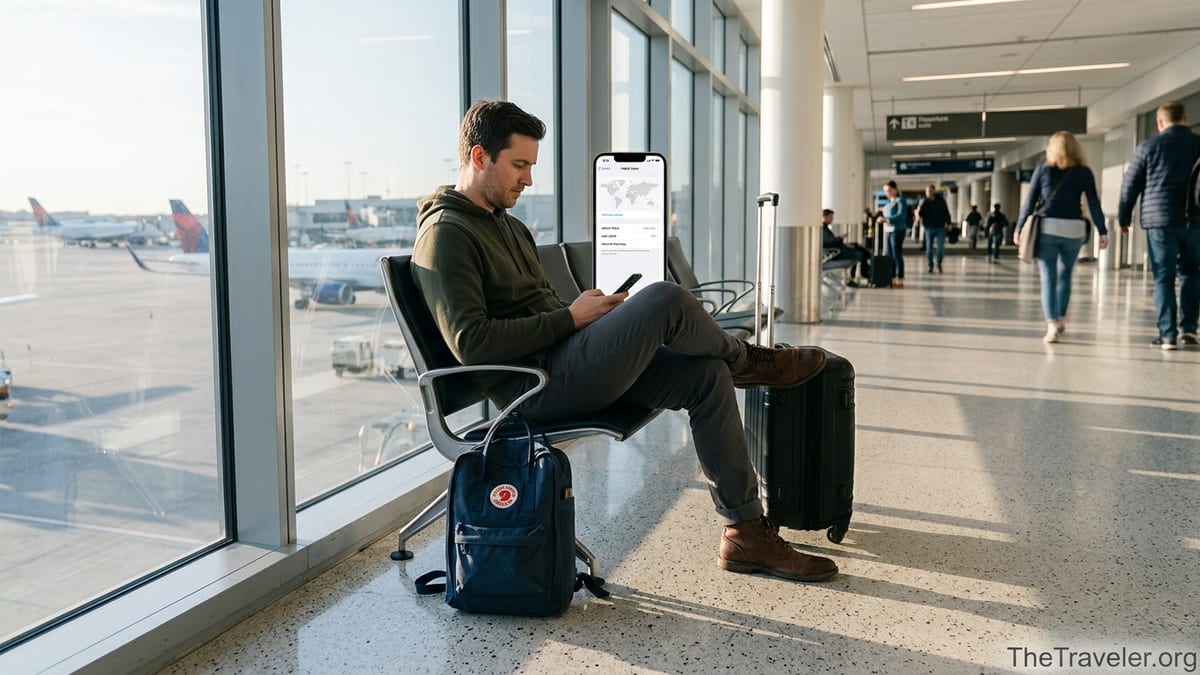
In practice, a traveler flying from New York to Lisbon could buy a Europe or global Maya eSIM the night before departure, receive the QR code by email within minutes, and install it on an iPhone or recent Android device. Once the plane lands and flight mode is switched off, the phone automatically registers on a local European partner network, typically with 4G or 5G data speeds, without needing to visit a kiosk or negotiate a local SIM in another language.
Maya focuses on data only. You do not get a local phone number for calls or SMS; instead, the expectation is that you will use apps like WhatsApp, iMessage, Signal, or Teams for communication. That aligns with how many travelers already use their phones: messaging over data, ride-hailing, maps, and email, with traditional SMS becoming less critical on the road.
The company positions itself as a “one eSIM for global travel” solution. Its flagship global product is designed to cover multi-country itineraries such as a month working remotely between Spain, Italy, and Croatia, or a two-week Asia loop through Thailand, Vietnam, and Singapore, all while keeping the same eSIM active.
Plans, Pricing, And Coverage Compared To Rivals
Maya Mobile’s current catalog centers on global and regional eSIM plans. The global products cover well over 100 countries, while the wider Maya ecosystem now advertises coverage across 165-plus destinations when you include regional and specific bundles. Pricing varies by destination and plan length, but a common pattern is a flat per-day cost for unlimited data or larger fixed-data bundles for shorter trips.
As a reference point, travelers often see Maya advertise global unlimited data for around the low single digits per day, depending on the length of the package and any promotions. For example, a two-week global pass will typically work out noticeably cheaper per day than a three-day city break package. That pricing structure makes Maya especially attractive for longer trips, digital nomads, and business travelers who spend several weeks abroad and would otherwise face steep roaming charges from their home carriers.
Compared with Airalo, which commonly sells destination-specific packages like 5 GB for 7 days in Japan or 10 GB for 30 days in Europe, Maya’s global offers feel simpler for multi-country travelers. Airalo can be cheaper in some single-country scenarios if you know you only need a small amount of data, while Maya tends to be stronger value once you cross multiple borders or expect heavy day-to-day usage on mapping, ride-hailing, social media, and video calls.
Holafly, another major competitor, leans heavily on “unlimited” regional eSIMs, particularly for Europe and parts of Asia and Latin America. However, these often operate under varying fair use policies that can reduce speeds after a certain, unspecified threshold. Nomad sits somewhere in the middle, offering both fixed data bundles and competitive regional plans, often at strong per‑GB rates in Europe and North America, but usually without the single, simple global product that Maya highlights.
Unlimited Data And Fair Use: How “Unlimited” Feels In Real Life
Unlimited data is the core of Maya Mobile’s marketing. On paper, its guidelines state that unlimited plans provide data at the full speed available on the local network, with use governed by a fair usage policy intended to prevent abuse and keep the network usable for everyone. In plain terms, that means you can stream, navigate, and tether within reason, but the service is not designed for heavy activities such as 24‑hour video streaming, large-scale file transfers, or acting as the main connection for an office.
In real-world use, travelers report that Maya’s unlimited global plans comfortably handle intensive everyday travel behavior. For example, on a 10‑day trip through Georgia and Armenia, a traveler using a 14‑day unlimited global Maya eSIM described using maps, social media, and video calls extensively each day without hitting a visible speed cap. Likewise, backpackers moving between Bangkok, Chiang Mai, and island destinations in Thailand have reported typical 4G and 5G performance for the usual mix of Google Maps, Grab rides, Instagram, streaming short videos, and booking ferries and hostels on the go.
However, it is important to understand that “unlimited” does not mean infinite high‑speed data under all conditions. Like many carriers and roaming providers worldwide, Maya can apply fair use measures if someone’s consumption is far beyond what a normal traveler would use, or if network resources need to be protected for everyone else. The exact threshold is not a hard public number and can vary by destination, partner network, and plan type. That is similar to how many mobile operators in Europe and North America handle their own “unlimited” plans.
If you routinely stream high‑bitrate video for hours, back up large photo libraries over mobile, or use your phone as a hotspot for multiple laptops, you may see speeds slow at times. For most typical travelers who are browsing, navigating, streaming moderately, and doing a few video calls a day, Maya’s unlimited offering will usually feel genuinely generous and less constrained than some rivals that start throttling quickly.
Country Coverage And Network Quality On The Road
Coverage is where Maya Mobile quietly differentiates itself. Its global and regional products collectively span more than 160 countries, which is on par with or slightly ahead of several competing travel eSIM brands. In practice, this means a single Maya eSIM can usually follow you from a business meeting in Frankfurt to a layover in Istanbul and on to a beach in Bali without requiring a new purchase at each leg.
Real-world itineraries illustrate this reach. A digital nomad spending a month moving between Lisbon, Barcelona, and the south of France can keep the same Maya global plan active, hopping among local partner networks with no manual reconfiguration. Likewise, a traveler routing from Los Angeles to Bangkok via Shanghai can rely on one global unlimited eSIM that covers transit in China and full two‑week use in Thailand, without juggling multiple eSIMs or swapping providers mid-trip.
Network quality naturally hinges on the local carriers Maya partners with in each country. In major hubs like London, Paris, New York, Singapore, and Tokyo, speeds generally align with native prepaid SIM performance, often reaching fast 4G or 5G with good latency for video calls. In more rural or remote regions, coverage reflects the limitations of the local network: mountainous areas, small islands, and developing infrastructure can all lead to slower data and patchier reception, regardless of whether you use Maya, Airalo, or a physical local SIM.
The practical upside of Maya’s broad coverage is not that it beats every local carrier in raw speed, but that it offers predictable connectivity across a complex itinerary. For travelers who value simplicity and continuity more than shaving a few dollars off by buying a new local SIM at each border, that reliability can matter more than theoretical maximum speeds.
Setup, TravelMode App, And Day‑To‑Day Usability
Setting up Maya Mobile follows the standard travel eSIM flow. After choosing a plan and paying online, you receive an email with a QR code and basic installation steps. On an iPhone, you open Settings, tap Mobile Service or Cellular, choose to add an eSIM, and scan the QR code. On many Android phones, you go to Network or Connections, add a mobile plan, and scan the same code. The entire process usually takes a few minutes, and you can install the eSIM before you even leave home.
In May 2026, Maya introduced TravelMode, a dedicated eSIM app designed to streamline activation and management. Instead of relying only on email QR codes, travelers can sign in to the app, install a plan in a few taps, see remaining validity, and manage top‑ups. For frequent travelers, this helps keep everything organized: no more hunting through an inbox in a boarding queue to find a QR code or usage information.
Day‑to‑day, Maya behaves like any other secondary mobile plan on your device. Most travelers keep their home SIM active for calls and text verification codes but route mobile data through the Maya eSIM to avoid roaming charges. You can choose in settings which SIM handles data, calls, and SMS, and switch back to your home plan instantly once you return.
One subtle but important benefit is continuity across trips. If you take a week in Mexico in March and a two‑week Europe swing in June, you can log into the same Maya account, see your previous plan history, and quickly buy a new regional or global plan without re‑entering details or setting up a fresh profile every time.
How Maya Stacks Up Against Airalo, Holafly, And Nomad
When you put Maya Mobile side by side with its best‑known rivals, a few clear patterns emerge. Airalo is very strong for travelers who like granular control: if you are flying to Tokyo for five days and know you only need a few gigabytes for maps and messaging, an Airalo Japan‑only package may work out cheaper than Maya’s global or Asia‑wide plan. However, if your itinerary combines Japan with side trips to South Korea and Vietnam, the simplicity of a single Maya eSIM starts to look more compelling.
Holafly’s unlimited regional plans are attractive for travelers who expect to be online constantly, especially in Europe or Latin America, and do not want to think about data limits. In practice, though, the way unlimited usage is managed varies by destination, and some travelers report speed slowdowns after heavy use. Maya’s unlimited offering is not fundamentally different in that it also uses fair use management, but its emphasis on a broad global plan, rather than mostly regional products, may suit those who are hopping between continents or doing complex round‑the‑world routes.
Nomad often appeals to tech‑savvy travelers who prioritize transparent per‑GB pricing and a clean app. In several independent comparisons, Nomad is praised for competitive data rates in Europe and North America and for having a polished user experience. For single‑region trips, Nomad can occasionally edge out both Maya and Airalo on price. Where Maya gains back ground is in the simplicity of its global coverage, straightforward unlimited plans for longer trips, and recent push into a tap‑to‑activate TravelMode experience that resembles what Nomad users like about its app.
In short, Maya is rarely the absolute rock‑bottom cheapest option for a single, short city break. Instead, it competes best where itineraries are longer, spread across several countries, and where travelers value a mix of unlimited data, consistent coverage, and minimal hassle over micro‑optimizing each destination’s data purchase.
Real‑World Use Cases: Who Maya Mobile Is Best For
Consider three common traveler profiles. First, the classic two‑week Europe vacation: a couple from Chicago spending four nights in Paris, four in Rome, and four on the Amalfi Coast. They do not want to think about changing eSIMs mid‑trip. A Maya Europe or global unlimited plan lets them land in Paris, enjoy fast data for maps, restaurant searches, social sharing, and streaming, then continue seamlessly across borders by train or budget airline without revisiting connectivity at every stop.
Second, the Southeast Asia backpacker. A solo traveler starts in Bangkok, buses to Chiang Mai, flies to Hanoi, then loops through Da Nang and Ho Chi Minh City before heading down to Bali. A global or Asia‑wide Maya plan allows them to keep the same eSIM active from day one, handling cheap tuk‑tuk rides, hostel bookings, flight check‑ins, and video calls home. While buying local SIMs in each country could shave a bit off the cost, the cumulative time spent finding kiosks, showing passports, and swapping SIM cards can easily outweigh the savings.
Third, the remote worker doing a month of “work from Europe.” Someone based in Toronto rents an apartment in Lisbon for two weeks, then spends two more working from Barcelona. They rely on consistent mobile data for Slack, Zoom, and two‑factor authentication when connecting to company tools. In this case, a longer Maya unlimited plan can effectively replace expensive North American roaming add‑ons, while still letting them receive calls and SMS on their domestic number. If occasional tethering is needed to cover for flaky café Wi‑Fi, the generous fair use allowances of unlimited plans can usually handle it without issue.
In each of these scenarios, Maya’s strengths are consistency and predictability rather than exotic features. Travelers who are on tighter budgets and have time to hunt down the cheapest local SIM in every country might save more by going direct to local carriers. Everyone else is likely to appreciate the balance between cost, ease of use, and the peace of mind that comes from knowing mobile data will simply work when the plane door opens.
The Takeaway
After comparing Maya Mobile with leading travel eSIM competitors, the service stands out as a strong all‑rounder for modern travelers in 2026. It offers wide coverage across more than 160 countries, genuinely practical unlimited data plans governed by familiar fair use principles, and a setup process that fits neatly into how people already use their phones. The launch of the TravelMode app further reduces friction by turning eSIM activation and management into a simple, app‑based experience.
Maya is not always the cheapest for tightly defined, single‑country trips or very light data users. In those cases, providers like Airalo or Nomad, or even traditional local SIMs, can sometimes come in a little lower in total cost. And, like all “unlimited” options, Maya’s plans are subject to network management policies that can reduce speeds if usage becomes extreme or interferes with network quality for others.
Where Maya truly earns its place is with travelers who value simplicity across complex itineraries: multi‑country vacations, extended work trips, or months of continent‑hopping where changing SIMs constantly is more hassle than it is worth. For those travelers, Maya Mobile’s combination of broad coverage, straightforward unlimited plans, and increasingly polished user experience makes it one of the most practical travel eSIM options available today.
FAQ
Q1. Is Maya Mobile really unlimited, or will my data be throttled?
Unlimited Maya Mobile plans are designed for typical traveler use, such as maps, social media, streaming, and video calls. Like many providers, Maya applies a fair use policy, so extremely heavy or unusual usage can trigger speed management, but most ordinary travelers will not hit any obvious limit.
Q2. How does Maya Mobile pricing compare with Airalo and Holafly?
Maya is often competitive but not always the absolute cheapest. For single‑country, light data trips, Airalo or a local SIM can sometimes cost less. For multi‑country or longer itineraries where you want unlimited data and minimal hassle, Maya’s global and regional plans tend to represent good overall value.
Q3. Will Maya Mobile work in both my layover country and my final destination?
In many cases, yes. One of Maya’s strengths is broad coverage across more than 160 countries, so a single global eSIM can often cover both a transit stop, such as a layover in Istanbul or Dubai, and your final destination without needing a second plan.
Q4. Can I use Maya Mobile for tethering and mobile hotspot on my laptop?
In most destinations, hotspot and tethering work normally, and many travelers use Maya to connect laptops or tablets when hotel Wi‑Fi is unreliable. However, heavy, continuous tethering may count more strongly toward fair use thresholds, so it is wise to avoid running large updates or constant high‑bitrate streaming through your mobile hotspot.
Q5. Do I get a local phone number with a Maya Mobile eSIM?
No. Maya Mobile is designed as a data‑only service. You keep your usual phone number active on your physical SIM for calls and SMS, and use data‑based apps such as WhatsApp, Signal, or FaceTime Audio for most day‑to‑day communication while abroad.
Q6. How do I know if my phone is compatible with Maya Mobile?
You need an eSIM‑capable, network‑unlocked smartphone, such as most recent iPhone models or higher‑end Android devices from brands like Samsung, Google, and Xiaomi. If your phone was sold by a carrier on contract, confirm that it is unlocked before your trip.
Q7. Is Maya Mobile a good choice for remote work and digital nomads?
For many remote workers, yes. The mix of broad coverage and generous unlimited plans makes it suitable for video calls, collaboration tools, and on‑the‑road work sessions. It may not completely replace a fixed broadband connection, but it is a solid primary or backup option in many countries.
Q8. What happens when my Maya Mobile plan expires while I am still traveling?
When your plan reaches the end of its validity period, data access stops until you top up or purchase a new plan. If you expect to stay longer than originally planned, it is usually easiest to extend coverage or buy a new plan from your Maya account or through the TravelMode app before the expiry date.
Q9. Is Maya Mobile better than buying a local SIM card at the airport?
It depends on your priorities. A local SIM can sometimes be slightly cheaper or offer higher local speeds in specific markets, but it requires time at a kiosk, identification in some countries, and swapping SIMs. Maya trades a little potential savings for convenience, continuity across borders, and setup that you can complete before you leave home.
Q10. Can I keep using Maya Mobile on multiple trips, or do I need a new eSIM each time?
You keep the same Maya account and can purchase new plans for future trips without starting from scratch. In many cases, you can also reuse the same installed Maya eSIM profile on your phone and simply attach a new plan to it, making it easier to manage connectivity across multiple journeys throughout the year.