


More news on this day
American Airlines is preparing to reverse years of strategy that favored personal devices over built in inflight entertainment, with industry reports indicating that the carrier is now moving toward adding seatback screens to a large portion of its narrowbody fleet.
Get the latest news straight to your inbox!
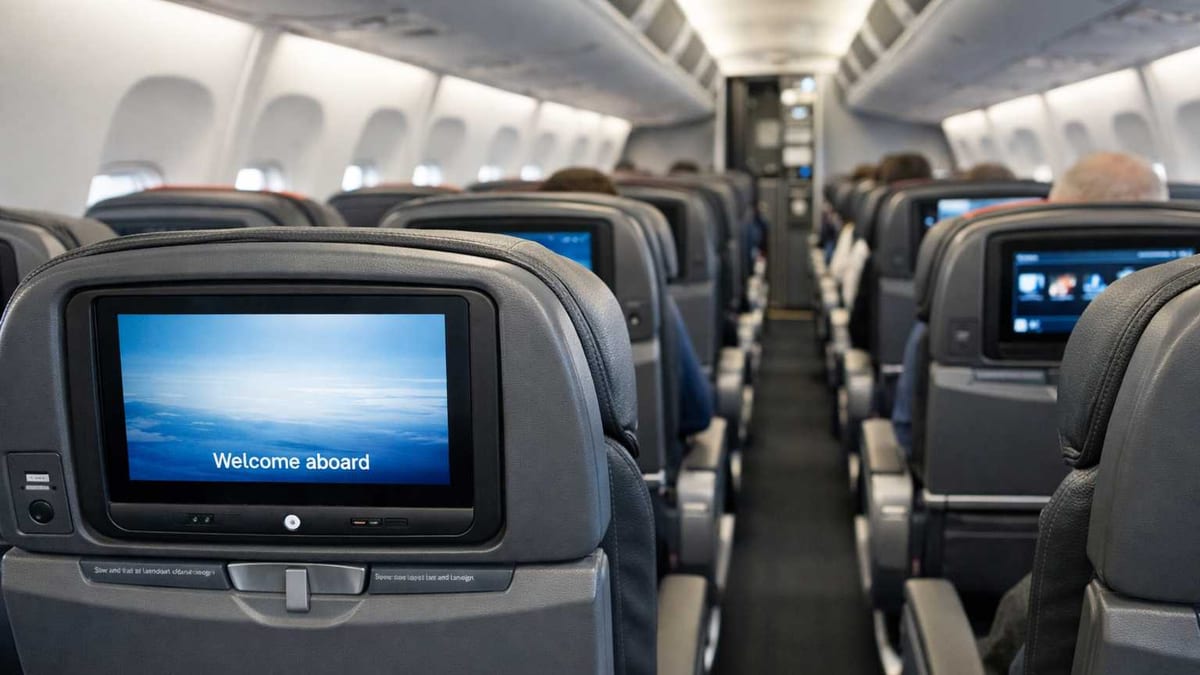
A Strategic Turn in American’s Cabin Philosophy
The move toward seatback screens would mark a notable shift for American Airlines, which spent much of the past decade removing embedded entertainment systems from domestic aircraft in favor of streaming content to passengers’ phones, tablets, and laptops. Published coverage over recent months has highlighted growing discussion inside the airline about restoring built in screens, particularly as competitors continue to market them as a differentiating feature.
Background reporting on American’s narrowbody retrofit program shows that recent A319 and A320 cabin updates have focused on more premium seating, new finishes, and additional storage, but without seatback entertainment on most domestic jets. At the same time, American has continued to invest heavily in high speed connectivity, positioning Wi Fi as the backbone of its inflight experience on routes within North America.
Industry analysts note that a renewed commitment to seatback screens would bring American closer to the product positioning of Delta Air Lines and United Airlines, both of which have leaned on embedded entertainment as part of their onboard branding. For American, a change of course would be about more than entertainment options; it would signal an effort to address customer perceptions that had increasingly framed the carrier as more bare bones than its largest rivals.
Competitive Pressure From Delta and United
Over the last several years, the U.S. legacy carriers have taken sharply different approaches to inflight entertainment. Delta has widely promoted the presence of seatback screens across most of its mainline fleet, while United has embarked on a large scale retrofit program to install modern displays and power at every seat on domestic narrowbody aircraft. Publicly available fleet updates show both airlines using these investments as key marketing points.
American, by contrast, emphasized wireless streaming and device holders instead of embedded screens, arguing that most travelers now carry their own devices loaded with content. However, traveler feedback shared in consumer forums and aviation communities has frequently compared American less favorably with competitors on this point, especially on longer domestic flights where passengers expect a more complete entertainment offering.
As American moves to add more premium seats and modernize cabins across hundreds of narrowbody jets, reports indicate that pressure to match or exceed the amenities offered by Delta and United is intensifying. Seatback screens have become a visible marker of that competition, signaling a full service experience even in economy cabins.
Linked to Major Retrofit and Connectivity Investments
The anticipated addition of seatback screens appears closely tied to American’s broader cabin upgrade strategy. The airline is already in the midst of a significant retrofit program that is increasing first class and extra legroom seating on Airbus A319 and A320 aircraft, as well as on Boeing 737 Max jets. Public documents and airline communications describe these projects as part of a multiyear plan to standardize interiors, introduce new seats, and expand access to in seat power.
Separately, American has announced plans to equip more than 500 narrowbody aircraft with new satellite based Wi Fi starting in 2027, through a partnership with SpaceX’s Starlink. That connectivity upgrade is expected to deliver higher speeds and more consistent performance on domestic and short haul international routes. Aviation industry coverage suggests that pairing advanced connectivity with modern seatback systems would allow American to offer a mix of streaming, live television, and personalized content that does not depend solely on passengers’ devices.
Observers point out that installing seatback hardware during scheduled interior work is more efficient than retrofitting in isolation. As American continues to cycle aircraft through maintenance lines for new seats, lighting, and storage bins, the airline has an opportunity to introduce integrated entertainment and power solutions without taking additional aircraft out of service solely for that purpose.
Customer Experience and Brand Positioning
For travelers, the possible return of seatback screens would mean a more consistent experience across domestic and international networks. American’s widebody aircraft and premium transcontinental jets already feature built in screens in all cabins, while most standard domestic narrowbodies do not. Unifying that product across more of the fleet would reduce guesswork for passengers booking longer routes within the United States.
Seatback systems also address practical issues that have become more prominent as personal device strategies matured. Passengers frequently cite concerns about battery life, limited space on tray tables, and the difficulty of watching a movie on a phone when meal service or work intrudes. A dedicated screen with its own power source can alleviate many of these complaints, particularly for families traveling with children or passengers who did not plan ahead to download content.
From a branding perspective, a pivot back to embedded entertainment would support American’s broader narrative of investing in the customer journey after years of cost focused changes. As the airline introduces more premium seating and enhanced Wi Fi, seatback screens would offer a visible, tangible improvement that travelers notice the moment they step on board, reinforcing messaging about a more modern and comfortable fleet.
What Travelers Should Expect Next
Although American has not yet detailed a final configuration or rollout schedule for new seatback systems, patterns from other retrofit and fleet projects offer some guidance. Industry precedent suggests that new deliveries, such as future narrowbody orders, are likely to arrive with integrated entertainment from the start, followed by a phased retrofit of existing aircraft as they pass through cabin upgrade lines.
Travelers can expect that any shift toward seatback screens would first appear on higher visibility routes and aircraft types where competition with other major carriers is strongest. Over time, a growing share of flights could feature the refreshed interiors, combining new seats, improved storage, power at every seat, upgraded Wi Fi and, eventually, modern embedded entertainment.
For now, American passengers will continue to see a mix of experiences, with streaming to personal devices remaining the standard on most domestic jets. However, as publicly available information continues to highlight ongoing investment in both connectivity and cabins, signs point toward a future in which American’s narrowbody fleet looks and feels much closer to the airline’s more feature rich widebody aircraft, with seatback screens playing a central role in that transformation.