


Maya Mobile has become a go to name in the exploding market for travel eSIMs. Its promises are compelling for anyone flying with a US carrier that still charges steep roaming fees: fast data in over 100 countries, simple app based activation and headline prices that look far lower than what major operators in the United States typically offer for international use. Scratch the surface, though, and the real cost of relying on Maya Mobile can be higher than it appears, not only in dollars but also in wasted time and missed connections when you actually need your phone most.
Get the latest updates straight to your inbox!
Why Travelers Are Flocking to Maya Mobile
Maya Mobile sells itself as a flexible, lower cost alternative to roaming with your home carrier. From a single app or website, you can buy an eSIM for a specific country such as Italy or Japan, a regional bundle like "Asia 20 countries," or a global plan that promises coverage in around 119 destinations on one profile. For a traveler planning a multi stop itinerary through Europe and Southeast Asia, that can sound far simpler than juggling multiple physical SIM cards or fighting with your US carrier’s complicated international add ons.
Price is another powerful draw. A typical US carrier might charge a flat daily fee of around 10 dollars for international roaming that taps into your domestic data allowance, or sell very small travel passes that work out to several dollars per gigabyte. In comparison, a Maya Mobile unlimited data plan advertised at roughly 1.67 dollars per day for global use looks like a bargain, particularly if you are used to paying premium rates at home. Many travel blogs and comparison sites echo this message and highlight potential savings of up to several dozen dollars on a one or two week trip.
On paper, the service can make sense for certain use cases. If you are a short term tourist who primarily uses maps, messaging and light social media, you could go through an entire city break in Rome or Lisbon without ever thinking about local carriers. You scan the QR code before you leave, land with data active and never have to navigate a foreign language shop counter. That convenience is real and worth something.
However, the glossy pitch obscures several important details about how Maya Mobile actually works in practice. The savings are not guaranteed and the trade offs can be significant, especially if you depend on stable high speed data for work, navigation or frequent video calls while abroad.
The Reality Behind “Unlimited” Data
The most important fine print in Maya Mobile’s offering sits inside its unlimited data plan guidelines under a fair usage policy. The company describes its unlimited products as intended for regular roaming use rather than high intensity data consumption. In practical terms, that translates into automatic throttling when your daily usage passes a certain threshold on an unlimited plan. According to Maya’s own support documentation, speeds may be reduced to around 10 Mbps if you exceed roughly 3 GB in a day, and then to approximately 1 Mbps if heavy usage continues, with any throttle lifted within about 24 hours.
This may sound generous until you map it onto a real travel day. Imagine a digital nomad landing in Tokyo with a Maya global unlimited eSIM, planning to work remotely from a coworking space and take a few video calls. A couple of 45 minute HD calls on Zoom or Teams, some cloud file syncing and a bit of YouTube in the evening can easily push daily usage beyond 3 GB. Once throttled to 1 Mbps, group video calls become choppy or impossible, map tiles load much more slowly and uploading large attachments can stall entirely. Yet the plan still shows as “unlimited” in your account, masking the practical limit on usable high speed data.
Traveler reviews illustrate how this mismatch feels in the real world. Several users report that their Maya unlimited plans performed well in the morning but slowed significantly after a few gigabytes of streaming and tethering to a laptop, turning previously smooth browsing into a frustrating crawl. Others describe buying an unlimited "Asia" pack marketed around daily high caps, then discovering that only lightweight use such as messaging and an occasional YouTube clip remained reliable once throttling kicked in. The issue is not unique to Maya, but the branding around truly unlimited data can easily mislead travelers who equate the term with the kind of all you can use home fiber connection they enjoy back in the United States.
This matters because many people choose Maya Mobile specifically to avoid thinking about data limits while on the road. Someone planning to upload dozens of photos from a safari in Kenya, stream sports in their hotel at night or run navigation for long road trips across Europe might assume they can do so freely. In reality, the combination of fair use caps and speed reductions means these habits could render the service barely usable at the times they matter most, undermining the value of the initial low price.
Coverage Gaps and Country Specific Surprises
Another hidden cost of using Maya Mobile is that coverage is not nearly as universal or consistent as marketing headlines imply. The company’s global eSIM supports more than one hundred countries, but that still leaves certain destinations out and performance can vary widely depending on which local partner network you end up on in each place. The list of supported countries may also lag behind individual travelers’ expectations about where a modern roaming product should work.
Real world experiences in places like Vietnam, the Bahamas and parts of the Caribbean highlight the risk. Some travelers report that a Maya data pack which worked smoothly in Paris or Madrid either refused to connect or repeatedly dropped the network in more challenging markets, even while a local prepaid SIM or another eSIM provider worked fine on the same phone. Others describe landing at Nassau or a smaller island airport, seeing a signal indicator appear briefly, then watching the connection vanish without explanation just as they needed to request a ride or open directions to their hotel.
A further wrinkle appears when routes involve less visited cross border combinations. A traveler might buy a regional Asia pack expecting it to cover a loop through Thailand, Cambodia and Vietnam, only to discover that the Vietnamese leg is subject to stricter network policies or limited partner options that lead to unstable data. On paper, coverage is technically present, but in practice the usable service might be much closer to intermittent 3G than to a steady 4G or 5G connection. For anyone relying on ride hailing apps in Ho Chi Minh City or remote working from Da Nang’s beachside cafes, that gap becomes a direct hit to productivity and peace of mind.
By contrast, picking up a local SIM from a national operator such as Viettel in Vietnam or Turkcell in Turkey often provides more predictable coverage and speed, albeit with the hassle of an in person purchase and potential ID checks. The allure of a single global eSIM only really pays off if it delivers comparable reliability once you step off the plane, which is not always the case.
App Usability, Activation Issues and Support Delays
Technical friction is another cost that rarely shows up in headline pricing. While many customers report smooth activation of Maya Mobile eSIMs, there is also a steady stream of accounts where the process misfires at the worst possible moment. These cases range from QR codes that will not install, to eSIM profiles that appear correctly on a phone but never attach to a network, to plans that worked in one country but stopped as soon as the traveler crossed a land border.
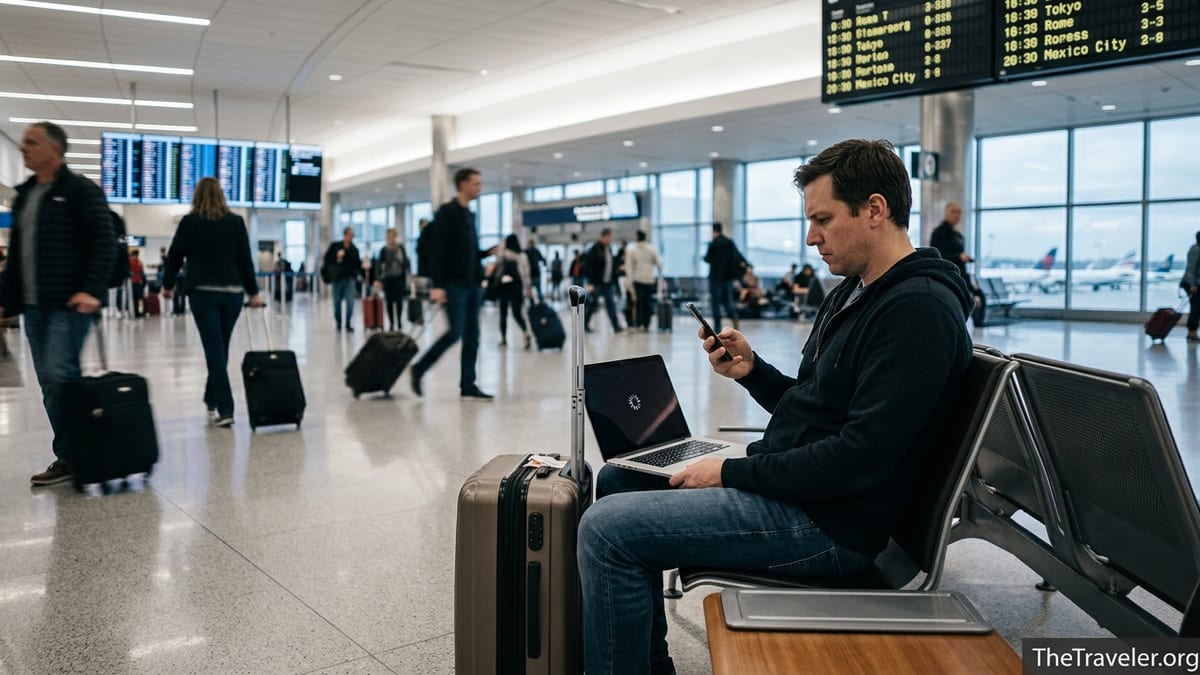
One scenario that crops up repeatedly is the airport arrival fail. A traveler installs their Maya eSIM at home on an iPhone, sees it listed as available, then turns off their physical SIM as the plane descends into Lisbon or Athens. After landing, they toggle data roaming to on but find that the eSIM line refuses to connect to any network. Without airport Wi Fi, they cannot open the Maya app to troubleshoot or reach support. By the time they navigate to a café with free Wi Fi and contact the company via in app chat or a support form, crucial time has been lost and any savings on the plan start to look less appealing.
Support responsiveness is a recurring theme in critical reviews. Some travelers report quick and helpful resolution when plans failed, including refunds or replacements. Others describe sending multiple messages through the app or WhatsApp in destinations like the Bahamas and receiving either delayed answers or no meaningful response before the trip ended. For a weekend break or cruise stopover, a 24 or 48 hour support lag effectively means the product never worked for the duration of the stay, even if the company later issues a partial credit.
The complexity of modern eSIM technology does play a role here. Issues can stem from phone software quirks, wrong APN settings, roaming restrictions on certain partner networks or misconfigured profiles. Yet from the traveler’s perspective, the practical question is simple: will I have usable data when I need it? Every hour spent rebooting a handset, re scanning QR codes or waiting on customer service has an opportunity cost, especially if you are trying to coordinate check in with an Airbnb host or find your way through an unfamiliar subway system late at night.
Marketing Claims vs Fair Use Fine Print
The tension between Maya Mobile’s marketing and its underlying policies is another form of hidden cost. Promotional language tends to emphasize "truly unlimited" global data, broad coverage and freedom from surprise roaming charges. The support documentation, however, places clear boundaries around what counts as acceptable use, including data intensive activities like acting as a mobile router for multiple computers or running large file transfers over tethering connections.
For instance, a traveler who reads that a Maya global eSIM offers fast unlimited data in Europe and then uses it to back up thousands of holiday photos to the cloud each night from a laptop may quickly hit the fair use threshold. Once throttled, they might find that even opening a simple web page or downloading a boarding pass becomes sluggish. The underlying technical reality is that unlimited refers to the amount of data you can send in principle, not to a guarantee of constant high speed connectivity regardless of volume.
There is also confusion around how daily caps reset. If you are on a two week global pass and exceed the full speed allotment on day three, speeds should technically recover within about 24 hours. Yet that window can overlap with your heaviest usage days if you happen to be on a long train ride across Germany or working remotely from a café in Barcelona, diminishing the value of the pass right when you most rely on it. Some travelers report that they perceived the throttle lasting longer than expected, while others say it seemed to reset faster, creating an inconsistent user experience that is hard to plan around.
Contrast this with buying a clearly labeled 10 GB or 20 GB local prepaid pack from a national carrier where you pay once and then can see an exact remaining allowance in a companion app. Once you hit zero, your data stops or slows to a clearly advertised backup speed and you add another pack. While this approach brings its own hassles, it often feels more transparent than a roaming product whose rules are tucked into a help center article that many customers never read before purchase.
When Maya Mobile Can Still Make Sense
Despite the pitfalls, Maya Mobile can still be a sensible choice for certain travelers, provided they understand its limitations. A short term visitor spending a long weekend in Rome, Paris or Seoul who mostly uses their phone for messaging, maps, rideshares and occasional social media will likely never brush up against the fair use thresholds on an unlimited plan. In that scenario, the convenience of landing with immediate data and the freedom from negotiating with a local carrier can outweigh the risks.
Multi stop trips through well covered countries are another sweet spot. Someone traveling from New York to London, then on to Amsterdam and Berlin over ten days may appreciate a single global eSIM that roams across partner networks in each city. If their usage stays around 1 GB per day or less, speeds should remain comfortably fast. Likewise, business travelers who need mainly email and messaging access between meetings could find Maya a straightforward replacement for a more expensive international roaming add on from their home operator.
The trouble starts when expectations exceed what the product is designed to deliver. Remote workers planning to run hours of daily video calls, creators uploading large batches of 4K footage from Bali or road trippers streaming high definition music and navigation across rural North America may be better served by local SIMs, portable Wi Fi hotspots from established providers or home carrier roaming passes that explicitly include large hotspot allowances. Even if these options cost more per day on paper, they can prove cheaper in practice if they prevent lost work time or missed client calls.
Ultimately, treating Maya Mobile as a tool for light to moderate roaming use, rather than as a full replacement for home broadband or a domestic unlimited mobile plan, is the key to avoiding disappointment. The product sits in a middle space between traditional high priced roaming and fully local connectivity, and travelers who recognize that middle ground are less likely to be caught off guard.
How to Protect Yourself From Hidden Costs
If you decide to use Maya Mobile, there are practical steps you can take to reduce the chance of unpleasant surprises. The first is to read the fair use policy and country coverage list in detail before you buy, paying close attention to any examples of what counts as normal use. If you expect to tether a laptop for work or stream video daily, assume that you will be closer to the high usage end of the spectrum and plan accordingly.
Before traveling, install the eSIM while you still have reliable Wi Fi at home and verify that your phone recognizes it correctly. On the day of departure, keep your physical SIM active until you land and confirm that Maya has successfully attached to a local network. If possible, test by loading a map, sending a message and checking email in the arrivals hall while you still have access to backup Wi Fi if something goes wrong. This small trial run can prevent the stress of discovering problems only after you have left the airport.
During your trip, keep an eye on your own behavior rather than obsessively tracking gigabytes. Avoid large software updates, cloud photo backups and long periods of high resolution streaming over cellular data on unlimited plans. If you know you will need to join an important video meeting or upload time sensitive files, try to do so from a hotel or café Wi Fi network instead of relying entirely on the eSIM. For destinations with a mixed track record like parts of Southeast Asia or island nations in the Caribbean, consider backing up Maya with a low cost local SIM purchased on arrival, which can act as a safety net if your roaming connection falters.
Finally, document any persistent issues with screenshots and timestamps, and contact support early rather than waiting until the end of your trip. While responses can be inconsistent, travelers who provide clear evidence of failures or unusable service tend to have a stronger case for refunds or credits. Even partial compensation can help offset the hidden costs of lost time and frustration, and your feedback may improve the experience for future users.
The Takeaway
Maya Mobile occupies an appealing niche in the travel connectivity market, offering a slick app, seemingly low daily prices and the promise of unlimited data across a long list of countries. For many light use travelers, particularly those taking short urban trips through well connected destinations, it can work exactly as advertised and deliver substantial savings compared to traditional roaming from US carriers.
Yet the service is not a magic bullet. Fair use policies mean that unlimited plans still carry practical limits on high speed data, and once those limits are crossed, throttling can turn a smooth connection into a sluggish one. Coverage gaps and partner network issues in certain countries create real risk for travelers who assume that a global eSIM equals universal, trouble free service. Activation hiccups and slow customer support add another layer of potential cost in the form of lost time and missed connections.
The hidden cost of using Maya Mobile is less about surprise charges on your credit card and more about the opportunity cost of unreliable connectivity when you need it most. By approaching the product with realistic expectations, treating it as a convenient supplement rather than a complete substitute for local options and taking basic precautions before and during your trip, you can capture the benefits while minimizing the downsides. In the end, the best travel data strategy is rarely a one size fits all solution, but an informed mix of tools matched to your specific destinations, habits and tolerance for risk.
FAQ
Q1. Is Maya Mobile really cheaper than using my home carrier’s roaming plan?
In many cases it can be cheaper, especially for light to moderate data use on short trips, but heavy users may find that throttling and limited support reduce the practical value compared with some carrier roaming passes or local SIMs.
Q2. What does the fair use policy on Maya’s unlimited plans actually mean?
It means that while you are not billed extra for using more data, your high speed connection may be slowed once your daily usage passes a certain threshold, typically after a few gigabytes, and speeds may stay reduced for several hours.
Q3. Will Maya Mobile work everywhere on my multi country trip?
No single provider works perfectly everywhere. Maya’s global eSIM covers many popular destinations, but performance depends on local partner networks and some countries still have patchy or inconsistent service, so having a backup option is wise.
Q4. Can I use Maya Mobile as my main internet connection for remote work abroad?
You can for light tasks like email and messaging, but if your job requires frequent video calls, large file transfers or reliable tethering for a laptop, you may run into fair use limits and throttling that make Maya unsuitable as your only connection.
Q5. How do Maya Mobile’s speeds compare to a local SIM card?
In major cities, speeds can be similar when you are on a strong partner network, but local SIMs from national carriers often offer more consistent performance, especially in rural areas or countries where roaming arrangements are less robust.
Q6. What should I do if my Maya eSIM does not connect when I land?
First, restart your phone, confirm that data roaming is enabled for the eSIM line and try selecting a different network manually. If it still fails, connect to Wi Fi and contact Maya support with screenshots and details of your location and device.
Q7. Is it safe to rely on Maya Mobile for navigation and ride hailing apps?
In well covered countries and for typical tourist use it is usually fine, but in destinations with known connectivity issues it is safer to keep offline maps downloaded and consider a local SIM as a backup for critical journeys.
Q8. Can I share my Maya Mobile connection with other devices using a hotspot?
Limited hotspot use may work, but using the plan as a primary router for multiple devices can quickly trigger fair use thresholds and throttling, so it is better to treat tethering as an occasional backup rather than your default.
Q9. How can I estimate how much high speed data I will actually need?
As a rough guide, many travelers use around 0.5 to 1 GB per day for maps, messaging and light browsing, while adding regular video calls or streaming can push usage above 2 or 3 GB a day.
Q10. Should I buy Maya Mobile before leaving home or after I arrive?
Buying and installing the eSIM before you depart is usually better, because it lets you test that your phone recognizes the profile while you still have reliable Wi Fi and time to troubleshoot any issues before you land.