


More news on this day
Spotting a commercial jet streaking across the sky with no passengers on board can look like pure waste, but so-called ferry flights are a routine part of modern airline operations and can send an empty aircraft halfway around the world to keep the broader network running on time.
Get the latest news straight to your inbox!
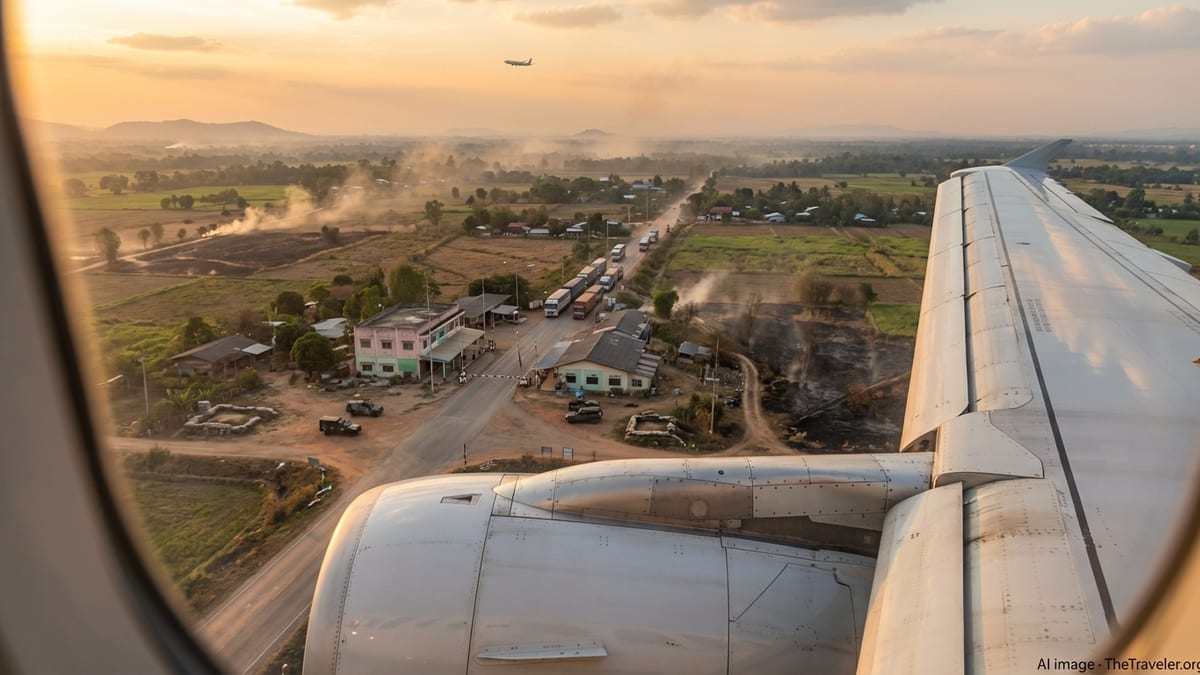
Inside the Definition of a Ferry Flight
In airline and regulatory terminology, a ferry flight is a non-revenue flight that moves an aircraft from one location to another without paying passengers on board. Publicly available glossaries describe it as a flight conducted to position an aircraft for maintenance, delivery, or other operational needs, rather than to transport ticketed travelers. In everyday airline jargon, the same activity is often called a repositioning or "repo" flight.
Industry manuals and training guides distinguish ferry flights from regular commercial services because the purpose is logistical, not commercial. That difference affects everything from how the flight is scheduled and crewed to how it appears in reservation systems. Passengers may never see these flights listed, even though they may cross oceans and multiple time zones.
Regulatory documents also treat ferry flights differently from normal services. International civil aviation guidance refers to them as non-revenue segments that fall outside typical traffic rights because they do not involve carrying paying passengers between two countries. Domestic aviation regulators describe the same activity as moving an aircraft to a point where it will either begin a revenue flight or receive required work.
Despite the technical classification, to the casual observer a ferry flight usually looks identical to an ordinary trip: the same aircraft type, painted in the same colors, climbing along standard routes. The difference is in who is on board and why the flight is happening.
Why Airlines Send Empty Jets Across Continents
Airlines turn to ferry flights when operating an empty aircraft costs less or causes less disruption than other options. Published airline training materials list common reasons such as returning a plane to its home base, moving it to a maintenance facility, delivering it to a new customer, or evacuating it from an airport where demand has collapsed or infrastructure is constrained.
Network planning models are built around complex webs of routes and aircraft rotations. When weather, technical issues, or airport congestion interrupt those plans, the right aircraft can easily end up in the wrong place. Rather than cancel multiple downstream flights, an airline may fly a jet empty to where it is needed for a busy long-haul departure, particularly during peak seasons when full cabins justify the extra cost.
Aircraft maintenance is another major driver. Large checks are clustered at specialized facilities around the world, and airlines schedule jets to arrive at these centers with precise timing. If a plane finishes work later than planned, or if a different aircraft must step in for a grounded jet, ferry flights are often the quickest way to restore the intended pattern of service in the wider network.
Fleet changes can add to the need for repositioning. When new aircraft are delivered from manufacturers or leasing companies, they typically fly empty on their initial journeys to airline hubs or regional bases. Additional ferry flights may follow as carriers move these jets onto newly launched routes or adjust capacity between cities in response to changing demand.
The Economics Behind Flying Without Passengers
Operating a large commercial aircraft with no paying passengers can easily cost tens of thousands of dollars on a long-haul sector once fuel, crew, navigation charges, and airport fees are counted. For that reason, ferry flights are usually a last resort chosen only after planners compare alternative scenarios such as rerouting passengers through hubs, swapping equipment, or delaying departures.
Airlines sometimes offset a portion of the cost by carrying cargo or select personnel, even when the flight is technically classed as non-revenue. Operational documents note that some repositioning flights may be allowed to transport freight or company staff under local rules and company policies, while still being scheduled primarily as logistical moves. In those cases, the cabin may remain empty, but the lower deck can leave full of shipments.
Ferry flights also intersect with aircraft utilization targets. Keeping an expensive long-haul jet grounded for hours while waiting for the best possible passenger load on its next segment can be more costly than flying it empty to a different city where it will operate a full departure. Analysts describe this as a trade-off between immediate operating cost and the longer-term value of protecting schedules, connections, and brand reliability.
In private and charter aviation, the same dynamic appears in the form of "empty legs," where a business jet repositions to pick up clients. Industry reports highlight that some operators now market these legs at reduced fares to recover costs that would otherwise be written off as the price of moving an aircraft to its next assignment.
Operational and Regulatory Constraints
Although ferry flights do not carry ticketed passengers, they still operate under the same safety and airspace rules as regular services. Pilots must meet standard qualification and rest requirements, and the aircraft must be in a condition that satisfies the relevant airworthiness regulations, subject only to narrowly defined exceptions documented in special permits or minimum equipment lists.
When an aircraft is flown to a maintenance base with known technical issues, regulators may issue a specific authorization allowing the ferry flight under controlled conditions, such as routing away from challenging terrain or scheduling the segment during daylight hours. Public guidance from aviation authorities notes that these permissions are tightly constrained and often involve additional preflight checks and contingency planning.
Air traffic management systems also treat ferry flights like any other aircraft in the sky. They receive slots at congested airports, follow assigned routes, and may be subject to flow restrictions or ground delays. In global airspace tracking feeds, they often appear under special flight numbers that regular passengers never see during the booking process.
Airport operators, for their part, record ferry movements as non-revenue landings, a category used in public statistics to distinguish them from commercial services. Aviation glossaries describe this as a separate line item because these flights occupy runways, taxiways, and gates but do not directly generate ticket sales in the same way as scheduled departures.
Environmental Scrutiny and the Push to Reduce Empty Flights
The sight of an empty or nearly empty aircraft has drawn escalating scrutiny as airlines face pressure to reduce emissions. Environmental groups and policy analysts frequently point to non-revenue operations as an area where efficiency gains could help cut fuel burn, especially on long-haul routes where a single flight can consume many tons of fuel.
In response, airlines and aircraft operators are increasingly open about efforts to limit repositioning where possible. Industry briefings describe strategies such as optimizing fleet assignments to reduce imbalances between hubs, coordinating maintenance scheduling more tightly, and using data analytics to spot patterns that lead to repeated ferry flights on the same routes.
Some carriers attempt to convert at least part of the capacity on necessary ferry legs into revenue by selling seats or cargo space when regulations allow, effectively transforming a pure repositioning segment into a lightly loaded commercial flight. Others experiment with schedule adjustments so that aircraft can remain longer at outstations instead of returning empty, particularly during off-peak seasons.
Despite these moves, aviation planners acknowledge that ferry flights are unlikely to disappear entirely. In a tightly interconnected global system where weather, technical events, and shifting demand can disrupt the best-laid plans, moving aircraft without passengers remains one of the tools airlines use to restore balance, even when that means sending a seemingly empty jet halfway around the world.