


More news on this day
Passengers flying from Knoxville’s McGhee Tyson Airport are being urged to allow extra time for check-in and security screening after mechanical issues affecting screening equipment led to longer lines and delays across parts of the terminal.
Get the latest news straight to your inbox!
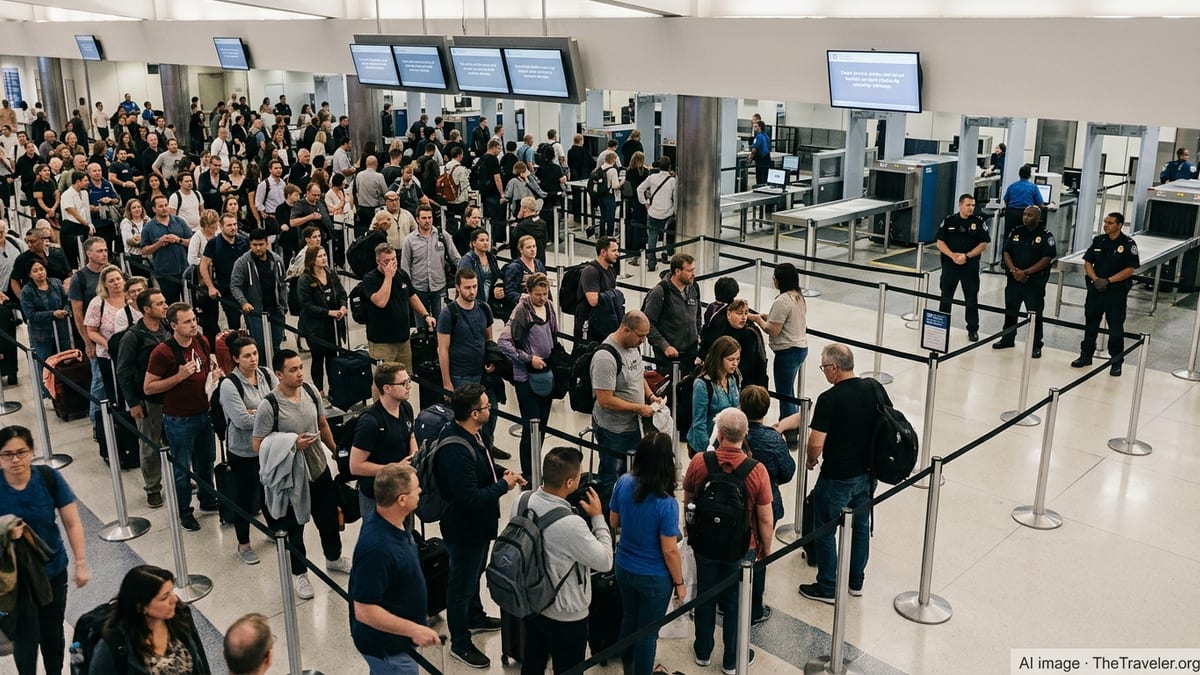
Mechanical problems slow screening operations
Recent reports indicate that McGhee Tyson Airport is contending with mechanical problems involving components of its passenger screening and support systems. Publicly available information points to intermittent outages and equipment resets, which have reduced the number of operational security lanes during certain peak periods. While core airport infrastructure such as runways and terminal access remains available, the diminished screening capacity is creating longer queues than travelers at this regional facility may be used to.
The impact is most noticeable at Transportation Security Administration checkpoints, where fewer open lanes translate directly into slower passenger throughput. Even relatively short interruptions can require systems to be fully rebooted and recalibrated before screening can resume at normal speed. Similar disruptions at other U.S. airports have previously produced multi-hour waits when only a portion of checkpoint equipment remained usable, underscoring how sensitive screening operations are to mechanical reliability.
McGhee Tyson is a growing airport that has seen its flight schedule expand in recent years, with more early morning and late afternoon departures. The mechanical issues are therefore emerging at a time when passenger volumes are already putting pressure on terminal capacity. Observations shared by travelers suggest that bottlenecks can develop quickly when one or more screening lanes are taken out of service for maintenance or troubleshooting.
Airport planning documents and trend reports show that passenger traffic at McGhee Tyson has risen steadily over the last several years, with the facility setting all-time records in 2025. That growth, combined with an increasingly busy schedule of regional and connecting flights, leaves less margin in the system when equipment fails or must be taken offline for repair.
Peak hours most affected by delays
According to travel-planning resources that track typical security patterns at McGhee Tyson, the airport generally recommends arriving around two hours before departure for domestic flights, and up to three hours for international itineraries. Those guidelines were developed for a normal operating environment, in which checkpoint wait times often hover around 20 minutes but can rise during busy periods. With current mechanical constraints, passengers are now reporting significantly longer waits during the heaviest morning and early week peaks.
First-wave departures in the early morning remain one of the most sensitive periods, as multiple airlines schedule flights within a narrow window. When checkpoint capacity is reduced, the line can extend far beyond the usual roped areas and toward the terminal curb. Travelers trying to check bags and move through security shortly before departure are most at risk of encountering extended queues.
Midday and late afternoon banks of flights are also vulnerable, particularly at the start and end of the workweek. Regional commentary and traveler accounts describe Friday afternoons and Monday mornings at McGhee Tyson as especially busy, even before the latest mechanical issues. A reduced number of functioning screening lanes during those windows can push wait times from a matter of minutes to well over an hour.
Quiet periods still exist, and some passengers continue to report relatively quick processing when traveling outside traditional peaks. However, the unpredictability of mechanical faults means that even off-peak hours can be disrupted without warning if equipment goes offline. This variability is leading many frequent flyers to build in substantially more buffer time than they might have planned in previous years.
Growing traffic strains a compact terminal
McGhee Tyson Airport serves the Knoxville metropolitan area and is the primary commercial airport for a broad swath of East Tennessee. Historically viewed as a smaller, convenient alternative to major hubs, the airport has undergone a notable increase in passenger traffic as airlines add new routes and frequencies. Economic reports from regional organizations highlight strong year-over-year growth in enplanements, reflecting both local demand and a surge in inbound leisure travel.
The compact layout that once made McGhee Tyson feel easy to navigate can turn into a constraint when passenger numbers spike. Check-in counters, security checkpoints, and boarding gate areas occupy a relatively tight footprint, which can make it challenging to create overflow space when lines lengthen. Construction and long-term capital improvement projects, documented in airport planning materials, aim to upgrade and expand elements of the airfield and terminal, but these works can also temporarily limit circulation areas or parking capacity.
Separate from mechanical issues, travelers have noted that parking and curbside congestion can contribute to overall journey time, particularly when garages or lots are undergoing work. Combined with slower security processing, these factors can add up to longer door-to-gate times than many Knoxville-area passengers previously experienced. The current situation illustrates how different parts of the airport system interact, and how strain in one area can quickly ripple through others.
Regional travel forums and community discussions over the past year have reflected a clear shift in expectations. Where travelers once assumed that arriving an hour before departure was sufficient, many regular users of McGhee Tyson now consider ninety minutes or more a prudent minimum in normal conditions, and longer when traveling at peak hours or checking bags. Mechanical disruptions to screening only reinforce that conservative approach.
What travelers can do to minimize disruption
Travel-advice platforms and crowd-sourced discussions suggest several strategies for passengers hoping to navigate McGhee Tyson with fewer headaches while mechanical issues persist. The most common recommendation is simply to arrive earlier than usual, especially for flights departing in the early morning, late afternoon, or on busy travel days such as Fridays and Mondays. Building in an additional thirty to sixty minutes over standard guidance can provide a buffer if lines are longer than expected.
Many travelers also consult real-time or historical wait-time tools before leaving for the airport, which can offer a rough indication of current checkpoint congestion. While such tools cannot predict sudden equipment failures, they can highlight whether security is already under strain. Passengers with access to expedited security programs can still experience delays when mechanical problems reduce overall lane availability, but these programs may help shorten the wait compared to standard lines.
Other practical steps include checking in online before arriving at the airport, using mobile boarding passes when possible, and ensuring that baggage and carry-on items comply with airline and security rules. Reducing the need for last-minute repacking at the checkpoint can help keep lines moving, especially when fewer lanes are in operation. Travelers connecting through larger hubs may also want to allow more time between flights, in case departure from Knoxville is delayed by upstream screening issues.
Travelers who reach the gate ahead of schedule may feel they overestimated the impact, but planners and frequent flyers consistently note that an uneventful wait in the boarding area is preferable to missing a flight because of an unexpectedly slow security line. With mechanical reliability still being addressed, conservative timing remains the most reliable way for passengers to protect their itineraries.
Outlook as repairs and upgrades progress
Publicly available planning documents for McGhee Tyson outline an ongoing program of capital improvements intended to support the airport’s long-term growth, including projects related to airfield surfaces, utilities, and terminal facilities. Mechanical reliability of critical systems such as power, backups, and screening equipment typically forms part of these multi-year plans, even when individual repair efforts are not highlighted in detail.
As maintenance teams work to restore full functionality to affected systems, wait times are expected to fluctuate. Some days may see operations run close to normal, while others could still experience temporary backlogs if mechanical issues reappear or if additional components require service. Travel analysts note that airports of McGhee Tyson’s size often need to coordinate closely with federal and airline partners when planning upgrades to ensure continuity of service.
The recent experience at other U.S. airports, where generator failures or power interruptions have led to screening delays of several hours, illustrates the wider vulnerability of airport security infrastructure to mechanical problems. While there is no indication that McGhee Tyson faces disruptions on that scale at present, the situation underscores the importance of resilient backup systems and routine testing, particularly at facilities experiencing rapid passenger growth.
For travelers, the near-term outlook involves a combination of heightened vigilance and flexible planning. Monitoring airline notifications, leaving extra time to move through the terminal, and staying alert to local reports about airport conditions can help reduce the risk of missed flights or stressful connections. As repairs progress and planned upgrades come online, McGhee Tyson aims to align its convenience-focused reputation with the realities of a busier schedule and more complex infrastructure demands.