


More news on this day
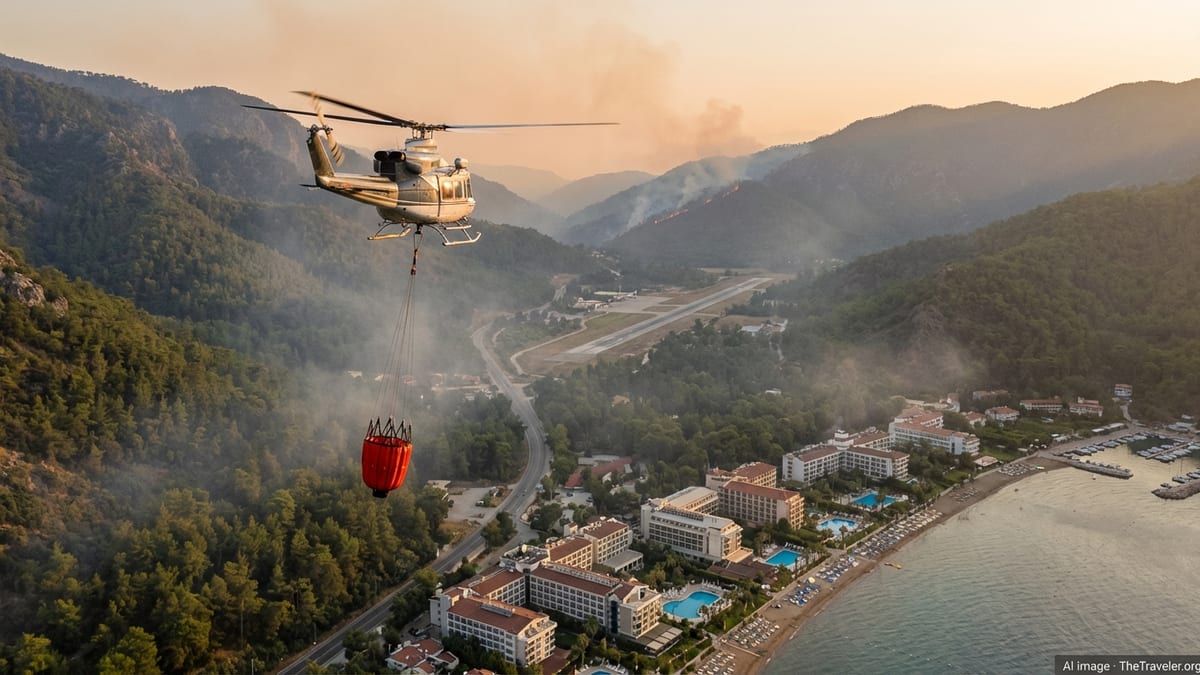
A fierce heatwave across the Mediterranean is driving fast moving wildfires and forcing mass evacuations from popular coastal resorts in France, Spain, Portugal, Italy and Greece, with travel disruption intensifying as Europe enters the core of the summer tourism season.
Get the latest news straight to your inbox!
France Emerges as New Wildfire Epicentre
France has moved to the forefront of the Mediterranean wildfire emergency after days of record breaking temperatures left landscapes tinder dry and vulnerable to ignition. Publicly available information shows that multiple blazes are now burning across southern regions including Aude, Var and Bouches du Rhône, following a heatwave that pushed the national heat index to unprecedented levels in late June.
Recent coverage indicates that nearly 3,000 people have been evacuated from campsites, coastal communities and rural homes in the south of the country as flames advanced toward built up areas. In Frejus, a resort town near Cannes, more than 2,000 holidaymakers were moved from six campsites as a precaution while water bombing aircraft and hundreds of firefighters attempted to hold back approaching fire fronts.
Tourism focused towns along the French Mediterranean are now operating with rolling road closures, beach access restrictions and heightened smoke conditions, complicating arrivals and departures for both domestic and international visitors. Travel industry reporting highlights growing concern among local operators that disruption at the very start of the July and August high season could hit hotel occupancy, campsite revenues and coastal tour bookings.
According to meteorological data cited in recent media reports, the current French heatwave built on several days of temperatures above 40 degrees Celsius in parts of the country, with night time lows remaining unusually high. The prolonged heat has dried vegetation and increased wind driven fire risk, leaving the country more closely aligned with the summer wildfire patterns long associated with Spain, Portugal, Italy and Greece.
Spain and Portugal Battle Flames Near Key Holiday Corridors
Across the Pyrenees, Spain and Portugal are confronting parallel wildfire outbreaks that are already affecting major tourist regions and road corridors. Video footage shared by European broadcasters shows large columns of smoke rising near Spain’s Costa Brava after a fast moving fire ignited close to La Bisbal d’Empordà, roughly 20 kilometres from Mediterranean beaches that attract millions of visitors each year.
Regional authorities in Spain have announced evacuations of rural properties and temporary closures of secondary roads as they seek to keep tourists and residents away from dangerous fire zones. Recent reports also describe intense firefighting efforts, with teams contending with gusty winds and temperatures well above seasonal norms, complicating containment attempts around popular coastal and inland sightseeing areas.
In neighbouring Portugal, national emergency bulletins and European news coverage indicate that the government has activated the European Union civil protection mechanism to request additional support as multiple blazes burn in the north of the country. Communities in high risk interior districts have seen evacuations and precautionary relocation of visitors staying in rural guesthouses and nature focused accommodations.
While Portugal’s main beach destinations have, so far, been less directly affected by flames, the combination of extreme heat alerts, smoke filled skies in some regions and the memory of previous deadly fire seasons is weighing on traveller sentiment. Travel insurers and risk analysts are warning that continuing heat, coupled with shifting winds, could quickly bring new fire threats closer to established tourist routes and airports.
Italy and Greece Brace for Peak Season Stress
Italy and Greece, which have endured repeated summer fire crises in recent years, are again under pressure as the Mediterranean heat dome expands eastward. Italian media has highlighted red level heat alerts in major cities including Rome and Milan, alongside warnings for smaller coastal and island destinations where infrastructure is more stretched during July and August.
Transport observers note that rail networks and highways in northern and central Italy are already contending with speed restrictions and maintenance issues linked to prolonged heat. In previous years, similar temperature spikes have forced temporary track slowdowns, increased risk of roadside fires and occasional power supply problems that ripple into station and airport operations. Industry analysts suggest that a comparable pattern is now beginning to re emerge as the latest heatwave intensifies.
In Greece, where wildfires are a recurring feature of summer, recent news reports describe multiple blazes in central regions and continuing concern around densely forested areas near popular island and mainland resorts. Memories of past evacuations on islands such as Rhodes and Evia remain fresh in the minds of tourism operators, who are closely monitoring wind forecasts and fire danger indexes as bookings reach their annual peak.
Publicly available information from aviation and ferry operators indicates that contingency plans are being reviewed for possible route changes or schedule disruptions if smoke, strong winds or emergency operations affect ports and island airstrips. Local authorities are also promoting heat awareness campaigns aimed at both residents and visitors as temperatures climb and fire risk rises.
Airports, Airlines and Tour Operators Confront Growing Disruption
The cumulative effect of the heatwave and wildfires across France, Spain, Portugal, Italy and Greece is now evident in mounting travel disruption. Aviation tracking data highlighted in European media shows pockets of delays at several Mediterranean airports as aircraft are rerouted around smoke plumes, departures are slowed by reduced visibility or ground operations are constrained by extreme tarmac temperatures.
In southern France, regional airports serving the Riviera and Languedoc have faced intermittent ground stops and diversions when nearby fires intensified, according to travel industry briefings. While most major hubs remain operational, passengers have been warned to expect longer queues, schedule changes and potential missed connections as airlines adjust flight plans on short notice.
Tour operators specialising in beach and camping holidays report a spike in customer inquiries about safety conditions, refund policies and options to switch destinations within Europe or to cooler regions such as Scandinavia and the Alps. Travel insurance providers are also seeing increased demand for policies that include explicit wildfire and extreme heat disruption clauses, reflecting growing awareness among holidaymakers of climate related risks.
Industry analysts caution that even short lived closures of airports, highways or tourist zones can have an outsized impact when they coincide with school holidays and peak weekly changeover days. A concentration of disruption across several Mediterranean countries at once amplifies the challenge, as spare capacity in alternative destinations or on other routes is more limited.
Tourism Industry Faces Climate Adaptation Test
The latest Mediterranean wildfires are sharpening debates over how Europe’s tourism industry will adapt to increasingly frequent and intense heatwaves. Climate researchers quoted in recent international coverage note that extreme heat events in the region are becoming longer and more severe, raising the probability of large wildfires and associated travel chaos during what has traditionally been the most profitable period of the year for coastal destinations.
Hotel groups, campsite operators and destination marketing organisations in France, Spain, Portugal, Italy and Greece are now re examining high season planning assumptions that once treated late June to August as relatively predictable. Strategies under discussion range from shifting promotional campaigns toward shoulder seasons, to investing in fire resistant landscaping, smoke management systems and more robust evacuation procedures for large complexes.
European Union initiatives, including pre positioning of firefighting aircraft and cross border rapid response teams, have been cited in public documentation as crucial tools for limiting the worst impacts on communities and visitors. However, analysts argue that the geographic spread of this year’s fires and heat alerts shows how quickly capacity can be stretched when multiple countries face simultaneous crises.
For travellers, experts recommend closely monitoring local weather alerts, airline and tour operator bulletins, and national civil protection advisories in the days leading up to departure. As France increasingly joins Spain, Portugal, Italy and Greece in experiencing severe wildfire conditions at the height of summer, the traditional image of a carefree Mediterranean holiday is being reshaped by the realities of a warming climate and the complex logistics of keeping visitors safe.