


More news on this day
Passengers on Qantas flight QF21 from Melbourne to Dallas Fort Worth on May 15 faced significant disruption when the ultra-long-haul service diverted to Tahiti following a serious onboard incident involving an unruly traveler.
Get the latest news straight to your inbox!
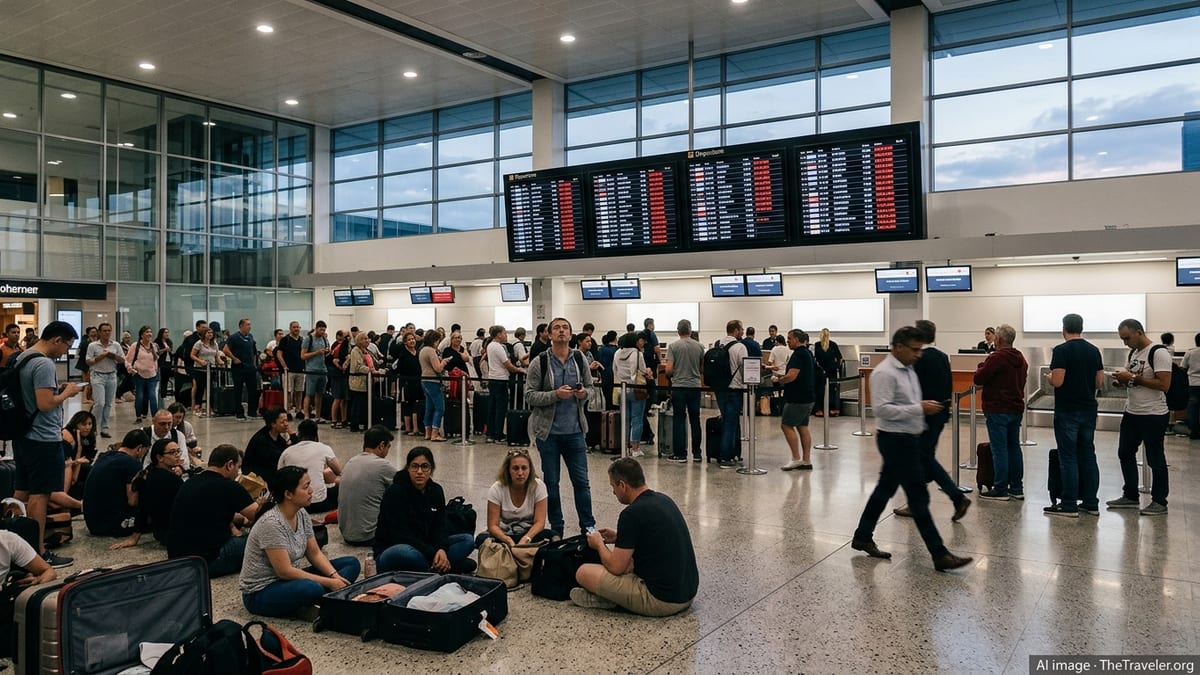
Mid-Pacific Diversion Turns Nonstop Route Into 19-Hour Odyssey
Publicly available flight-tracking information and aviation incident reporting show that Qantas flight QF21, operated by a Boeing 787-9, departed Melbourne on 15 May bound for Dallas Fort Worth but diverted mid-Pacific to Papeete, Tahiti. The aircraft landed at Fa'a'a International Airport so local authorities could meet the flight and remove a disruptive passenger.
Reports from aviation-focused outlets indicate the diversion followed an altercation in which a passenger allegedly bit a member of the cabin crew. Fellow travelers reportedly helped restrain the individual in the cabin until the aircraft could land safely. The incident transformed what is already one of the world’s longest scheduled routes into an extended and highly disrupted journey.
Operational data show that after refueling and completing formalities on the ground in Tahiti, the 787 continued on to Dallas Fort Worth, arriving several hours behind its planned schedule. The unscheduled stop added substantial flying time and additional ground delays, contributing to a total disruption window of more than three hours for those booked through to Texas.
The Melbourne to Dallas service is a key long-haul link for Qantas, offered as a nonstop option multiple times per week. The mid-ocean diversion underscored how a single serious incident on board can have consequences far beyond the aircraft itself, particularly on routes where diversion airports are limited and remote.
Knock-On Impact for Connections Across North America
Because QF21 is structured to feed a wide bank of onward departures from Dallas Fort Worth, the timing of the diversion had a cascading effect on travelers headed to cities across the United States, Canada and Latin America. Published coverage and traveler accounts highlight that many passengers missed tightly timed connections, even after the flight completed its journey to Texas.
Dallas Fort Worth serves as a major hub for transpacific itineraries, with schedules carefully built around minimum connecting times. When long-haul arrivals are pushed back by several hours, rebooking options can quickly narrow, especially late in the day when onward flights are close to full or have already departed.
According to reports from flight-tracking services, QF21 ultimately reached Dallas more than three hours behind schedule. For passengers connecting onward to destinations such as New York, Chicago and various regional U.S. airports, that delay often meant overnight stays, rerouting through alternative hubs or, in some cases, splitting travel parties across multiple flights.
Travel industry analyses note that ultra-long-haul services like Melbourne to Dallas are particularly vulnerable to disruption ripple effects. With only a single daily or near-daily frequency and limited alternative nonstop options, any large delay can trigger complex rebooking chains that stretch across airline partners and alliances.
Unruly Passenger Behavior Under Fresh Scrutiny
The Tahiti diversion places renewed focus on unruly passenger behavior at a time when aviation regulators and airlines worldwide are reporting heightened concern about in-flight incidents. Industry summaries compiled over recent years show a steady flow of cases involving physical altercations, intoxication and failure to follow crew instructions.
In this case, aviation news reports indicate that the passenger involved has received a permanent or indefinite travel ban from Qantas. Such bans have become a more visible tool for airlines seeking to deter severe misconduct and reassure travelers and crew that aggressive behavior will carry lasting consequences.
While severe cases like the Melbourne to Dallas diversion remain relatively rare compared with the millions of passengers carried safely each month, carriers and cabin crew unions have repeatedly highlighted the strain caused by even a single serious episode. Diversions not only disrupt schedules but also involve additional fuel burn, landing fees and complex logistics for handling passengers and crew at unscheduled airports.
Safety specialists frequently stress that removing a disruptive passenger at the earliest safe opportunity is preferable to continuing across remote stretches of ocean with an unresolved security concern. The QF21 diversion, occurring over the South Pacific with limited alternate airports available, illustrates why operators build contingency planning into long-haul routes.
Timing Clashes With Wider Weather and Hub Disruptions
The disruption on the Melbourne to Dallas route has unfolded against a backdrop of broader operational challenges affecting Dallas Fort Worth in mid-May. Separate weather systems moving across North Texas around 18 and 19 May prompted temporary ground stops and hundreds of cancellations and delays, according to airport and media reports.
For travelers heading to or from Australia, this combination of a high-profile mid-air incident and later weather-driven interruptions created an extended period of uncertainty around connections through Dallas. Some passengers arriving on subsequent QF21 services encountered tight connection windows at a time when schedules were already stretched by storms and congestion.
Travel data providers tracking the Melbourne to Dallas corridor show that Qantas continues to list QF21 as operating, with a typical schedule of several nonstops per week. However, recent days have highlighted how quickly conditions can shift, whether due to events inside the cabin or rapidly changing weather patterns at a major U.S. hub.
Analysts note that for long-haul passengers planning complex trips that rely on Dallas connections, monitoring both airline status updates and local weather advisories has become increasingly important. Delays at a single hub can ripple back across the Pacific, leaving little margin for tight same-day connections.
What Travelers on the Melbourne–Dallas Route Should Expect Now
Following the Tahiti diversion, public information suggests that Qantas has kept its Melbourne to Dallas operation in place, with QF21 continuing to appear in schedules and availability tools. There is no indication at this stage of a long-term suspension of the route, and the incident appears to be treated as an isolated case linked to one passenger’s behavior.
Travel experts generally advise that passengers booked on future QF21 departures allow extra buffer time for onward connections out of Dallas, particularly while the region continues to experience intermittent severe weather. Where possible, selecting itineraries with longer layovers or earlier arrival times can provide more options if delays occur.
Insurers and consumer advocates also point to the value of reading policy details carefully when booking ultra-long-haul journeys. While diversion-related delays due to security incidents or unruly passengers are typically outside an airline’s direct control, some comprehensive travel insurance products may offer limited compensation for missed connections, overnight accommodation or additional transport costs.
For now, the Melbourne to Dallas route remains a crucial bridge between Australia and the central United States. The diversion to Tahiti serves as a reminder that even highly optimized long-haul operations can be quickly reshaped by events in the cabin or shifting conditions on the ground, and that flexibility is increasingly an essential part of modern air travel planning.