


Menton, the self proclaimed “Pearl of France,” sits almost on the Italian border, with pastel facades, palm lined promenades, and a microclimate that keeps terraces busy long after the rest of the Riviera cools down. In 2026 it remains one of the Côte d’Azur’s most appealing bases for travelers who want Riviera sunshine, swimmable beaches, and authentic neighborhood life without the prices and crowds of nearby Monaco and Nice. This guide gathers the best current attractions, beaches, and practical local tips to help you make the most of a stay in Menton.
Get the latest updates straight to your inbox!
Why Menton Belongs on Your French Riviera Itinerary
Menton lies in the far east of the Provence Alpes Côte d’Azur region, a short hop from the Italian town of Ventimiglia and about 40 kilometers from Nice. Trains along the coast connect these points in roughly 40 minutes, which means you can enjoy quieter evenings in Menton while still doing easy day trips to Monaco, Èze, or even Cannes. Many recent visitors use Menton as a home base because hotel prices are often lower than in central Nice, especially in peak summer, yet you still get sea views and a compact, walkable town center.
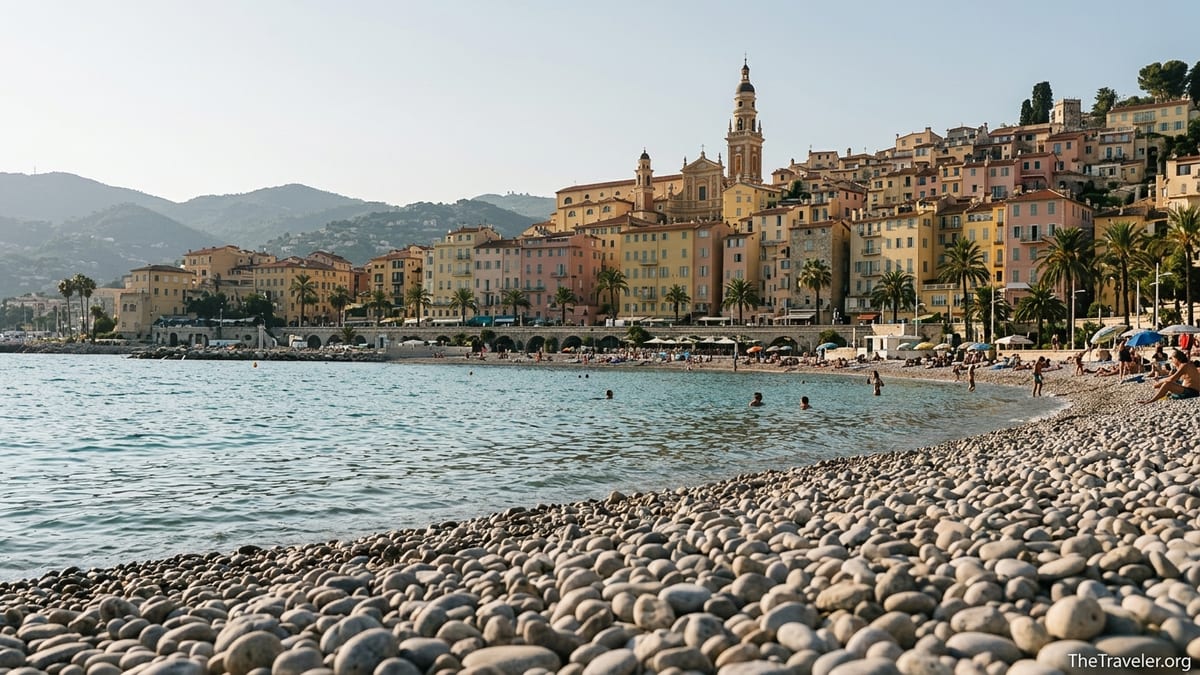
The town’s setting is part of the magic. Colorful houses cascade down the hill from the Baroque basilica towards the Mediterranean, framed by terraced gardens and mountains just inland. Thanks to its sheltered bay and southerly exposure, Menton enjoys a particularly mild microclimate, with more than 300 days of sunshine reported most years and winter temperatures that often feel closer to spring. This climate is one of the reasons citrus trees thrive here and why lemon motifs appear on everything from ceramics to pastries.
Compared with glitzier Riviera neighbors, Menton feels more small town and local. You will still see superyachts off Monaco if you hop on a quick train, but in Menton the pace is slower: older residents chatting on benches along the Promenade du Soleil, children playing on pebble beaches after school, and markets where regulars buy vegetables and locally grown lemons. For many travelers this balance of authentic daily life and picture perfect scenery is the real draw.
Menton has also evolved in the last decade into a discreet food destination. High profile restaurants like Mirazur, just above town, helped put it on the map, but there is also a good selection of mid range bistros and casual beachside spots serving socca, niçoise specialties, and pasta dishes that reflect the border location. Combined with reliable train links and mostly car free sightseeing, Menton works well for both short getaways and longer slow travel stays.
Top Sights and Experiences in Menton
Start in the Vieille Ville, Menton’s Old Town. Climb the stepped lanes up to the parvis in front of the Basilique Saint Michel Archange, whose bell tower is one of the town’s most recognizable silhouettes. From the square you get sweeping views over the tiled roofs and harbor, especially atmospheric in late afternoon when the facades take on a warm golden hue. Continuing a little higher brings you to the Cimetière du Vieux Château, a peaceful cemetery with some of the best panoramic views on the coast, out towards Cap Martin and Italy.
Back at sea level, the Promenade du Soleil stretches along the waterfront, dotted with palm trees, benches, and Belle Époque buildings. It is the town’s social spine, used by joggers at sunrise, families on evening strolls, and visitors drifting between public beaches and private beach clubs. Just off the promenade you will find the Jean Cocteau Museum area; the dedicated museum building is closed as of mid 2026 following storm damage, but the seafront setting remains pleasant and some works are periodically shown in alternative spaces, so check locally for temporary exhibitions.
Even if you only have a day, it is worth exploring at least one of Menton’s notable gardens. The Val Rahmeh Botanical Garden, managed by the French National Museum of Natural History, is known for its rare subtropical plants and quiet shaded paths. La Serre de la Madone, created by British garden designer Lawrence Johnston, offers another perspective with terraced layouts, water features, and viewpoints back towards the sea. Entry fees are modest, usually under 15 euros per adult, and both gardens are easily reached by local bus or on foot from the center if you do not mind a slightly uphill walk.
For a different angle on the coastline, many travelers take a half day to walk a stretch of the coastal path around nearby Roquebrune Cap Martin. The Sentier des Douaniers or related seaside paths hug the rocks above the water, with access points reachable by train from Menton in 5 to 10 minutes. You can walk part of the route and return by train from another station, combining a gentle hike with swim stops in small coves along the way.
The Best Beaches in and around Menton
Menton’s beaches run almost uninterrupted along the town’s waterfront, but they differ in feel and practicality. Closest to the Old Town, Plage des Sablettes is framed by the pastel skyline and basilica overhead. Despite the name it is mostly fine pebbles rather than sand, but the gentle slope and sheltered position make it a favorite for families and visitors who want the classic postcard view. In summer you will find a mix of free public space and private beach sections with sun lounger rentals and simple seafood restaurants directly on the water.
Moving west along the Promenade du Soleil, beaches such as Plage du Marché and Plage du Casino sit opposite cafes and hotels, convenient if you want to duck across the street for lunch or a coffee. These stretches tend to be livelier, especially in July and August, with paddleboards for rent and families sharing the space with local teenagers and after work swimmers. Further west towards Carnolès, around Plage du Borrigo and Plage de Carnolès, the waterfront becomes more residential and the beaches slightly less crowded. Travelers staying in mid range hotels in this area often appreciate being able to cross the road straight onto a fairly quiet beach even at peak times.
Water quality along the Menton shoreline is generally good, with regular monitoring during the bathing season and clear, swimmable conditions most days in summer. As with much of the French Riviera, expect pebbles rather than sand, so many locals wear lightweight water shoes, which are easy to pick up at supermarkets or beach shops for under 20 euros. Public showers are spaced along the promenade, and most public sections of beach remain free, with no entry charge if you bring your own towel.
If you are staying several days, consider a short hop over the Italian border for a change of scenery. Trains from Menton to Ventimiglia take around 15 minutes, and from there or from the small intermediate stations you can access beach clubs like those in the Balzi Rossi area, which combine rocky coves with clearer water and more of an Italian holiday atmosphere. These clubs typically charge a daily fee for a lounger and umbrella, which can run from around 25 euros per person in shoulder season to higher prices in peak summer, similar to private beach pricing on the French side.
Food, Drink, and Menton’s Lemon Flavors
Menton’s food scene reflects both its Riviera location and its citrus heritage. Many menus feature a “cuisine mentonnaise” that blends French techniques with Italian influences and abundant local produce. In casual bistros you might find barbajuans, small fried pastry parcels filled with chard and ricotta like a cross between a ravioli and an empanada, or socca, a thin chickpea pancake served hot and lightly charred. Along the seafront and in the streets behind the market, pizzerias sit next to brasseries offering grilled fish and niçoise salads.
The town’s lemons, with protected indication of origin status, appear in both savory and sweet dishes. Lemon tarts, candied peel, and limoncello style liqueurs are easy to find in pastry shops and specialty boutiques. Many travelers pick up jars of lemon jam or olive oil infused with Menton lemon as portable souvenirs. During the annual Lemon Festival in February, which attracts large crowds and elaborate citrus sculptures, restaurants often create special lemon driven menus, though you will see lemon themed desserts on menus year round.
For a high end experience, some visitors book months ahead for a table at Mirazur, the acclaimed restaurant set on the hillside above town. It has held multiple Michelin stars and is known for its garden driven tasting menus. Prices are correspondingly high, and reservations require planning, but it has helped raise the town’s culinary profile. For more accessible options, mid range hotel restaurants such as those attached to seafront properties and independent spots in the Old Town offer set lunch menus that can represent good value, often around 20 to 30 euros for two or three courses at midday.
To experience local life, plan a morning visit to Menton’s covered market, the Marché des Halles, close to the Old Port. Stalls here sell seasonal fruit and vegetables, local cheeses, fresh fish, and prepared foods like pissaladière, a caramelized onion tart with anchovies and olives. This is an ideal place to pick up supplies for a picnic on the beach or a self catered apartment stay. Prices at market stalls are generally comparable to or slightly above supermarket prices but the quality and variety of produce tend to be better, especially in summer and early autumn.
Practical Tips: Getting There, Getting Around, and When to Go
Most international visitors reach Menton via Nice Côte d’Azur Airport. From the airport, the simplest route is usually by train: take the tram or bus into Nice Ville station, then a regional TER train towards Ventimiglia and get off at Menton or Menton Garavan, depending on where you are staying. The ride from Nice Ville to Menton usually takes about 40 minutes, with tickets often around 5 to 7 euros one way in 2026. Trains run frequently through the day, though services can be busier on summer weekends and during major events like the Monaco Grand Prix.
Once in town, you rarely need a car. The center, seafront, and Old Town are compact and walkable, and local buses link outlying neighborhoods and gardens. For day trips, regional trains are usually more convenient than driving; they connect Menton to Monaco in around 10 to 15 minutes, to Nice in under an hour, and to Italian towns just across the border. If you do arrive by car, be aware that street parking near the Old Town and promenade is limited, especially in July and August, and paid underground car parks fill quickly at peak times.
The best time to visit depends on your priorities. For beach weather with fewer crowds, late May, June, and September are often ideal, with warm water and long daylight hours but slightly lower hotel rates than in high summer. July and August bring the liveliest atmosphere and the highest prices, along with fuller trains and busier beaches. Winter is relatively mild; in January and February, daytime temperatures often sit around 10 to 15 degrees Celsius, and many hotels stay open. This is a good season for garden visits, leisurely walks, and the Lemon Festival, though some beach clubs and smaller restaurants may close for a seasonal break.
Accommodation spans from small family run hotels in townhouses just behind the seafront to larger seafront properties with pools and terraces. Prices fluctuate by season, but in 2026 it is still possible to find simple double rooms in lower to mid range hotels from roughly 90 to 130 euros per night in shoulder season, while seafront rooms in higher category properties typically run higher, especially in July and August. Booking early is worthwhile for stays overlapping major events along the Riviera, when visitors often combine Menton with trips to Nice Carnival, Monaco races, or art festivals.
Where to Stay: Neighborhood Feel and Hotel Styles
Choosing the right part of Menton can shape your stay. If you want to step directly into the postcard view, look near the Old Town, the Old Port, and Plage des Sablettes. Here you will find smaller hotels and apartments in historic buildings, many with partial sea views and easy access to the market, basilica, and harbor. Even without a balcony, being able to walk a couple of minutes to sunrise over the water or a drink on the promenade in the evening is a major advantage for short stays.
Along the central Promenade du Soleil, especially between the casino and the Borrigo river, mid to larger hotels line the seafront, many with balconies facing the water and rooftop terraces. These properties suit travelers who prioritize direct beach access, on site restaurants, and amenities like 24 hour reception. Expect more traffic noise than in the Old Town back streets, balanced by wide sea views and immediate access to both public beaches and private beach clubs directly in front.
Further west towards Carnolès and east towards Menton Garavan, the atmosphere becomes more residential. Hotels here tend to be slightly more spaced out and often offer better value for money, especially for longer stays. You might trade a 15 to 20 minute walk into the Old Town for quieter evenings and broader options for street parking. For travelers planning frequent train based day trips, staying near either Menton or Menton Garavan station can be practical, cutting the time you spend walking with luggage or beach gear.
Apartment rentals are also widely available and appeal to travelers staying a week or more, families, or anyone keen to shop in the market and cook. When comparing options, check whether the building has air conditioning, which is important during July and August, and whether windows face the sea or a courtyard, as waterfront views come with more noise from the promenade. For hillside properties above town, confirm access details; some charming renovated houses and guest rooms are reached via steep stepped lanes that can be challenging with heavy suitcases or limited mobility.
Local Etiquette, Money Saving Ideas, and Safety
Menton is generally relaxed and welcoming, but a few local habits help visits go smoothly. Greetings matter: when entering small shops, bakeries, or market stalls, a simple “Bonjour” or “Bonsoir” to the staff is expected, and leaving without a quick “Merci, au revoir” can feel abrupt. On the beach, topless sunbathing is accepted on many public sections, but nude bathing is not the norm in central Menton, so check for signage if you are unsure. In churches and cemeteries, modest dress and quiet voices are appreciated, especially during services.
To keep costs in check, consider timing larger meals at lunchtime, when many restaurants offer fixed price menus that are noticeably cheaper than evening à la carte dining. Picking up picnic supplies in the Marché des Halles or local supermarkets for a few beach lunches can also save money: a baguette, cheese, fruit, and a bottle of water for two people can cost less than a single restaurant main course on the seafront. Public beaches are free, and it is perfectly acceptable to sit on your own towel instead of renting loungers, which can add up if used every day.
Menton is widely regarded as a safe destination for travelers. Petty theft exists, as in any tourist area, but violent crime is rare. Basic precautions such as keeping valuables out of sight on the beach when you go for a swim and watching your bag on crowded trains are usually sufficient. Late evening along the promenade is lively but not rowdy, more families and couples than nightclubs, though older teenagers gather in some squares on summer nights. If you are out late, trains back from nearby towns can be busy, so allow extra time and verify schedules in advance.
Language is rarely a barrier. English is spoken in most hotels and many restaurants, and younger staff in particular are used to international visitors. That said, a few words of French go a long way, and you may overhear Italian as well, reflecting the border location. For payments, cards are widely accepted, including for small amounts at bakeries and cafes, though it is still useful to keep some cash handy for small markets, bus tickets, and ice cream kiosks along the promenade.
FAQ
Q1. How many days should I spend in Menton?
Most travelers find that two to three full days is enough to explore the Old Town, enjoy the beaches, and visit at least one major garden, but a four to five day stay works well if you also plan day trips to Monaco, Èze, or Ventimiglia.
Q2. Is Menton a good base without a car?
Yes, Menton works very well without a car thanks to frequent regional trains and local buses. You can walk to most sights in town, and trains connect you quickly to Nice, Monaco, and Italian border towns for day trips.
Q3. Are the beaches in Menton sandy or pebbly?
The majority of Menton’s beaches are made up of small pebbles or coarse shingle rather than fine sand. Many locals use water shoes for comfort, and children usually manage well near the shoreline where the pebbles are smaller.
Q4. When is the Lemon Festival in Menton?
The Fête du Citron, or Lemon Festival, usually takes place over several weeks in February, featuring citrus sculptures, parades, and themed events. Exact dates and programs change each year, so check the latest schedule before booking if you want to visit specifically for the festival.
Q5. Can I swim in Menton outside the summer months?
Sea temperatures are warmest from late June to early October, but many residents swim earlier and later in the year on sunny days. In May and late October the water can feel cool but still manageable for short swims, especially around midday.
Q6. Is Menton expensive compared to other Riviera towns?
Menton is generally a little more affordable than high profile neighbors like Monaco or central Nice, particularly for accommodation and restaurant prices, though it is still part of the Côte d’Azur, so you should expect higher costs than in many inland French towns.
Q7. Do I need to book restaurants in advance?
For casual spots and most bistros, same day or walk in dining often works outside peak July and August weekends, but for popular seafront restaurants, garden view terraces, and especially for high end places like Mirazur, advance reservations are strongly recommended.
Q8. Which area is best to stay in Menton for first time visitors?
First time visitors usually enjoy staying near the Old Town, the Old Port, or along the central Promenade du Soleil, which keeps you close to the main beaches, markets, and train connections while offering plenty of cafes and restaurants within a short walk.
Q9. Is Menton suitable for families with young children?
Yes, Menton is very family friendly, with gently shelving beaches, pedestrian friendly promenades, and parks and squares where children can play. Many hotels offer family rooms, and apartment rentals make it easy to prepare simple meals and keep flexible schedules.
Q10. How close is Menton to Italy, and can I visit for a day?
Menton sits right next to the Italian border, and regional trains reach Ventimiglia in around 15 minutes, making a cross border day trip easy. Many visitors spend a morning exploring Italian markets or beach clubs and return to Menton in time for dinner.