


Menton, the last French town before the Italian border, often slips under the radar of travelers focused on Nice, Cannes, or Monaco. Yet this pastel-colored coastal city, framed by citrus groves and steep mountains, has quietly become a favorite for travelers seeking a slower, more local slice of the Riviera. Is Menton worth visiting, and what should you know before you go? Here is a clear, up-to-date look at what to expect, with practical examples to help you decide if it belongs on your itinerary.
Get the latest updates straight to your inbox!
Where Is Menton and What Kind of Traveler Will Like It
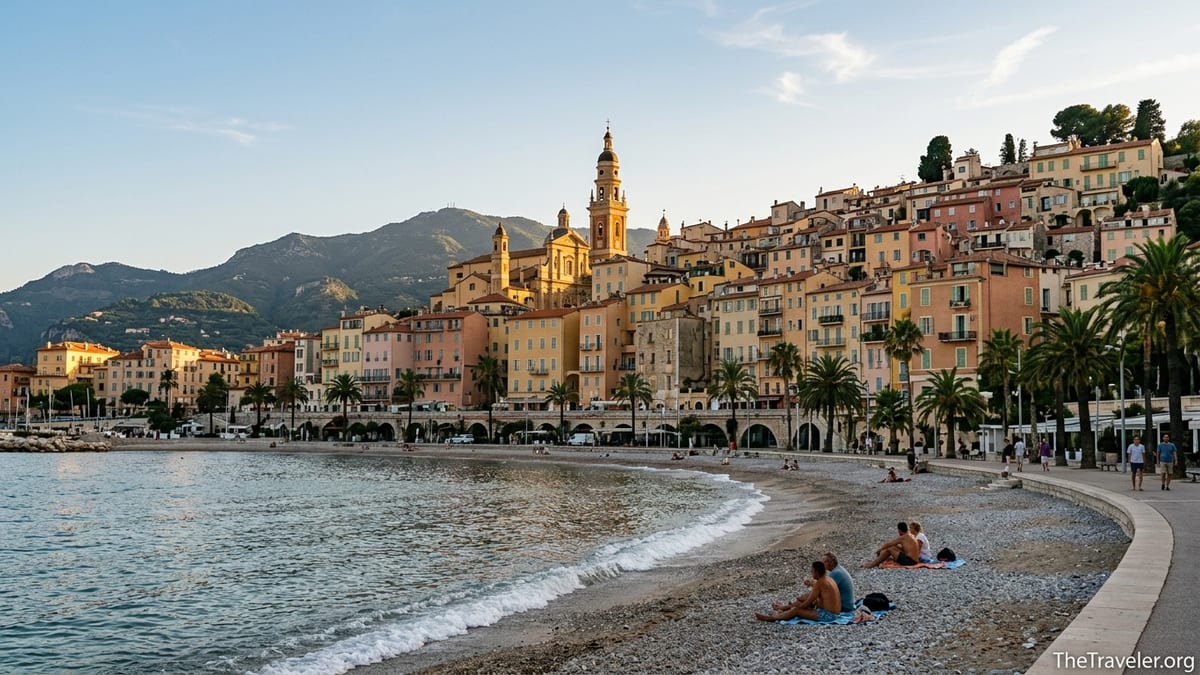
Menton sits at the far eastern end of the French Riviera, a few minutes from the Italian border and less than 40 minutes by regional train from Nice. Despite this easy access, it feels noticeably calmer than its glitzier neighbors. Color-washed buildings climb the hillside, small fishing boats still bob in the harbor, and even in high season the old town can feel more like a lived-in community than a stage set. For many visitors, that is precisely the appeal.
If you enjoy leisurely days of wandering historic streets, lingering over long lunches, and swimming from pebbly beaches rather than rushing between museums and must-see attractions, Menton fits well. It especially suits couples, mature travelers, and solo visitors looking for a base with a neighborhood feel. Families with younger children also appreciate the relatively gentle sea, the long seafront promenade, and several small playgrounds along the waterfront.
Travelers who thrive on nightlife, designer shopping, and packed event calendars may find Menton quiet. Bars do exist, especially along the seafront and around the old town, but you will not find the club scene of Cannes or Saint-Tropez. Many visitors who stay in Nice or Monaco choose Menton as a day-trip destination. Increasingly, though, travelers are using it as a calmer base and visiting Monaco, Èze, and even Ventimiglia in Italy on easy day trips.
In practical terms, Menton can work either as a two- or three-night stop within a wider Riviera itinerary, or as a full weeklong base for travelers who prefer swimming, short excursions and good food over constant sightseeing. If your ideal day includes a morning dip, a market visit, and an afternoon in a garden or on a terrace with a book, Menton is likely to feel deeply satisfying.
Top Reasons Menton Is Worth Visiting
One of Menton’s strongest draws is its microclimate. Sheltered by mountains and facing south, it is often a few degrees warmer than Nice. That extra warmth is what allows Menton’s famed lemons and other citrus fruits to thrive, and it also extends the beach season. In a mild year, you might comfortably eat lunch outdoors on the seafront in late October or swim on sunny days in May and early June.
Architecturally, the town is one of the most photogenic on the Riviera. The Baroque Basilica of Saint-Michel and its campanile dominate the skyline above a tight maze of ochre and terracotta houses. Photographers often head to the eastern side of town, near the Plage des Sablettes, at sunset to capture the pastel facades glowing against the sea. Unlike some resort towns that feel rebuilt around modern hotels, large sections of Menton’s old town retain their original street layout and scale.
Food is another major reason Menton earns repeat visitors. The three-Michelin-starred restaurant Mirazur, perched above town, has drawn global attention and is frequently booked months ahead. Even if you never set foot inside Mirazur, its presence has encouraged a broader food culture. You will find plenty of mid-range bistros offering dishes built around local citrus, olive oil, and vegetables from the hinterland. A typical lunch of grilled fish with lemon, a glass of local wine, and coffee on the seafront might come to the equivalent of 25 to 35 euros per person, noticeably less than comparable spots in Monaco.
Finally, Menton’s position at the crossroads between France and Italy makes it a strong base for day trips without a car. Regional trains can carry you west to Villefranche-sur-Mer and Antibes, or east to Ventimiglia for its sprawling Friday market. Buses and hiking trails connect to hill villages like Sainte-Agnès and Gorbio, where stone streets, chestnut trees, and sweeping sea views offer a very different side of the Riviera.
Experiences You Should Not Miss
For many travelers, the covered market near the seafront is the first memorable experience. Visit in the morning to see stalls piled with Menton lemons, sun-ripened tomatoes, socca vendors frying chickpea pancakes, and cheesemongers offering local goat cheeses. Even if you are staying in a hotel without a kitchen, it is easy to assemble a picnic from fresh bread, olives, fruit, and a wedge of cheese to enjoy on a bench along the promenade.
The old town deserves at least half a day. Climb slowly up the stepped lanes to the Basilica of Saint-Michel and the adjoining cemetery, where you will be rewarded with panoramic views over the tiled rooftops, harbors, and across to Italy. The ascent includes plenty of viewpoints where you can pause for photos. In the late afternoon, when the sun softens and day-trippers drift back toward Nice and Monaco, the upper lanes can feel surprisingly peaceful.
Menton is also known for its gardens, which benefit from the mild climate. Jardin Serre de la Madone and Jardin Botanique Val Rahmeh, among others, showcase exotic and Mediterranean species in layered, shaded terraces. Entry fees are typically in the range of a modest museum ticket, and many visitors appreciate them as cooling retreats on hot summer afternoons. If you are visiting during shoulder season in late winter or early spring, the gardens can be filled with camellias, magnolias, and of course citrus in fruit.
For a very local experience, spend an evening on the Promenade du Soleil. On warm nights, residents stroll, children ride scooters, and diners fill the terraces of casual pizzerias and brasseries facing the sea. Ordering a simple pizza, a carafe of house wine, and a lemon sorbet for dessert can still come in under the price of a single cocktail at an upscale bar in Monaco, which is part of Menton’s quiet appeal.
The Lemon Festival and When to Visit
Menton’s most famous event is the Fête du Citron, the Lemon Festival, which typically takes place from mid-February to early March. In 2025, for example, the 91st edition ran from 15 February to 2 March, with giant citrus sculptures in the Biovès gardens and themed parades featuring illuminated floats built from lemons and oranges. In 2026 and beyond, the festival is expected to continue on similar late-winter dates, though exact themes and schedules can vary from year to year.
During the festival, Menton transforms into a lively carnival town. Hotels fill quickly, and room rates can rise noticeably compared with a normal February weekend. Ticketed events include daytime and nighttime parades along the seafront and evening visits to the illuminated citrus displays in the gardens. Food stalls sell everything from lemon marmalade and candied peel to limoncello and lemon-flavored craft beer. If you enjoy local festivals and do not mind crowds, this is one of the most distinctive times to visit.
Outside of the Fête du Citron, Menton’s rhythm changes with the seasons. Summer, especially July and August, brings warm seas and long beach days, but also higher prices and denser crowds on the narrow lanes. Early summer in June and early autumn from mid-September to early October often strike a good balance: you still have swim-friendly water temperatures and long evenings, but the town feels less compressed and hotel rates are usually more manageable.
Winter, aside from the festival period, can be a pleasant surprise. While you should not expect beach days in January, daytime temperatures often feel mild enough for outdoor café seating, and blue-sky days are common. Many travelers use Menton as a base for winter hiking in the nearby hills or for quiet cultural visits without the pressure of peak-season tourism.
Costs, Accommodation and Dining: What to Expect
Compared with Nice or Monaco, Menton often feels like good value, though it is still part of the French Riviera and priced accordingly. In high summer, mid-range hotels or guesthouses in or near the old town commonly charge rates that would be considered moderate-to-high in many European cities. In shoulder seasons like May or October, prices can drop noticeably, and you may find sea-view rooms for amounts that in Monaco might only secure you a room facing a courtyard.
Short-stay apartments and small hotels clustered behind the seafront are popular with budget-conscious travelers. They may offer compact rooms but put you within a few minutes’ walk of the market, beaches, and station. If you are traveling in a group or as a family, renting a small apartment with a balcony can reduce daily costs by allowing you to cook simple meals using market ingredients while still going out for dinners several times during your stay.
In restaurants, menu prices are generally lower than in Monaco and roughly comparable to those in Nice. A typical café breakfast of a croissant, orange juice, and coffee at a bar counter might cost only slightly more than in inland French towns, especially if you avoid the most prominent seafront terraces. At lunch, many bistros offer a fixed-price formula, such as a starter and main course or main course and dessert, at a price bracket that makes it reasonable to eat out daily if you choose carefully.
For fine dining, planning ahead is crucial. Mirazur often needs reservations months in advance, particularly for weekend evenings and festival periods. Other appreciated addresses include smaller bistros and Italian-influenced trattorias that highlight fish, vegetables, and of course Menton lemons. If you are sensitive to budget, consider choosing one special-occasion meal and keeping other dinners simpler: sharing a large pizza and a carafe of wine on a casual terrace can still be a memorable experience when the sea is just across the road.
Getting to Menton and Getting Around
Most international visitors reach Menton via Nice, whose airport is the main gateway to the French Riviera. From Nice-Ville train station, frequent regional TER trains run eastward along the coast, stopping at Villefranche-sur-Mer, Monaco, and Roquebrune-Cap-Martin before arriving in Menton and Menton-Garavan. Journey times typically hover around 35 to 45 minutes depending on the service. Trains are a practical choice for both day-trippers and overnight visitors, and they run reasonably late into the evening, though schedules thin out after about 9 or 10 pm.
If you are traveling from Italy, regional trains connect Ventimiglia with Menton, crossing the border in under half an hour. Many travelers like to use Menton as a bridge between an Italian Riviera stay and the French side. Do remember that ticketing rules can change at the border, and it is wise to check whether regional passes valid in France cover the Italian section or if you need a separate ticket from Ventimiglia to Menton.
Within Menton itself, you can comfortably explore the main sights on foot. The old town is compact, though some streets are steep and involve steps. The seafront promenade is flat and stretches for several kilometers, linking different beach areas. Local buses run to outlying neighborhoods and nearby villages, and taxis or ride-hailing services can bridge the gap if you arrive with heavy luggage or mobility issues.
Parking in the center can be challenging and often paid, particularly in high season and during the Lemon Festival. Unless you are planning extensive excursions into the mountain villages or inland valleys, many visitors find that a car adds stress without significant benefits. If you do drive, choosing accommodation with dedicated parking can save considerable time and frustration.
Beaches, Weather and Practical Tips
Menton’s beaches are predominantly pebbly or made of coarse sand and small stones, typical of much of the French Riviera. Public stretches alternate with private beach clubs that rent loungers and umbrellas. The Plage des Sablettes near the old town, with its view of the stacked houses and basilica, is a favorite for visitors who value scenery. Farther east toward Menton-Garavan, beaches can feel a bit quieter, especially outside school holidays.
The sea is usually calm, shielded to some degree by breakwaters, which makes it suitable for relaxed swimming and for families with children who are comfortable in the water. Water temperatures peak in late summer, but many locals and visitors continue to swim well into September and early October. Outside the core summer season, you may find that some beach clubs close and lifeguard presence becomes limited, so check local information before swimming.
Weather-wise, Menton enjoys more sunshine and slightly warmer temperatures than many parts of the Riviera. Light layers work well for much of the year, with a light jacket or sweater for evenings and winter days. In July and August, heat and humidity can make midday sightseeing tiring, so planning indoor or shaded activities in early afternoon and focusing hikes or long walks on mornings and late afternoons is wise.
As in many small Mediterranean cities, supermarkets and many shops close for a few hours at midday or on Sundays, especially outside high summer. Restaurants may keep more limited hours than in large cities; it is common for kitchens to close between lunch and dinner service. Having a flexible attitude to meal times, and perhaps carrying a small snack from the market or bakery, helps avoid frustration if you arrive at a restaurant just after the lunch service has ended.
The Takeaway
So, is Menton worth visiting? For travelers who value atmosphere over spectacle, the answer is usually yes. It offers a blend of historic charm, mild climate, accessible beaches, and strong food culture that feels distinctly less pressured than some of its more famous neighbors. Its position between France and Italy adds depth to even short stays, with easy day trips in both directions.
At the same time, Menton is not for everyone. Travelers whose ideal Riviera experience centers on luxury shopping, late-night parties, and large museums may be happier basing in Nice, Cannes, or Monaco and treating Menton as a gentle day trip. The town also runs on a slower rhythm, with limited nightlife and steeper, stepped lanes that can be challenging for some visitors.
If you imagine yourself enjoying long seaside strolls, market picnics built around citrus and olives, garden visits in the soft winter light, and balcony sunsets rather than club lights, Menton is likely to feel not only worth a visit but worth lingering in. Choosing the right season, booking accommodation early for festival or summer dates, and planning a mix of local wandering and a few targeted excursions will help you get the best out of this quietly compelling corner of the Riviera.
FAQ
Q1: Is Menton worth visiting if I am already staying in Nice?
Menton makes an excellent day trip from Nice, especially if you want a calmer, more traditional-feeling town. The regional train ride is short and scenic, so even a half-day visit for lunch, a stroll through the old town, and a swim can feel rewarding.
Q2: How many days should I spend in Menton?
Many travelers find that one full day is enough for a first taste, but two to three nights allow you to explore the old town, gardens, and beaches at an easy pace and still fit in a day trip to Monaco or an inland village.
Q3: Is Menton expensive compared with Monaco and Nice?
Menton is generally less expensive than Monaco and broadly comparable with or slightly cheaper than Nice, especially for mid-range dining and accommodation. It is still part of the Riviera, so you should budget for higher prices than in many inland French towns.
Q4: When is the best time to visit Menton?
Early summer and early autumn often offer the best balance of pleasant weather and manageable crowds. If you enjoy festivals and do not mind higher prices and busier streets, visiting during the February Lemon Festival is particularly memorable.
Q5: Are the beaches in Menton suitable for children?
Yes, many families enjoy Menton’s beaches. The water is usually calm and there are gently sloping areas near the breakwaters. The beaches are mostly pebbly, so water shoes can make it more comfortable for children to enter and exit the sea.
Q6: Do I need a car in Menton?
Most visitors do not need a car. The town is walkable, and regional trains and buses connect to nearby destinations. A car can be useful if you plan to explore remote hill villages extensively, but parking in the center can be difficult and often paid.
Q7: Is Menton safe for solo travelers?
Menton generally feels safe for solo travelers, including those walking around the old town and seafront in the evening. As in any tourist destination, normal precautions apply, such as keeping valuables secure and avoiding poorly lit, unfamiliar areas late at night.
Q8: Can I visit Italy easily from Menton?
Yes, Menton is just minutes from the Italian border. Regional trains connect quickly to Ventimiglia, and many visitors spend a morning at its weekly market or combine Menton with an Italian Riviera stay.
Q9: Is Menton a good destination in winter?
Menton can be an appealing winter destination thanks to its mild climate. While you will not be sunbathing on the beach most days, you can enjoy coastal walks, garden visits, and café terraces in relatively soft weather, especially around the Lemon Festival period.
Q10: Is Menton suitable for travelers with limited mobility?
The seafront promenade and lower town are quite flat and easier to navigate, but the historic old town is steep and involves many steps. Travelers with limited mobility may wish to focus on the promenade, market area, and accessible viewpoints, and select accommodation with elevator access where possible.