


Menton sits quietly at the Italian border, sometimes overshadowed by Nice and Monaco, yet many French Riviera regulars end up calling it their favorite stop. With pastel facades, a mellow promenade and a famous love affair with lemons, it is an ideal base for first time visitors who want Riviera scenery without Riviera stress. This guide focuses on the best things to do in Menton if it is your first time on the French Riviera, with concrete examples of what to see, how to get around and what to realistically expect on the ground.
Get the latest updates straight to your inbox!
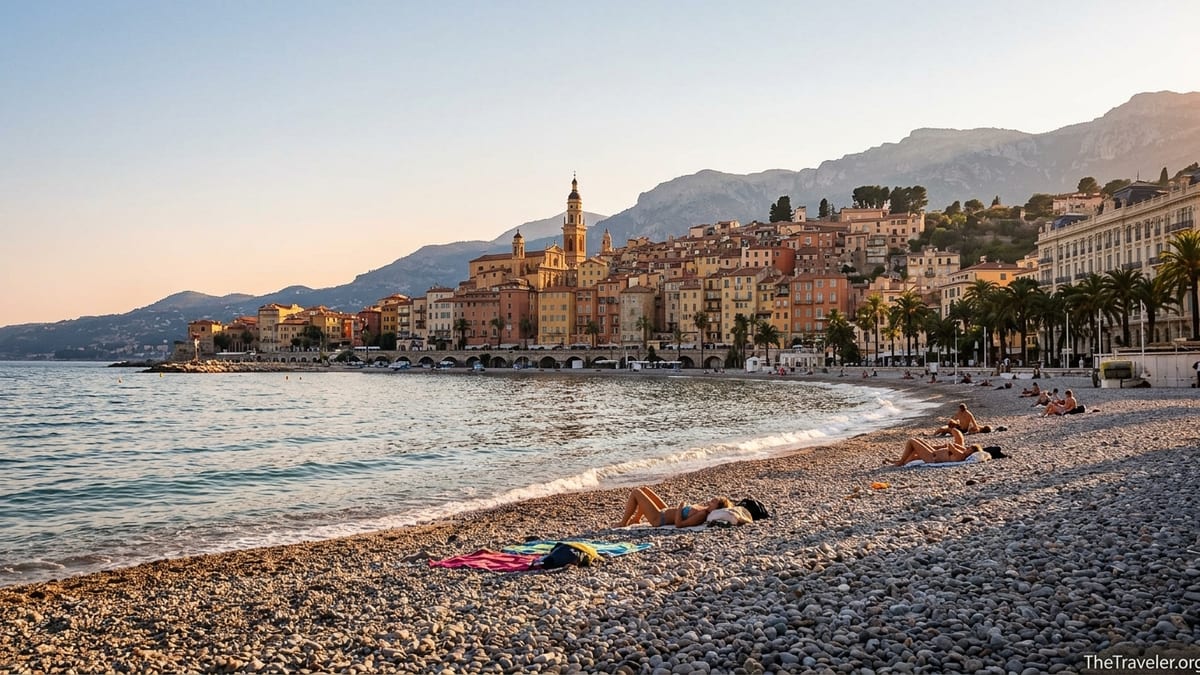
Stroll the Old Town and Climb to the Basilica Viewpoint
For a first visit, start in Menton’s compact old town, a tangle of ochre and salmon colored houses rising steeply above the sea. The atmosphere feels closer to a Ligurian village than a big French resort, which makes it especially pleasant if you are easing into the Riviera after a long travel day. From the seafront, follow the narrow lanes upward toward the bell tower that dominates the skyline. The walk is steep but short and you are never more than a few minutes from a cafe terrace if you need to catch your breath.
The architectural highlight is the Basilica of Saint Michel Archange, a baroque church set above a wide cobbled square reached by the zigzagging Rampe Saint Michel. The basilica dates back to the 17th century and its striped bell tower and ornate facade provide one of the Riviera’s most photographed backdrops. In summer, the square transforms into an open air stage for the Menton Classical Music Festival, so if you visit in August you may hear musicians rehearsing as you arrive.
Just above the basilica, keep climbing toward the Cimetière du Vieux Château, the old cemetery perched on the hilltop. It is both a tranquil historic site and one of the best free viewpoints in town, with sweeping views across Menton’s roofs, the curve of Baie de Garavan and the mountains that close in behind. On a clear day you can see along the coast toward Italy in one direction and Monaco in the other. Early morning or late afternoon is the most comfortable time to visit, especially in July and August when the steps can feel intense in full sun.
On your way back down, wander without a fixed route. Small details are part of Menton’s charm for first timers: laundry lines strung between houses, cats asleep on warm steps, a tiny grocer selling local lemons, and impromptu glimpses of the sea framed between buildings. Plan at least two hours for the old town and hilltop loop so you are not rushed.
Relax on Menton’s Beaches and Promenade du Soleil
Menton’s seafront is one long curve of beaches backed by the Promenade du Soleil, a flat waterfront walkway ideal for a first day when you may not want anything too demanding. The atmosphere is calmer than Nice, with fewer scooters and more families and locals simply strolling. Benches line the promenade and there are regular drinking fountains, useful in the hotter months of June through September.
If you want a postcard first impression, head to Plage des Sablettes at the eastern end of town, below the old port. This broad, gently shelving beach faces the pastel old town, so you can swim while looking back at Menton’s most famous view. The beach is mostly fine shingle rather than soft sand, so many visitors bring or buy inexpensive water shoes from beachfront shops. The water is usually clear and calm, which makes it popular with families and less confident swimmers.
Closer to the modern center you will find Plage du Marché and Plage du Casino, narrow stretches of pebbles backed by cafes, the casino building and Biovès Gardens. These beaches are convenient if you want to alternate between a swim and a coffee or if someone in your group prefers to wander the shops. There are both free public sections and private beach clubs where you can rent sun loungers and umbrellas for a day; prices vary but in recent seasons a full day lounger at a private beach club on this part of the coast often starts around a few dozen euros per person, with restaurant service to your chair.
For a quieter feel, walk a little further west toward Plage de Fossan or east toward Garavan bay. These stretches are less developed and appeal to travelers who prefer to bring their own towel and picnic. Wherever you choose, keep an eye on the sea conditions after heavy rain, when runoff can briefly cloud the water near river mouths. Otherwise, Menton’s beaches are known for good water quality and easy access, including designated handiplage facilities at Sablettes for travelers with limited mobility.
Discover Menton’s Love Affair with Lemons
Menton has long marketed itself as Europe’s lemon capital, and for a first time visitor this citrus heritage adds a playful thread to the trip. Even if you do not plan your dates around the famous Fête du Citron, which usually takes place in February with parades of floats covered in citrus fruit, you will encounter lemons everywhere from shop windows to restaurant menus. Local grocers and delicatessens often stack Menton lemons separately from imports, with slightly higher prices reflecting their local reputation.
In the compact center, specialty boutiques sell lemon themed products that make practical souvenirs. You will see jars of lemon jam, marmalade and curd, bottles of limoncello style liqueur, lemon infused olive oil and even lemon scented soaps and candles. A small jar of artisanal lemon jam might cost in the region of six to eight euros, while a boutique bottle of liqueur is usually closer to twenty. Buying directly from small producers or co operative style shops supports local agriculture and gives you a more distinctive gift than generic Riviera trinkets.
If you are interested in seeing where the fruit actually grows, you can dedicate a half day to visiting a lemon grove in the surrounding hills. Some family run orchards on the slopes behind town occasionally offer pre arranged tours where you can walk among terraced trees, learn how the microclimate protects citrus from frost and taste products made on site. These visits typically require advance booking and involve a short taxi or bus ride from the center, so check opening days carefully if you are visiting outside peak season when schedules can be more limited.
Food lovers should also look for lemon driven dishes on restaurant menus around the old town and seafront. You might find ravioli filled with ricotta and Menton lemon zest, fish baked in lemon and local olive oil, tarts piled with glossy lemon cream, or simple sorbets that are particularly welcome on humid August evenings. Ordering even one of these specialties at a modest brasserie or family restaurant is an easy way to anchor your first Riviera meal firmly in Menton rather than in a generic coastal setting.
Visit the Covered Market and Taste Local Flavors
Menton’s Marché des Halles, the covered market near the seafront, is an excellent stop for first time visitors who want to understand the town through its food. Housed in an early 20th century building with decorative brickwork, the market opens in the morning with stalls selling seasonal fruit and vegetables, olives, cheese, charcuterie, bread and fresh fish. It is busiest on weekends and slightly quieter on weekday mornings, though in summer it rarely feels empty.
A practical approach is to wander first, then circle back to buy picnic supplies once you have seen what is available. You might pick up ripe tomatoes, local goat cheese, a small tub of anchoïade or tapenade, a baguette and a bag of Menton lemons to take back to your rental apartment. Prices are higher than in a large out of town supermarket but in line with other Riviera markets; the trade off is fresher produce and the chance to talk directly with producers. Some vendors label items as coming from Menton or nearby valleys, which is useful if you prefer hyper local food.
Just outside the market you will find cafes with outdoor terraces where you can sit with a coffee and watch shoppers come and go. This is a good place to practice basic French phrases and get a feel for daily life rather than just tourist activity. If you are traveling with children or in a group, consider setting a meeting point near the market entrance so that everyone can wander independently for a short time before regrouping without stress.
From the market it is an easy walk back to the seafront, making it simple to combine a market visit with a beach picnic at Plage du Marché or a stroll east toward the old port. Even if you are only in Menton for a day trip from Nice, carving out an hour for the covered market can turn a generic sightseeing day into something more grounded and sensory.
Explore Menton’s Gardens and Jean Cocteau Connections
Menton’s subtropical microclimate has long attracted botanists and garden designers, and first time visitors often leave surprised by how green the town feels. On the inland side of the city, the Jardin botanique Val Rahmeh showcases exotic species from around the world, arranged around a Belle Epoque villa. Paths wind through palms, citrus trees and semi tropical plants, with shaded benches that provide relief on hot days. There is an admission fee, but it is modest by Riviera standards and the calm atmosphere can be a welcome contrast to busier seafront areas.
A little further into the hills, the garden known as Serre de la Madone offers a more intimate, layered landscape originally created in the early 20th century. Terraces, ponds and shaded corners make it appealing if you enjoy slower, contemplative walks rather than formal flowerbeds. Reaching these gardens from the seafront typically involves a bus ride or a taxi; visitors staying several days in Menton often choose one garden on their first trip and leave the other for a future visit to avoid over scheduling.
Back toward the sea, Menton also has a strong connection with the artist and writer Jean Cocteau, who spent considerable time here in the mid 20th century. The Bastion Museum, housed in a small 17th century fort on the harbor wall, displays a collection of his works in a space he helped decorate. Next to the beach and not far from the covered market, this museum is compact enough to visit in under an hour, which makes it an easy cultural stop even for travelers who normally prioritize outdoor activities.
Between the gardens and Cocteau sites, you can build a day that balances art and nature without leaving town. For a first timer on the Riviera who might be torn between visiting multiple coastal cities, concentrating your limited days in and around Menton in this way can be more satisfying than racing between too many different places.
Enjoy Easy Day Trips to Monaco, Italy and Coastal Walks
One reason Menton works so well for first time French Riviera visitors is its position at the end of the coastal rail line. From the main station, regular regional trains connect you to Monaco in around 10 to 12 minutes and to Nice in under an hour, with dozens of departures per day in recent seasons. Ticket prices for these short regional trips are typically only a handful of euros per person, so you can make spontaneous decisions based on weather without committing to expensive tours.
For a classic contrast, dedicate one day to Monaco. Trains from Menton arrive at Monaco Monte Carlo station, from where you can walk to the harbor, the Prince’s Palace and the Oceanographic Museum. Many travelers choose to spend the day exploring Monaco’s dense sights, then return to calmer and often cheaper Menton in the evening for dinner and a quieter night. This balance can be especially appealing during large events such as the Monaco Grand Prix, when staying directly in Monaco becomes extremely expensive and crowded.
In the other direction, Italy is only minutes away by train. Within a short ride, you can reach nearby towns over the border, where open air markets and slightly different food traditions await. For first time visitors, this cross border hop can be a simple way to add another country to your trip without the stress of long distance travel. Check schedules in advance, particularly outside summer or on public holidays, to avoid unexpected gaps in service.
If you prefer to stay on foot, coastal walks provide another low stress option. Paths link Menton with neighboring Cap Martin and beyond, offering sea views and occasional access to small coves. These walks are generally well marked but can be exposed to the sun, so plan them for early morning or late afternoon, carry water and wear suitable footwear. Combining a short train hop one way with a coastal walk back is a popular pattern for reasonably fit first time visitors who want to see more of the Riviera without renting a car.
The Takeaway
For first time French Riviera visitors, Menton offers an appealing mix of color, calm and convenient connections. You can spend your days climbing through the old town to basilica and cemetery viewpoints, lingering on Sablettes or Casino beach, tasting citrus flavored specialties at the market and in restaurants, and slipping into shaded gardens when the sun feels too strong. When you want more spectacle, Monaco and Italian towns sit just a short train ride away, turning Menton into a practical base rather than an isolated outpost.
Perhaps the most distinctive quality Menton offers a newcomer is its relaxed rhythm. The town has enough infrastructure to feel easy, with frequent trains, a reliable promenade and a compact center, but it does not demand that you rush between major museums or blockbuster attractions. You can simply give yourself two or three full days, build in a little weather flexibility, and allow the place to reveal itself at walking pace.
Whether you come for the Lemon Festival in late winter or for long beach days in late spring and early autumn, the same core experiences anchor a first visit: water, light, citrus and stone. Once you have walked the ramps to the basilica, watched dusk settle over the bay from the promenade and tasted a dessert perfumed with Menton lemons, you will understand why this quieter corner of the Riviera often lingers longest in travelers’ memories.
FAQ
Q1. How many days should I spend in Menton on a first trip?
Most first time visitors are comfortable with two to three full days in Menton, which allows time for the old town, beaches, one garden and a short day trip.
Q2. Is Menton a good base instead of Nice for exploring the French Riviera?
Menton is an excellent base if you prefer a quieter atmosphere; frequent regional trains still make it easy to visit Nice, Monaco and Italian towns on day trips.
Q3. When is the best time of year to visit Menton?
Late spring and early autumn typically offer warm weather, swimmable sea temperatures and fewer crowds, while February appeals to travelers who want to experience the Lemon Festival.
Q4. Are Menton’s beaches sandy or pebbly?
Most beaches in Menton are made of fine shingle or pebbles rather than soft sand, so many visitors bring water shoes for more comfortable swimming and walking.
Q5. Do I need a car to get around Menton and nearby towns?
No, you can comfortably explore Menton on foot and use regional trains and local buses for nearby destinations such as Monaco, Nice and Italian border towns.
Q6. Is Menton expensive compared with other French Riviera resorts?
Menton is generally a little less expensive than high profile neighbors like Monaco or central Nice, especially for accommodation and dining, though it still reflects Riviera price levels.
Q7. Can I swim in Menton outside the main summer months?
Many people start swimming from late May and continue through October in milder years, though water temperatures and personal comfort levels vary, so a light wetsuit can help in shoulder seasons.
Q8. Are there family friendly activities in Menton?
Yes, gently shelving beaches such as Plage des Sablettes, the flat Promenade du Soleil, the covered market and easy train trips make Menton very manageable for families with children.
Q9. Is Menton walkable for travelers with limited mobility?
The seafront, market area and much of the modern center are flat and step free, though the old town and basilica involve steep ramps and stairs; accessible beach facilities are available at Sablettes.
Q10. Is Menton safe to visit as a solo traveler?
Menton is widely regarded as a calm and safe destination; normal urban precautions are sufficient, and many solo travelers feel comfortable walking the seafront and central streets even after dark.