


Mexico’s bureaucracy is widely perceived as intricate, document heavy, and uneven in quality, yet it has undergone visible simplification and digitalization efforts in recent years. Understanding how complex it is in practice is essential for anyone evaluating a move, particularly those who will interact frequently with public agencies as employees, entrepreneurs, retirees, or dependants. This briefing explains Mexico’s Bureaucracy Complexity Score, outlines the main drivers of administrative friction, and assesses recent reforms so prospective relocators can form a realistic, decision‑grade view of day‑to‑day dealings with the state.
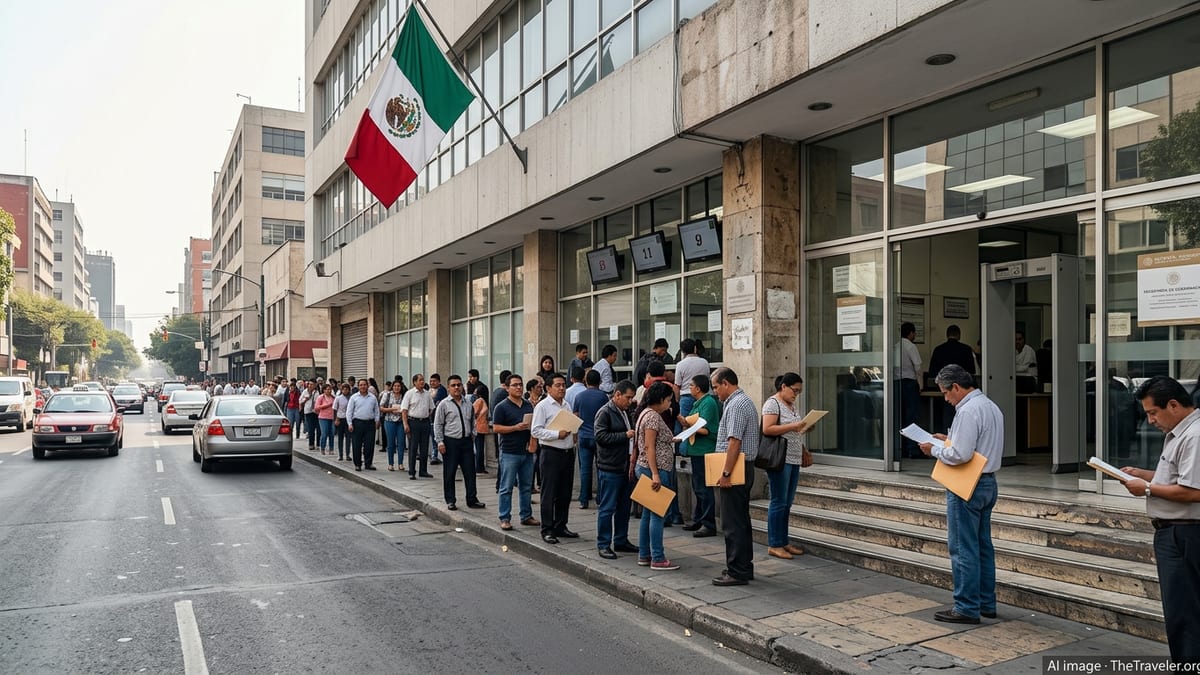
What the Mexico Bureaucracy Complexity Score Measures
The Mexico Bureaucracy Complexity Score is a composite, relocation‑oriented interpretation of how demanding it is to complete common administrative procedures with Mexican public authorities. It summarizes the expected time, steps, discretion, and predictability involved in dealing with the state at federal, state, and municipal levels. It does not assess political risk, security, or broad economic performance, but rather the operational frictions individuals and small enterprises face when they must obtain documents, registrations, or approvals.
Key inputs behind this score include international governance indicators such as government effectiveness and regulatory quality, which evaluate how well public agencies design and implement policies and whether regulations are clear and consistently applied. They are complemented by studies of regulatory burden that estimate the cost of complying with government procedures as a share of gross domestic product, as well as business‑environment surveys that track the number of interactions companies have with authorities each year and the time spent on them.
The score also takes into account sector‑specific findings. For example, evidence from Mexico’s social security institute indicates that targeted digitalization and simplification can reduce administrative burdens by roughly one quarter to two fifths for certain procedures, while small‑business indexes for Latin America report that Mexican firms still invest hundreds of hours per year in paperwork, with a minority of these processes completed fully online. Together, these sources point to a bureaucracy that is structurally heavy, though improving in select areas.
For relocation analysis, Mexico’s Bureaucracy Complexity Score is therefore positioned in the “medium‑high” range: significantly more complex than the average high‑income OECD country, less complex than some large emerging economies with weaker institutional capacity, and characterized by strong variation between modernized digital services and traditional paper‑based offices.
Structural Drivers of Bureaucratic Complexity in Mexico
Mexico’s federal structure is one of the core reasons its bureaucracy remains complex. Regulatory powers are spread across federal, 32 state, and thousands of municipal governments. Even when federal law establishes a unified framework, states and municipalities can impose additional local registrations, permits, or licenses. Analyses of small and medium enterprise procedures in Latin America highlight that, in Mexico, new businesses often must complete separate tax and licensing steps at local level on top of federal registrations, adding time and legal costs relative to countries with more centralized one‑stop systems.
Regulatory governance data further show that while Mexico has adopted modern tools such as regulatory impact assessment and a national better‑regulation law, implementation quality and coverage across subnational governments is uneven. The National Commission of Better Regulation has documented that, in the late 2010s, the aggregate cost of complying with government regulation was equivalent to roughly a few percentage points of national GDP, and that Mexican businesses reported tens of millions of administrative procedures annually. These estimates underline the macro‑scale weight of bureaucracy, which ultimately manifests as long queues, repeated document requests, and frequent follow‑up visits for individuals.
Another structural driver is the historic reliance on formal documentation and notarization. Many legal transactions in Mexico require the intervention of a notary public and a preference for stamped, physical documents. International business reports note, for example, that registering property or obtaining certain permits in Mexico typically takes longer than the average in high‑income OECD economies, reflecting multiple agency touchpoints and verification steps. While these formalities provide legal certainty, they also raise the baseline administrative workload for residents compared with more digitized or less formalistic jurisdictions.
Finally, governance quality and corruption risks influence perceived complexity. Worldwide governance indicators for Mexico place the country below the OECD average on measures of government effectiveness and rule of law, and external corruption indexes consistently rank Mexico among the weaker performers within the OECD group. Surveys of Mexicans’ interactions with authorities report non‑trivial rates of administrative corruption, which translate into additional uncertainty, informal costs, and the sense that formal procedures are more cumbersome than they appear on paper.
Digitalization, Simplification Initiatives, and Their Impact
Mexico has undertaken multiple waves of administrative simplification over the last decade, with a focus on digital platforms. The social security institute’s “IMSS Digital” strategy, launched in the early 2010s, is a reference case. Evaluations of this program found that simplifying and digitizing selected procedures reduced the administrative burden for users by approximately 25 to 40 percent, depending on the scenario, primarily by cutting visits to physical offices and consolidating data requirements. This experience demonstrated that targeted reforms could significantly lower Mexico’s bureaucracy complexity in specific domains.
Building on that, the federal government has progressively expanded online services. The tax authority offers electronic filing and digital identity for most taxpayers, the foreign affairs ministry has simplified and partially digitized passport processes, and one‑stop portals for certain business registrations exist in major states and cities. More recently, a nationwide digital transformation strategy announced in the mid‑2020s set the goal of digitalizing at least 80 percent of federal procedures and halving average waiting times for common services. Early reports indicated that the number of distinct federal procedures had been cut by more than half and that the average number of requirements per procedure had been reduced by about one third.
However, the impact on the aggregate Bureaucracy Complexity Score is moderated by several factors. Independent policy analysis notes that Mexico’s digital government index score has remained below the OECD average, with particular gaps in user‑centric design and data sharing across agencies. Moreover, subnational implementation lags behind federal efforts. Surveys of micro, small and medium‑sized enterprises in 2023 indicated that such firms still invested on the order of several hundred hours per year in governmental procedures, with roughly one sixth of those completed fully online. This suggests that while flagship platforms exist, many everyday interactions continue to require in‑person visits, printed documentation, and manual follow‑up.
In practice, the result is a dual system. Certain high‑volume procedures, especially in taxation and social security, are relatively efficient by regional standards and support electronic processing end to end. Other processes, particularly at municipal level or in sectors that have not been prioritized for reform, remain bureaucratically intensive. For a relocating individual or small entrepreneur, the experienced complexity will therefore depend heavily on the specific agencies involved and the degree to which local authorities have adopted federal simplification standards.
Subnational Variation and Procedural Fragmentation
Subnational variation is one of the most important aspects of Mexico’s bureaucracy complexity profile. Studies of regulations across Mexican states show large differences in the number of steps and days required to complete similar procedures, such as obtaining construction permits or registering property. Some states and major metropolitan areas have implemented one‑stop shops and standardized checklists that substantially streamline these processes, while others still rely on sequential approvals from multiple offices without integrated information systems.
For company formation and business operations, comparative indexes indicate that Mexico is roughly mid‑table globally on ease of doing business but ranks significantly worse on the specific metric of starting a business. This is explained not only by the number of formal steps, but by the need to interact with federal, state, and municipal entities. A new business may need to register with the federal tax authority, enroll employees in social security, register with state tax authorities, and obtain a municipal business license, along with sector‑specific permits. Each of these interactions introduces potential delays, document requirements, and opportunities for inconsistent interpretation of rules.
For individuals, this fragmentation emerges in areas such as civil registry, land use permits, and local service connections, which are managed largely by municipalities. Where local offices remain paper based and under‑resourced, processing times can extend significantly beyond official estimates, and procedures may lack clear online guidance. Conversely, states that have invested in interoperable registries and online appointment systems offer a markedly smoother experience. As a result, the Bureaucracy Complexity Score for Mexico must be understood as an average that masks significant internal dispersion.
Relocators planning to live and work in Mexico City, Monterrey, Guadalajara, or other large urban centers are likely to encounter more digitized and standardized interactions than those relocating to smaller cities or rural municipalities. Nevertheless, even in advanced jurisdictions, variations between agencies persist, particularly where land, construction, or environmental permits are involved. The overall pattern is one of pockets of administrative excellence within a broader landscape of fragmented, multi‑layered regulation.
Corruption Risks, Discretion, and Predictability
Corruption risks and discretionary implementation significantly influence Mexico’s practical bureaucracy complexity. External governance and rule of law indexes show that Mexico has slipped in international comparisons of judicial independence and regulatory enforcement over the past decade. Transparency‑focused surveys report that Mexicans continue to encounter requests for informal payments in a noticeable share of their interactions with public authorities, especially in local law enforcement and particular licensing or inspection processes.
From a complexity‑score perspective, corruption amplifies perceived and actual administrative burden by injecting uncertainty into procedures. When the outcome of an application appears to depend partly on the discretion of individual officials rather than clear, time‑bound rules, applicants must invest additional time in gathering extra documents, making repeated visits, and sometimes seeking legal or professional assistance to navigate opaque requirements. Even when individuals do not experience direct requests for bribes, the expectation that “things are complicated” adds psychological and planning costs.
Mexico has also undergone institutional changes that affect the transparency environment, including intense political debates around the design and role of autonomous oversight bodies. Analysts have warned that attempts to centralize control over transparency or anti‑corruption agencies, if not carefully designed, could weaken external checks on administrative behavior, which in turn would risk raising the complexity and unpredictability of dealing with public entities. At the same time, there are countervailing trends, such as the expansion of open data portals and digital tracking systems for certain procedures, which can reduce opportunities for discretionary intervention.
For relocators, the critical implication is that procedures in Mexico often take longer than formal norms suggest, and timelines can vary significantly between apparently similar cases. Engaging reputable local professionals and insisting on written, stamped receipts and official communications can mitigate these risks, but they do not eliminate the underlying structural factors that keep the bureaucracy complexity score elevated compared with more institutionally robust jurisdictions.
Practical Implications for Relocation Planning
Although the Mexico Bureaucracy Complexity Score is a synthetic metric, its practical meaning is straightforward: individuals and companies relocating to Mexico should expect that routine interactions with the state will require more time, documentation, and persistence than in the most administratively efficient countries. This applies across citizenship, residency status, and sector, although the intensity of interaction will differ by personal circumstances and professional activity.
For employees, the main bureaucratic impacts are likely to arise around onboarding processes, social security registration, tax identification, and periodic interactions with public agencies related to employment or family status. In many cases, employers and specialized service providers shield workers from the most complex elements, but delays in documentation or data updates can still have knock‑on effects, for example on access to public services or formal financial products.
For entrepreneurs and independent professionals, the complexity score is more directly operational. The combination of multi‑layered regulation, subnational variation, and partial digitalization means that starting and running a small business in Mexico typically involves a significant upfront investment of time in understanding local requirements and building compliance routines. Surveys of Mexican small and medium‑sized enterprises suggest annual compliance time costs in the order of several working weeks per firm, a non‑trivial commitment that new entrants should factor into their business plans.
Prospective relocators can partially offset these challenges by selecting locations with stronger digital government adoption, relying on experienced advisors familiar with local practices, and allowing for generous time buffers when dealing with procedures involving property, construction, or complex licensing. Nonetheless, Mexico’s bureaucracy complexity profile should be seen as a structural characteristic that is improving gradually but unlikely to converge with the most efficient systems in the near term.
The Takeaway
Mexico’s Bureaucracy Complexity Score reflects a system in transition. On one hand, the country has made tangible strides in simplifying and digitalizing high‑volume procedures, particularly in taxation and social security, and has adopted modern regulatory governance frameworks with the aim of reducing administrative burdens. On the other, federalism, entrenched formalism, uneven subnational implementation, and persistent corruption risks combine to keep overall complexity at a medium‑high level by global standards.
For relocation decision making, this means that bureaucracy in Mexico is manageable but demanding. Prospective movers should anticipate variable experiences between agencies and regions, factor realistic timelines and administrative costs into their plans, and recognize that personal outcomes may depend as much on local execution as on formal national rules. Mexico’s trajectory is one of incremental improvement rather than rapid transformation, and relocation strategies that assume continued friction, while leveraging areas of successful simplification, are likely to be the most resilient.
FAQ
Q1. How does Mexico’s bureaucracy compare globally in terms of complexity?
Mexico’s bureaucracy is generally more complex and time consuming than that of most high‑income OECD countries, but less so than some large emerging economies with weaker institutional capacity.
Q2. Are bureaucratic procedures in Mexico getting easier over time?
Yes, gradually. Targeted digitalization and simplification have reduced burdens for some high‑volume procedures, but many processes, especially at local level, remain paperwork intensive.
Q3. Does bureaucracy function the same way across all Mexican states and cities?
No. There is pronounced subnational variation. Large urban centers tend to have more digitized and standardized procedures, while smaller municipalities often rely on traditional, paper‑based processes.
Q4. How important is digital government for reducing bureaucracy complexity in Mexico?
Digital government is a key reform tool and has delivered significant burden reductions where fully implemented, but Mexico’s overall digital governance performance still trails the OECD average.
Q5. What role do corruption risks play in Mexico’s bureaucracy complexity?
Corruption risks increase perceived and real complexity by adding uncertainty, potential informal costs, and discretionary delays, especially in licensing, inspections, and some local services.
Q6. How much time do businesses typically spend on administrative procedures in Mexico?
Studies suggest that small and medium‑sized enterprises can spend the equivalent of several working weeks per year on compliance, reflecting the cumulative weight of numerous procedures.
Q7. Are there types of procedures that are relatively efficient in Mexico?
Yes. Many tax and social security procedures at the federal level are comparatively streamlined and can often be completed online, reducing the need for in‑person visits.
Q8. Which procedures tend to be most bureaucratically demanding?
Processes involving property registration, construction permits, land use, and certain local licenses typically involve multiple agencies, extensive documentation, and longer timeframes.
Q9. Can relocating individuals reduce the impact of bureaucracy on their daily lives?
They can mitigate, but not eliminate, impacts by choosing highly digitized jurisdictions, using reputable local advisors, and allowing generous time buffers for complex procedures.
Q10. Is Mexico likely to reach low bureaucracy complexity levels soon?
Current evidence points to steady but gradual improvement. While meaningful gains are probable, convergence with the most administratively efficient systems is unlikely in the short term.