


Mexico’s economy currently combines moderate growth, a powerful nearshoring narrative, and elevated uncertainty from global trade tensions and domestic policy shifts. For potential expats, understanding how these forces shape medium term economic prospects is essential for judging the stability and opportunity profile of a relocation decision.
Current Macro Snapshot and Growth Baseline
Mexico is classified as an upper middle income economy and ranks among the fifteen largest globally by total output. Recent performance has been subdued. After expanding by roughly 3 to 4 percent in 2023, real GDP growth slowed to around 1.4 percent in 2024. Preliminary national accounts for 2025 indicate that the economy avoided recession but registered growth of only about 0.7 to 0.8 percent, with external demand and manufacturing exports offsetting weaker domestic investment and consumption.
Forward looking projections from major international institutions for 2025 and 2026 cluster in a narrow range around 1 to 1.5 percent real growth per year. This represents a step down from Mexico’s pre pandemic trend and implies that the country is currently on a low growth trajectory relative to both other emerging markets and its own potential. Analysts estimate Mexico’s potential growth at approximately 1.4 percent annually, suggesting that without structural reforms or a more robust investment cycle, the economy may remain in a slow growth equilibrium.
From a relocation perspective, this macro baseline points to an economy that is broadly stable rather than booming. It is not currently in a crisis scenario, but it is also not generating rapid broad based income gains. Expats whose opportunities are tied to high growth consumer sectors may find a less dynamic demand environment than headlines about nearshoring alone would suggest.
Nearshoring, Foreign Investment and Regional Divergence
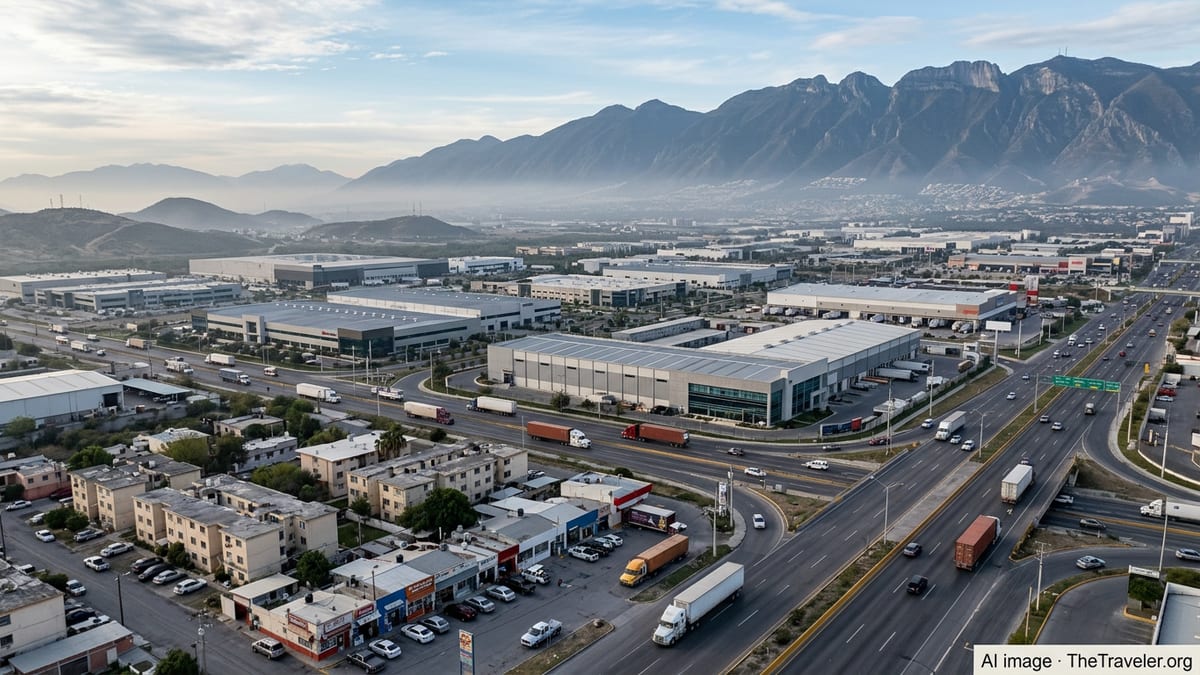
The most prominent positive theme in Mexico’s recent economic narrative is nearshoring. Global manufacturers seeking to shorten and diversify supply chains have expanded their presence in Mexico, particularly in automotive, electronics and industrial components. Foreign direct investment linked to manufacturing reached record levels in recent years, with total FDI inflows in 2025 reported at roughly 41 billion US dollars, an increase of around 10 to 15 percent compared with 2024. Manufacturing accounted for the bulk of new inflows, reinforcing Mexico’s role as a production platform for the North American market.
However, underlying investment dynamics are more nuanced. Data on the composition of FDI show that new greenfield projects represent a relatively small share of total inflows, with reinvested earnings of existing firms and intra company loans making up most of the total. New foreign investment represented less than one tenth of total inflows in 2024, down from roughly one eighth the year before. Announced nearshoring related projects between 2023 and 2025 are large in aggregate value, but the trend line in new announcements has eased, with 2025 volumes lower than the 2023 peak. This suggests that while Mexico has captured a significant first wave of nearshoring, the pipeline is no longer accelerating at the same pace.
Geographically, nearshoring gains are highly concentrated. Northern border states and a few central industrial hubs capture the majority of new manufacturing investment and related employment. One northern state alone has been estimated to account for more than three quarters of nearshoring related FDI in recent years. For expats, this concentration implies that economic opportunities related to supply chains, logistics, industrial services and advanced manufacturing are heavily skewed toward specific corridors rather than evenly spread across the country.
Labor Market Conditions and Sectoral Outlook
Mexico’s labor market has recovered from the pandemic shock, with headline unemployment relatively low by international standards. However, underemployment and informality remain widespread, and productivity growth is modest. The strongest labor demand is in export oriented manufacturing, transport and logistics, and certain business services that support cross border trade. These sectors benefit directly from nearshoring dynamics and from Mexico’s integration into the United States and Canada through regional trade agreements.
At the same time, several sectors face cyclical or structural headwinds. Construction has been volatile, reflecting fluctuations in public infrastructure spending and private real estate investment. Retail and domestic services are constrained by weak real wage growth and the drag from high interest rates on household credit. Public sector employment is influenced by fiscal consolidation efforts and shifting policy priorities, which can lead to changes in hiring or spending patterns at relatively short notice.
For expats, the implication is that employment or business opportunities are more robust in internationally integrated sectors than in purely domestic demand segments. Professionals in manufacturing management, supply chain optimization, engineering, IT services tied to industrial operations, and specialized consulting linked to trade and compliance are more directly exposed to the expanding parts of the economy. Those whose roles depend on broad based local consumption growth should factor in a more cautious demand outlook.
Inflation, Monetary Policy and Financial Stability
Inflation has been a central feature of Mexico’s macroeconomic environment in recent years. After peaking well above target earlier in the decade, headline inflation decelerated through 2023 and 2024 but remained somewhat above the central bank’s 3 percent objective. By late 2024, annual inflation had eased into the mid single digit range, supported by an economic slowdown and earlier monetary tightening. Core inflation followed a similar downward trend, although services prices have been stickier.
Mexico’s central bank has maintained one of the higher policy rates among large emerging economies to anchor inflation expectations and support currency stability. Even after beginning a cautious rate cutting cycle, the real policy rate remains positive, with market expectations suggesting that interest rates will stay relatively elevated compared with pre pandemic norms through at least 2026. This stance supports macro stability and moderates capital outflow risks but also weighs on domestic credit growth, construction and consumer spending.
From the perspective of expats, the combination of controlled but not fully normalized inflation and still tight monetary policy has several implications. Financial system stability is underpinned by conservative regulation and ample international reserves, and Mexico retains access to a precautionary flexible credit line with multilateral institutions, which provides an additional buffer against external shocks. At the same time, high borrowing costs can restrain corporate expansion plans and limit wage growth in more interest sensitive sectors. Relocating professionals should therefore expect a macro environment that favors caution and balance sheet strength rather than aggressive leverage driven growth.
Fiscal Policy, Public Debt and Infrastructure Constraints
Mexico’s fiscal stance is transitioning from expansion to consolidation. A significant increase in public spending in 2024, including on social programs and strategic projects, pushed the public sector deficit wider and set the stage for rising debt ratios. Estimates for 2025 place gross public debt close to 60 percent of GDP, up from earlier years but still moderate relative to many advanced economies. The current policy path envisages a gradual tightening of fiscal policy to stabilize debt, which implies slower growth in public investment and more disciplined current spending.
One consequence is that large scale infrastructure gaps may narrow more slowly than initially hoped. Logistics infrastructure, power transmission capacity and urban transport systems in fast growing industrial regions face stress as nearshoring related activity outpaces public investment in roads, rail, ports and grid expansion. While there are plans for additional energy and transport projects, including reforms aiming to increase generation and transmission capacity by the end of the decade, execution risks are non trivial.
For expats evaluating medium term prospects, the fiscal outlook suggests that Mexico is unlikely to face a classic sovereign debt crisis in the near term under current assumptions, but also that public investment will be constrained. This can translate into bottlenecks such as electricity shortages in certain industrial zones, congestion around logistics hubs and slower improvements in urban infrastructure. Professionals whose work relies on seamless infrastructure, time sensitive supply chains or large public works should factor these constraints into their risk assessment.
Key External Risks: Trade Tensions, Tariffs and US Cyclicality
Mexico’s open, export oriented model makes the country heavily exposed to external demand and trade policy developments, particularly in the United States. The United States accounts for the overwhelming majority of Mexico’s manufactured exports and a large share of its foreign direct investment. As a result, any slowdown in US growth or changes in US trade policy have outsized effects on Mexico’s outlook.
In the current environment, the most prominent risk is the imposition or escalation of tariffs or other trade barriers on Mexican exports. Recent years have seen waves of tariff measures targeting various countries and products, and Mexico is not immune to this policy volatility. Even the threat of higher tariffs can delay investment decisions, disrupt supply chain planning and depress confidence. Forecasts from international organizations have explicitly cited renewed trade tensions and tariffs as reasons for downgrading Mexico’s growth outlook compared with earlier projections.
Another related risk is the broader global environment of subdued growth. World economic forecasts for the mid 2020s point to one of the weakest multi year expansions outside of formal global recessions, with trade volumes and cross border investment under persistent pressure. For Mexico, whose strategy hinges on leveraging integration into global manufacturing networks, a structurally weaker global trade cycle limits the upside from nearshoring. Expats considering roles embedded in export sectors should monitor not only Mexico specific policy but also the trajectory of US demand and global trade rules.
Domestic Structural Risks: Security, Governance and Climate Impacts
Several domestic structural factors shape Mexico’s medium term growth ceiling and risk profile. Security challenges linked to organized crime impose direct and indirect economic costs through lost output, higher business costs, and deterrence of some categories of investment. Academic estimates suggest that cartel related violence imposes an annual economic burden equivalent to several percentage points of GDP. While the impact varies by region, persistent security concerns can affect corporate location decisions, especially for higher value added activities and for expats who weigh personal safety in relocation choices.
Governance and policy predictability are additional considerations. Shifts in regulatory frameworks in sectors such as energy and infrastructure, changes in the balance between state and private participation, and debates over institutional checks and balances all influence investor sentiment. While macroeconomic management by the finance ministry and central bank has remained broadly orthodox, micro level regulatory changes can create uncertainty about the long term rules of the game in certain industries.
Climate related risks are increasingly salient. Mexico is highly exposed to extreme heat, drought and severe weather events, which have already affected agricultural output and stressed water and energy systems in some regions. At the same time, the country is pursuing an expansion of renewable energy capacity and related grid investments over the coming decade. The pace and effectiveness of this transition will influence both the reliability and cost of energy, particularly important for energy intensive manufacturing and for expats employed in industrial operations or environmental services.
The Takeaway
Mexico’s economic outlook for the mid 2020s is best characterized as one of resilient stability with structurally constrained growth and meaningful downside risks. Headline GDP growth around 1 to 1.5 percent per year, moderate but not fully subdued inflation, and a relatively conservative macro policy framework provide a degree of predictability. The nearshoring wave has reinforced Mexico’s role as a key manufacturing hub for North America, particularly in specific industrial corridors that offer continued opportunity for expat professionals tied to global supply chains.
At the same time, the environment is far from risk free. The growth impulse from new foreign investment has softened, infrastructure and energy bottlenecks are increasingly binding in some regions, and public finances are entering a phase of consolidation. Exposure to US trade policy has increased rather than diminished, making Mexico vulnerable to tariff cycles and broader shifts in global trade architecture. Domestic security, institutional questions and climate stress further weigh on long term potential.
For expats, these dynamics imply that relocation decisions should be sector and region specific. Opportunities are strongest in export oriented manufacturing, logistics, and specialized services located in the industrial north and central corridors. Those whose careers depend on robust domestic demand growth or large scale public investment should approach with more caution. A clear understanding of the interplay between nearshoring opportunities and macro structural risks is essential for calibrating expectations and designing resilient relocation plans.
FAQ
Q1. Is Mexico’s economy currently growing fast enough to support new expat arrivals?
Mexico is growing, but at a modest pace of around 1 to 1.5 percent per year, which supports stability rather than rapid expansion. Expats will generally find steady but not booming conditions, with the strongest opportunities concentrated in export oriented sectors.
Q2. How important is nearshoring to Mexico’s economic outlook for expats?
Nearshoring is central to Mexico’s medium term outlook, particularly for manufacturing and logistics. It is driving record levels of foreign direct investment in specific regions and creating demand for specialized skills, though the pace of new project announcements has recently slowed.
Q3. Are there significant regional differences in economic prospects within Mexico?
Yes. Northern border states and certain central industrial hubs benefit most from nearshoring and exhibit stronger growth and investment. Other regions depend more on domestic demand, agriculture or tourism and may offer fewer opportunities directly linked to global manufacturing chains.
Q4. How volatile is inflation and what does it mean for expats?
Inflation has decreased from earlier peaks but remains somewhat above the central bank’s 3 percent target. While not extreme by emerging market standards, it can erode real wages if compensation is not periodically adjusted, and it reinforces a policy of relatively high interest rates.
Q5. Could fiscal or debt problems trigger an economic crisis in Mexico?
Public debt has risen toward about 60 percent of GDP, but fiscal policy remains relatively conservative compared with many peers. Current projections point to gradual consolidation rather than a near term debt crisis, although reduced space for public investment may limit future growth.
Q6. How exposed is Mexico to changes in US trade policy?
Mexico is highly exposed. The United States is its main export market and investment source, so new tariffs or stricter trade rules can quickly affect growth, employment and investor sentiment. Expats tied to export sectors should closely monitor US trade developments.
Q7. What are the main domestic structural risks to growth that expats should note?
Key risks include persistent security challenges, regulatory uncertainty in sectors such as energy and infrastructure, and climate related stress on water, agriculture and power systems. These factors can influence both corporate strategies and the perceived quality of the operating environment.
Q8. Is Mexico’s financial system considered stable for expats working in finance or relying on local credit?
Yes, the financial system is generally viewed as well regulated and conservatively managed, supported by prudent banking supervision and access to precautionary international credit lines. However, high interest rates mean that borrowing costs for households and firms remain elevated.
Q9. How sustainable is the current nearshoring driven growth model?
The model is sustainable if infrastructure, energy supply and human capital keep pace with investment. Slower global trade and potential tariff frictions represent external headwinds, while domestic policy consistency and security improvements are critical for maintaining investor confidence.
Q10. For which types of expat professionals does Mexico’s economic outlook look most favorable?
Prospects are strongest for professionals in manufacturing management, engineering, supply chain and logistics, industrial IT, compliance and specialized business services linked to export industries. Those dependent on rapid growth in local consumer demand or public spending should adopt a more cautious outlook.