


Relocating to Mexico involves navigating a paperwork environment that is formal, document heavy, and often inconsistent across offices and states. For many expats, the primary challenges are not legal eligibility to reside in the country, but the practical difficulties of securing, aligning, and maintaining the many documents required for everyday transactions. Understanding these recurring paperwork problems in advance is critical for assessing whether a move to Mexico is operationally realistic.
Systemic Features of Mexican Paperwork That Affect Expats
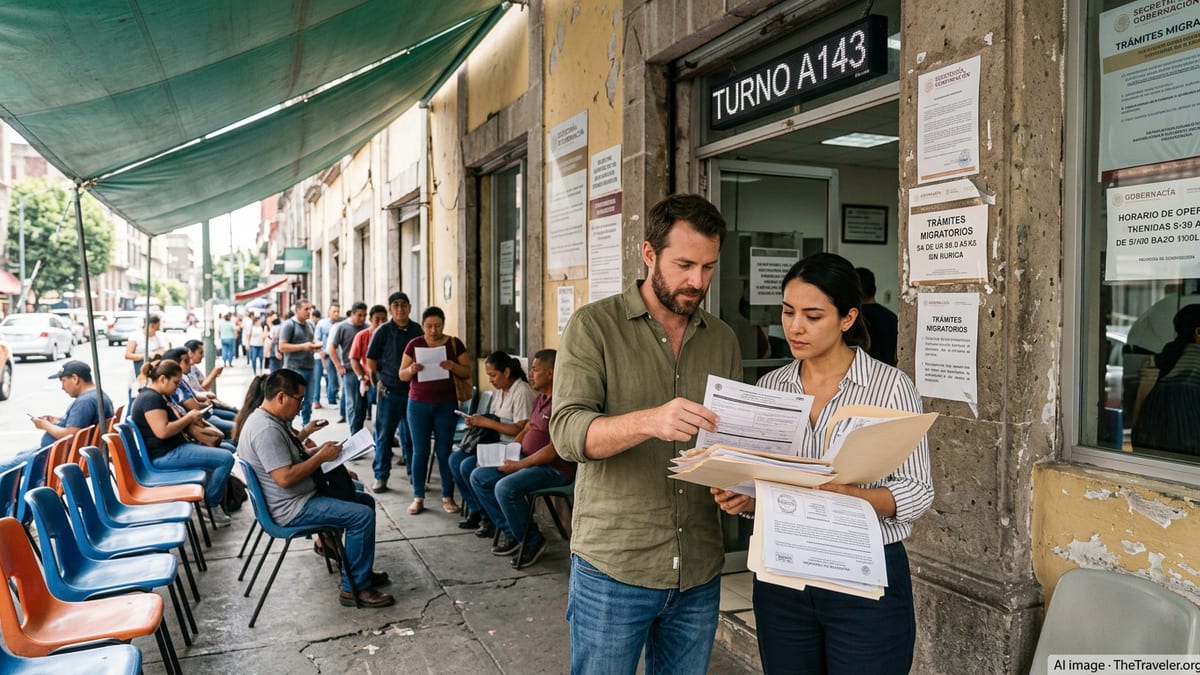
Government and legal processes in Mexico are highly document driven, with an expectation that individuals can produce original paper records, certified copies, and official translations on demand. Unlike more digitized systems, many procedures still depend on in person submissions, wet signatures, and physical stamps. This creates friction for expats used to fully online workflows, especially during the first one to two years of residence while key identifiers are being established.
Procedures, known locally as trámites, are governed by federal laws but administered by a combination of federal, state, and municipal offices. In practice, each office may interpret requirements differently and apply its own checklists. As a result, expats frequently report that documentation accepted at one office or on one visit is rejected on another, even for identical procedures. This lack of standardization is a structural feature rather than an anomaly, and it significantly increases the time and effort required to complete paperwork.
Processing times for many administrative tasks remain unpredictable. While some documents can be issued within a day, other procedures involving national registries, tax authorities or notaries can stretch into several weeks or months, particularly in high demand cities. Office closures on local holidays, appointment backlogs, and periodic system outages compound the problem, making it difficult for expats to plan travel, employment start dates, or property transactions around paperwork milestones.
Language is another critical dimension. Although some offices in major cities offer limited English support, most official procedures are conducted entirely in Spanish, including online portals. Misunderstandings about document names, translations, and legal terms frequently lead to incomplete submissions or inadvertent non compliance. For expats without strong Spanish and without access to professional support, this can be a decisive barrier to completing required paperwork efficiently.
Identity Numbers and Inconsistent Integration (CURP, RFC and Local IDs)
For expats, two core identifiers underpin almost all formal paperwork in Mexico: the CURP, which is an individual population registration code, and the RFC, which is the federal tax identification number. These identifiers are required for common activities such as formal employment, utility contracts, property transactions, and interaction with tax and social security systems. Difficulties arise because these numbers are sometimes issued through different channels and their integration across systems is incomplete.
In many cases, the CURP is generated automatically as part of the residency process and printed on the resident card, but expats frequently discover discrepancies between the CURP shown on their card and the version recorded in online government databases. Minor differences in name order, spelling, or date format can cause online systems to reject applications or block follow on procedures that depend on CURP validation. Inconsistent capture of middle names and dual surnames is a particular point of friction.
The RFC, administered by the tax authority, often requires a separate in person appointment and a detailed set of supporting documents. Appointment availability in some cities can be limited, leading to waiting periods of several weeks or more. Expats commonly report that RFC issuance is delayed by small errors in address documentation, mismatched names between foreign and Mexican documents, or missing proof of foreign tax identification numbers, each of which may require additional certified documents or translations.
Because many private entities such as banks, telecom providers, and insurers have digitized their onboarding processes around CURP and RFC validation, any inconsistency in these identifiers can cascade into broader access problems. Expats may find themselves unable to open or modify accounts, sign formal contracts, or receive certain deliveries until these identifiers are corrected in multiple systems, a process that can involve visits to both tax offices and immigration or civil registries.
Name Formats, Translations, and Document Matching Issues
A recurring paperwork problem for expats in Mexico is the way personal names are structured and recorded. Mexican official documents typically use a first name or names followed by both paternal and maternal surnames. Foreign names, especially those without dual surnames or with multiple middle names, often do not fit neatly into these fields. As a result, different offices and officials may input the same name differently across documents and databases.
Common inconsistencies include swapping first and middle names, truncating double surnames, omitting second surnames, or inserting prepositions and hyphens in ways that do not match the original foreign documents. These differences may seem minor, but they can cause serious downstream issues when a bank, tax office, or notary requires that every document in a file show the exact same full legal name. When discrepancies are discovered late in a process, applications can be suspended until the underlying documents are corrected.
Another major source of complications is the treatment of foreign civil status documents such as birth and marriage certificates. Mexico generally requires these to be legalized or apostilled and then translated by a certified translator recognized by local authorities. Expats often encounter situations where one office accepts a specific format or translator while another demands retranslation, additional certification, or a newer issue date. Processing queues for official translators and the need for physical stamps introduce additional time and cost.
The combined effect of these factors is that expats often spend considerable effort creating a coherent identity record where all core documents align in names, dates, and places of birth. This may require updating entries in civil registries, requesting new versions of foreign certificates, redoing translations, and in some cases executing notarial declarations to explain name variations. Until this alignment is achieved, procedures such as property purchases, inheritance recognition, or complex corporate paperwork can be delayed or blocked.
Proof of Address and Residency Ties
Proof of local address is a foundational requirement for a range of paperwork in Mexico. Utilities, banks, tax authorities, and various government agencies typically request a recent utility bill or municipal tax receipt that clearly shows the applicant’s name and address. Expats often confront the practical reality that their name is not on any bill because they rent informally, live in shared housing, or occupy accommodation where all contracts are in a landlord’s or partner’s name.
Where formal residential leases exist, some offices accept the lease as supplementary proof, but many still insist on a utility bill that matches the applicant’s name or their legal representative’s details. In areas where utility providers issue minimal receipts or do not include full addresses on bills, expats may need to obtain alternative documents such as municipal certificates or property tax statements, which themselves involve additional trámites and processing time.
Changes of address introduce another layer of complexity. Various systems require notification within a specified period when an individual moves, and failure to update address records can result in fines or procedural complications when renewing documents or applying for new ones. Expats sometimes underestimate the importance of this obligation, particularly if they move frequently within the same city. When offices later compare historical records, mismatched addresses can trigger additional scrutiny or requests for supporting documentation to demonstrate continuity of residence.
These address related issues have concrete consequences for relocation feasibility. Without acceptable proof of address, expats can face obstacles to registering with local health systems, securing internet and electricity contracts, or completing tax and property related paperwork. In regions where informal rental arrangements are common and landlords are reluctant to modify utility accounts, establishing documentary proof of residence can be a persistent problem rather than a one time hurdle.
Coordination Problems Between Agencies and Notaries
Many key procedures that matter for expats, such as property purchases, corporate activities, and complex family arrangements, rely on coordination between notaries and multiple government agencies. The notary acts as a quasi public official responsible for verifying identity, legal capacity, and absence of encumbrances, and for submitting documents to public registries. While this centralization provides legal security, it also means that any missing or inconsistent paperwork in one part of the chain can stall the entire process.
Typical coordination challenges include mismatched information between civil registries, tax authority records, and public property registries. For example, if a name or CURP appears differently in any one database, the notary may refuse to proceed until the discrepancy is corrected at the source. Resolving such inconsistencies usually requires expats to visit or empower representatives to visit the relevant offices, secure updated certificates, and then return to the notary, often extending timelines significantly.
Public registries and municipal offices in some locations continue to face backlogs and staffing constraints, which slow the registration of deeds, corporate minutes, or other notarized acts. Expats should be prepared for the possibility that registration, and thus full legal finalization of a transaction, may take substantially longer than the signing itself. During this period, documents may be valid but not yet fully reflected in official registries, which can complicate follow on procedures such as financing, resale, or inheritance planning.
For corporate structures and foreign investments, the situation becomes more complex. Documentation for foreign legal entities, powers of attorney, and board resolutions typically must be legalized or apostilled, translated, and then carefully synchronized with Mexican corporate records and tax identifiers. Any omission, such as missing registry excerpts or outdated corporate certifications, can result in repeated submissions and multiple notarial sessions. For expats considering entrepreneurship or property investment, these coordination issues materially affect the practicality and timing of planned activities.
Digital Portals, Appointments, and System Reliability
Mexico has expanded the use of digital portals for many procedures, including tax registrations, appointment scheduling, and retrieval of official certificates. In theory these tools simplify access, but expats often experience a different reality marked by account creation difficulties, system outages, and unclear error messages. Online forms typically require exact matches to official records, so any underlying CURP, RFC, or name discrepancy quickly surfaces as an application failure without meaningful explanation in English.
Appointment booking systems for high demand offices can be particularly challenging. Slots may be released unpredictably or at specific times that are not clearly announced, leading expats to repeatedly check portals or rely on anecdotal information about when appointments might appear. In some cities, there are extended periods when no appointments are visible, even though in person service continues for individuals who secure slots through other channels or at different times.
Digital document downloads, such as tax situation certificates or CURP confirmations, also rely on accurate integration between databases. Expats sometimes find that their data are partially registered but not yet fully active for online access, producing a situation where they hold valid physical documents but cannot generate the digital confirmations demanded by third parties. Rectifying these inconsistencies usually requires in person visits, contradicting the intended efficiencies of digitalization.
The combined effect of these digital challenges is that expats must be prepared to alternate between online and in person approaches, and to allocate significant time to trial and error within government portals. For individuals accustomed to predictable, fully online government services, this hybrid and sometimes unstable environment can be a decisive factor in evaluating whether Mexico’s administrative landscape matches their tolerance for procedural uncertainty.
The Takeaway
For prospective expats, the primary paperwork challenges in Mexico arise less from exceptionally strict regulations and more from fragmented implementation, document heavy procedures, and systemic inconsistencies. Key identifiers such as CURP and RFC, name formatting mismatches, proof of address requirements, and coordination across agencies and notaries collectively create a web of potential delays and rework. These issues are manageable for individuals with time, language skills, and professional support, but they can become significant obstacles for those needing rapid, predictable outcomes.
When assessing relocation feasibility, decision makers should factor in the likely need for multiple rounds of document correction, apostilles, certified translations, and office visits over the first several years in Mexico. The operational cost of these trámites is not only financial but also temporal, affecting work start dates, investment timelines, and family logistics. Individuals and organizations with low tolerance for administrative uncertainty may find these frictions material enough to influence their choice of destination.
Conversely, expats who approach Mexican paperwork as an ongoing project rather than a one time hurdle tend to achieve more stable outcomes. Early consolidation of identity documents, proactive alignment of names and addresses, and realistic expectations about processing times can significantly reduce friction. Assessing personal and organizational capacity to manage this environment is therefore a critical part of any serious relocation evaluation.
FAQ
Q1. What are the most common paperwork problems expats face in Mexico?
Expats most frequently encounter problems with inconsistent name formats across documents, delays obtaining or correcting CURP and RFC identifiers, proving local address, and coordinating requirements between different government offices and notaries.
Q2. How long does it typically take to resolve CURP or RFC issues?
Resolution times vary widely, but expats should realistically expect anything from a few days to several weeks, depending on appointment availability, accuracy of supporting documents, and whether corrections must be made in multiple registries.
Q3. Why do different offices in Mexico ask for different documents for the same procedure?
Although many procedures are governed by federal rules, local offices retain discretion in how they interpret and apply requirements. Internal checklists, risk tolerance, and staff training differ, which results in varying document demands for similar processes.
Q4. How serious are name mismatches between foreign and Mexican documents?
Even small discrepancies in spelling, order of names, or use of middle names can halt procedures such as property purchases, bank registrations, or tax filings. In many cases, authorities insist that every document in a file show the exact same full legal name before proceeding.
Q5. What counts as acceptable proof of address for paperwork in Mexico?
Commonly accepted documents include recent utility bills, municipal tax receipts, or similar official statements that display both the applicant’s name and local address. Some offices may accept leases or notarized statements as supplementary evidence, but requirements differ by location.
Q6. Are Mexico’s online government portals reliable for handling paperwork?
Online portals are useful but not fully reliable. Expats often encounter account creation errors, system outages, and data mismatches that require in person follow up. Many procedures still require a hybrid approach that combines digital steps with visits to physical offices.
Q7. How much time should expats allocate for major paperwork tasks after arrival?
For core identifiers and basic registrations, a conservative assumption is several weeks to a few months, especially in larger cities with appointment backlogs. More complex tasks involving property or corporate structures can extend timelines further.
Q8. Do expats need certified translations and apostilles for most documents?
Foreign civil status and legal documents often require both apostille or legalization and certified translation by translators recognized by Mexican authorities. Whether each document needs this treatment depends on the procedure, but expats should assume a need for formally prepared versions of key records.
Q9. How do paperwork issues impact buying property in Mexico?
Property transactions rely heavily on precise documentation. Name inconsistencies, missing CURP or RFC records, and unresolved address questions can delay or temporarily block closings, as notaries may refuse to proceed until all paperwork aligns with registry requirements.
Q10. Can professional assistance significantly reduce paperwork problems?
Using experienced local professionals such as gestores, lawyers, or notary associated staff can materially reduce errors and delays. They understand local office practices, preferred document formats, and common points of rejection, which improves the likelihood of first time approval for many trámites.