


Mexico’s immigration enforcement regime has shifted significantly in recent years, with a clear move toward stricter controls, greater data integration, and closer coordination with United States border policies. For foreign residents and long-stay visitors, these trends affect how status is checked, how rules are applied on entry and exit, and how consistently enforcement is carried out across the country. Understanding these dynamics is critical for anyone evaluating a medium or long-term relocation to Mexico.
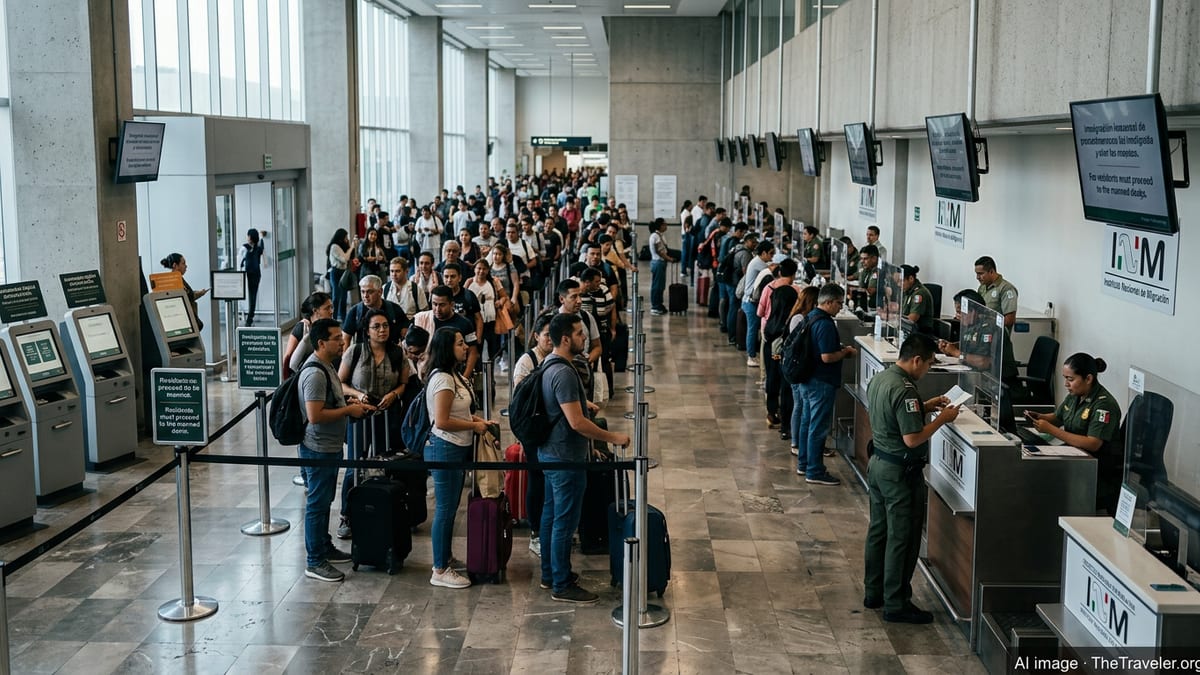
Overview of Mexico’s Immigration Enforcement Architecture
Mexico’s immigration enforcement is led by the National Migration Institute (Instituto Nacional de Migración, INM), supported by the National Guard and, in some corridors, by military units. While much public attention focuses on irregular migration flows toward the United States, the same institutions and systems underpin enforcement as it relates to foreign residents and long-stay visitors. The result is an enforcement environment that is increasingly formalized, digitized and coordinated with international partners, particularly the United States.
Enforcement actions relevant to foreign residents take several forms: document checks at airports and land borders, verification of status during internal inspections, and sanctions for irregular stay such as fines, detention, and administrative deportation. In parallel, Mexico is consolidating a nationwide database of entries and exits for foreign nationals that allows INM to see prior overstay patterns, multiple entries as visitors, and inconsistencies between declared purpose of stay and actual behavior. This database underpins more assertive questioning of frequent or long-term visitors who use short-stay categories repeatedly instead of resident status.
Since 2023 there has been a noticeable shift from discretionary, locally interpreted practices toward more standardized digital procedures at major airports and some land crossings. These changes reduce the room for informal negotiation at the counter and increase the likelihood that historical travel behavior is taken into account. Foreign residents contemplating relocation should assume that prior patterns of extended tourist stays or casual visa compliance will be visible to INM and may influence future decisions.
At the same time, enforcement capacity remains highly uneven. Major air and land entry points show the most structured and tech-enabled controls, while smaller airports and interior checkpoints can still operate with significant discretion and variability. This patchiness means that some residents experience strict enforcement while others perceive the system as lax, even though the underlying national trend is toward tighter control and greater data use.
Digitization, Exit Controls, and Tracking of Foreign Residents
One of the most consequential shifts for foreign residents has been the gradual replacement of paper entry forms with digital registration and automated kiosks at major airports. Where paper FMM cards once served as both entry and exit records, passport stamps and electronic logs now capture length of stay and exit dates. For tourists, self-service kiosks are increasingly available. For residents, however, use of such kiosks instead of staffed counters can risk misclassification as a visitor and may even lead to cancellation of resident status if records are not properly updated.
Digitalization has enabled more robust exit control practices. INM now places greater emphasis on matching an exit record to every previous entry, particularly at international airports. Foreign nationals with resident cards are typically required to “check out” with INM before boarding outbound flights, so that their status remains active and their time outside the country is correctly logged. While implementation is not yet fully consistent nationwide, foreign residents who fail to complete formal exit procedures increasingly report administrative complications on re-entry, including additional questioning, delays, or the need for corrective processes at INM offices.
For long-stay visitors who are not residents, the digital record of multiple consecutive entries as tourists has become more visible to INM officers. In practice this has translated into more frequent questioning of individuals who appear to be residing in Mexico on back-to-back tourist entries. Officers may scrutinize travel history, accommodation plans, and financial means more closely and may limit the number of days granted, issue a shorter stay than the historical default of up to 180 days, or advise the traveler that residency is required for ongoing stays of that nature.
The cumulative effect of these changes is that foreign nationals can expect their arrival and departure patterns to be tracked more systematically than in the past. For relocation planning, this increases the importance of choosing and maintaining an appropriate status and of adhering strictly to formal entry and exit procedures, especially when making frequent trips in and out of the country.
Internal Inspections, Document Checks, and Detention Practices
Beyond border controls, immigration enforcement for foreign residents also operates through internal inspections and document checks. INM conducts verification operations at transport hubs, highway checkpoints, and in some urban areas. These operations have historically focused on irregular migrants in transit, but in recent years there has been discussion and, in some states, practice of involving local police and National Guard personnel more directly in immigration-related checks. For lawful foreign residents, this raises the practical likelihood of being asked to present documentation away from the border.
Foreign residents who hold valid cards and carry identification generally experience internal checks as a bureaucratic inconvenience rather than a major threat. However, foreigners with expired documents, unclear status, or a pattern of irregular entries can encounter more serious consequences, including temporary detention while status is verified. Mexico’s detention centers and short-stay holding facilities have been under scrutiny following high-profile incidents, leading to political and legal pressure for better oversight. Nevertheless, from a risk perspective, anyone whose documentation is not in clear order should understand that enforcement operations can result in detention pending clarification or removal.
Enforcement at internal checkpoints is also shaped by broader political and diplomatic dynamics, particularly agreements with the United States to curb northbound irregular flows. When migration pressures are high or bilateral commitments intensify, operations tend to become more frequent and more assertive. During such periods, foreign nationals who are otherwise compliant can experience a more security-oriented environment, with multiple document checks on long-distance buses and at certain highway choke points in southern and northern states.
For residents considering relocation to secondary cities or rural areas, it is relevant that enforcement intensity varies widely by region and corridor. Key border states and main transit routes see far more frequent checks than many interior urban centers. However, sporadic operations can occur anywhere, and residents should plan for a baseline expectation that lawful presence may be questioned and must be documented on demand.
Changing Treatment of Long-Stay Visitors and Digital Nomads
Mexico’s relatively flexible visitor regime has made it attractive for remote workers and long-stay visitors, many of whom stay for extended periods using visitor entries. In practice this has blurred the boundary between temporary tourism and de facto residence, contributing to local concerns about housing markets and neighborhood change in popular urban districts. These concerns, combined with broader migration pressures, have contributed to a gradual tightening in how immigration authorities view repeated long stays as a visitor.
Recent years have seen more cases of visitors being questioned at the border about the frequency and duration of their stays, their sources of income, and their housing arrangements. In some instances, officers have granted fewer days than requested or fewer than the historical maximum stay, effectively discouraging repeated long-stay tourism where the traveler appears to be living full time in Mexico. While there is no formal nationwide ban on long-stay visitors, the operational trend is toward closer scrutiny and a clearer expectation that those who reside in Mexico should hold an appropriate resident status.
The tightening environment is amplified in high-visibility neighborhoods where gentrification and rising rents have sparked public debate. Local protests and political discourse about the impact of foreign “digital nomads” on housing availability and affordability have made authorities more sensitive to the perception that foreigners are using flexible tourist entries to live and work without integrating through formal residence channels. This context does not change written immigration law, but it shapes enforcement priorities and discretion at ports of entry.
For individuals considering a move to Mexico while working remotely for foreign employers, the enforcement trend implies a higher risk of intensive questioning on arrival, especially after multiple extended stays as a visitor. Over time, this evolving practice could make the “permanent temporary tourist” model less reliable and push more long-stay foreigners into formal resident categories, where their status and presence are more clearly regulated.
Coordination with United States Border and Regional Migration Policies
Mexico’s immigration enforcement posture toward all foreign nationals, including residents, does not exist in isolation. It is closely intertwined with United States border and asylum policies as well as broader regional migration dynamics. When the United States tightens asylum eligibility, increases returns, or implements new restrictions on irregular entries, Mexico faces greater pressure to manage larger numbers of people in transit and to prevent northbound flows from reaching the border at all.
In response, Mexico has expanded use of checkpoints, patrols, and verification operations far from the immediate border areas. National Guard deployments, increased INM staffing, and coordination with other security forces form part of this effort. While these measures are primarily aimed at irregular migration flows, they translate into a more security-conscious environment for all foreign nationals, including lawful residents who may encounter more frequent document checks or questions about their movements within the country.
Bilateral understandings between Mexico and the United States have also included daily caps on irregular crossings and strengthened cooperation on returns and repatriations. When such measures are in force, Mexican authorities have an incentive to ensure that authorities can identify and process foreign nationals whose status is irregular quickly and efficiently. The same data systems that support these objectives also enhance the ability to track compliance by foreign residents and to detect patterns of misuse of visitor categories.
For relocation decision-making, the key implication is that Mexico’s enforcement intensity is likely to remain closely linked to United States policy cycles. Changes in U.S. politics or border rules often lead, with a lag, to changes in how Mexico conducts internal checks and manages its own immigration controls. Individuals planning a long-term move should expect periods of heightened enforcement when U.S. policy hardens and should factor in the possibility of more frequent inspections and questioning during such cycles.
Risk Factors and Practical Exposure for Foreign Residents
From a relocation risk perspective, not all foreign residents are equally exposed to immigration enforcement measures. Several practical factors influence the likelihood and potential impact of enforcement actions on an individual level. These include the clarity and validity of documentation, travel patterns, residence location, and involvement in activities that draw official or community attention.
The highest enforcement risk generally falls on individuals with any of the following profiles: expired or soon-to-expire resident cards, history of repeated overstays as a visitor, unresolved administrative issues with INM, or a pattern of back-to-back tourist entries while effectively living full time in Mexico. Residents who frequently cross borders, especially through high-volume northern and southern entry points, are more likely to encounter detailed questioning and database checks. Those who live in areas subject to intense migration controls or political sensitivity, such as certain border zones and major tourist corridors, may also face more document checks than residents in less scrutinized interior cities.
Even for fully compliant residents, practical exposure to enforcement includes potential delays during exit and re-entry procedures, unexpected internal checkpoints during road or bus travel, and occasional requests to present resident cards during local operations. While such encounters usually resolve smoothly when documentation is in order, they contribute to a baseline environment in which foreign residents must be prepared for regular interaction with immigration authorities.
Prospective residents evaluating Mexico should view immigration enforcement as a manageable but non-trivial factor in relocation planning. The trend toward increased digitization and cross-agency cooperation reduces the scope for informal practices and raises the premium on rigorously maintained status. Those who prioritize predictability and low regulatory friction should plan on fully regularizing their presence and adhering closely to formal procedures, rather than relying on historical leniency or anecdotal reports of lax enforcement.
The Takeaway
Mexico’s immigration enforcement environment for foreign residents is transitioning from relatively informal and paper-based processes toward a more digitized, standardized, and security-conscious system. For current and prospective residents, this means that historical experiences of flexible or uneven enforcement are a poor predictor of future conditions. Exit controls, digital tracking of entries and exits, and closer scrutiny of long-stay visitors are now embedded features of the system rather than temporary experiments.
Internal checks, increased cooperation with security forces, and external pressure stemming from United States border policies reinforce a trajectory of tighter control. While the primary focus of these measures remains irregular transit migration, lawful foreign residents are inevitably affected through more frequent document checks, more detailed questioning, and reduced tolerance for gray-area residency based on repeated visitor entries.
For relocation decision-making, the key considerations are clear: maintain unambiguous legal status, avoid practices that resemble de facto residence on tourist entries, anticipate periods of more intensive enforcement linked to regional policy shifts, and be prepared for regular interaction with immigration authorities at borders and within the country. Under these conditions, Mexico remains accessible as a destination for foreign residents, but the cost of casual or improvised compliance is steadily increasing.
FAQ
Q1. Are foreign residents in Mexico now subject to more immigration checks than before?
Yes, foreign residents can expect more frequent and structured checks, particularly at airports, major land crossings, and on some transport routes, as Mexico strengthens its overall immigration enforcement and data systems.
Q2. How has the shift to digital entry and exit records changed enforcement for residents?
Digital records make it easier for authorities to see full travel histories, link each entry to an exit, and identify patterns such as overstays or repeated long visits, which in turn supports more consistent and sometimes stricter decision-making at borders.
Q3. Can long-term visitors still rely on repeated tourist entries to live in Mexico?
While some people still do this, immigration officers are increasingly questioning repeated long tourist stays and may limit the length of stay, demand more documentation, or signal that formal residency is expected for de facto long-term living.
Q4. Do foreign residents need to complete any special procedure when leaving Mexico?
At many international airports, residents are expected to check out with immigration so that their exit is logged correctly and their status remains active, and failure to do this can complicate future entries or administrative processes.
Q5. How likely is detention for a foreign resident with expired or unclear status?
A foreign resident with expired documents or unresolved issues can be detained during checks while status is clarified, and in some cases this can lead to administrative fines, cancellation of status, or removal from the country.
Q6. Are document checks common away from the borders?
Yes, internal checks occur on highways, at transport hubs, and in some urban operations, and although they focus on irregular migrants, lawful residents may be asked to show documents and should carry valid identification.
Q7. Do regional politics with the United States affect enforcement inside Mexico?
Yes, when United States border and asylum policies tighten, Mexico often responds with increased checkpoints, patrols, and cooperation measures, which tends to raise overall enforcement intensity and the frequency of document checks.
Q8. Is enforcement equally strict across all parts of Mexico?
No, enforcement levels vary by region, with border states and major transit routes experiencing more frequent operations than many interior areas, though sporadic checks can occur nearly anywhere.
Q9. What are the main risk factors that draw extra scrutiny from immigration officers?
Common triggers include expired or soon-to-expire documents, a history of overstays, repeated back-to-back tourist entries suggesting de facto residence, inconsistent answers during interviews, and frequent crossings through sensitive border zones.
Q10. How should prospective residents factor enforcement trends into relocation plans?
Prospective residents should plan to obtain and maintain clear legal status, follow formal entry and exit procedures, anticipate more systematic checks over time, and avoid relying on informal practices that may have been tolerated in the past.