


More news on this day
Mexico has set a new tourism benchmark in the first half of 2026, recording 51.1 million international visitors and underscoring the country’s status as one of the world’s most in-demand destinations.
Get the latest news straight to your inbox!
Historic First-Half Numbers Reshape Mexico’s Tourism Map
Publicly available government data show that between January and June 2026 Mexico received 51.1 million international travelers, a historic high and an increase of 7.7 percent compared with the same period in 2025. The figures, drawn from the National Institute of Statistics and Geography (INEGI) and compiled by the Secretariat of Tourism (Sectur), confirm that the country is consolidating the rapid rebound recorded since the pandemic years.
Within that broader total, 24.5 million were classified as international tourists, meaning they stayed at least one night in the country. This segment expanded 4.6 percent year on year and remains the primary driver of foreign-currency inflows from tourism, according to Sectur summaries of the official survey of international travelers.
Spending also moved to record territory. Reports based on Sectur’s Datatur platform indicate that international visitors generated 18.78 billion dollars in revenue during the first half of 2026, edging 0.5 percent above the same period of 2025. While the pace of growth in receipts is more moderate than the surge in arrivals, analysts in the domestic tourism industry describe it as a sign of consolidation at higher volume levels.
The new record builds on momentum already visible earlier in the year. A separate federal tourism report on the first quarter of 2026 pointed to 26.22 million international visitors and 12.66 million international tourists, confirming a steady upward trajectory that has now extended through the second quarter.
Cruise Sector and Air Travel Lead the Upswing
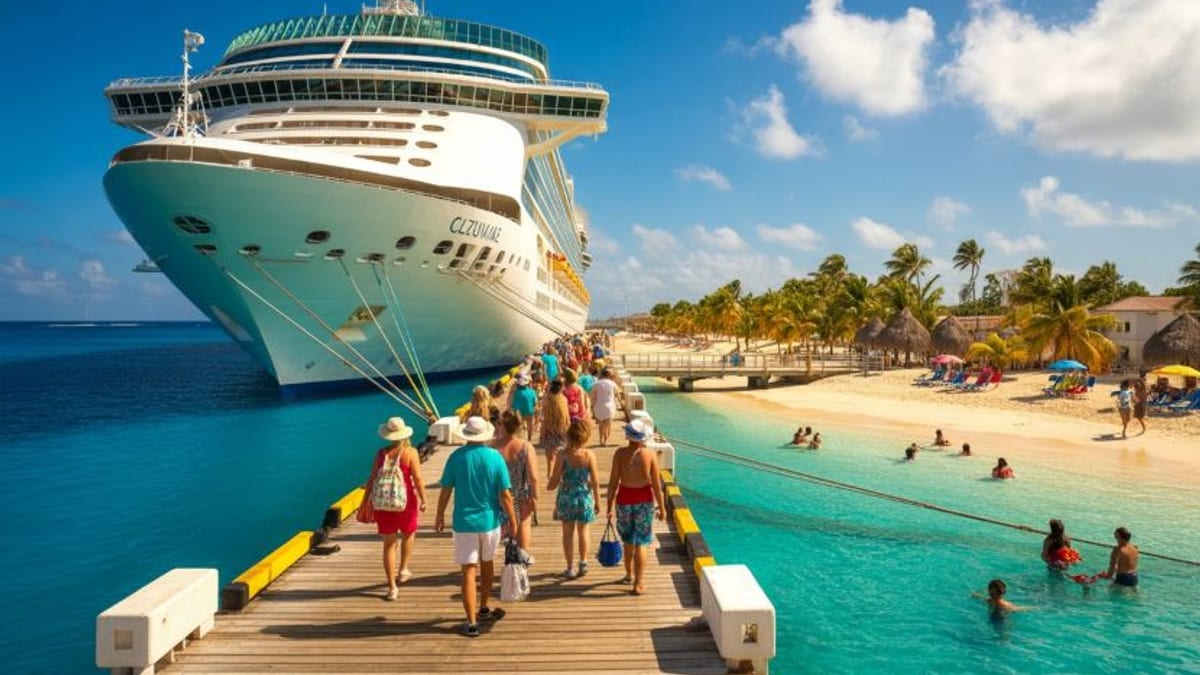
Behind the headline number of 51.1 million travelers are several individual indicators that have also reached all-time highs. Cruise tourism stands out as one of the fastest-growing segments. Sectur data for January to June 2026 show that 6.6 million cruise passengers arrived at Mexican ports, an increase of 15.2 percent over the first half of 2025 and the strongest performance on record for the segment.
Spending by cruise passengers rose even faster than arrivals. According to published coverage that draws on government statistics, cruise visitors generated an estimated 575 million dollars in the first six months of 2026, up 18.7 percent year on year. This pattern of higher expenditure growth than volume growth suggests that operators are successfully capturing more value per passenger through shore excursions, local services and onboard purchases linked to Mexican ports of call.
Regular air traffic, both domestic and international, has also expanded sharply. Datatur’s summary of accumulated tourism indicators for early 2026 reports 51 million passengers carried on scheduled flights within and to Mexico from January through May, with international visitors by air forming a key part of that total. The United States remains the principal origin market for air arrivals, maintaining a market share of roughly 62 percent in the January to May period.
Observers note that the combination of robust air connectivity and cruise capacity underpins Mexico’s ability to sustain record inflows. Ongoing expansion at major gateways, together with new routes from secondary U.S., Canadian and European cities, is cited in industry analysis as central to the current tourism cycle.
Economic Impact Reaches Deeper Into Local Destinations
The 18.78 billion dollars in international visitor receipts recorded in the first half of 2026 are being closely watched by business groups, which frame tourism as a core channel for regional development. The national business chamber for commerce, services and tourism (Concanaco Servytur) has highlighted the five separate tourism records reported for the semester and called for policies that ensure the benefits reach small and family-owned enterprises across the country.
Datatur employment indicators, based on labor-force surveys, point to steady job creation in tourism-related sectors. Although the latest detailed breakdowns require technical interpretation, prior releases for early 2026 already showed more than 5 million people employed in tourism activities, with net job gains compared with 2025. This reinforces the view that the current wave of arrivals is translating into sustained employment opportunities.
Industry associations stress that the dispersion of visitors across coastal resorts, colonial cities and emerging nature destinations can magnify the impact on local economies. Publicly available tourism reports note record or near-record hotel occupancy levels in many established beach destinations, while central and southern states are working to attract longer stays and higher-spend segments.
Analysts also point to the role of domestic tourism, which complements the international figures. Datatur’s accumulated data for early 2026 indicate more than 36 million domestic tourists staying in hotels, a marginal increase over the previous year that helps stabilize occupancy and employment during periods of softer foreign demand.
Context: Long-Term Growth and Global Positioning
The new first-half record is the latest milestone in a decade-long transformation of Mexico’s tourism sector. Historical Datatur series show that total international visitors for a full year stood below 100 million before the pandemic and fell sharply during 2020. Since then, a combination of open borders, competitive pricing, diversified product offerings and extensive air links has propelled a rapid recovery.
By 2022 and 2023 Mexico had already returned to, and then surpassed, pre-pandemic levels of international tourism. The current 51.1 million figure for just six months of 2026 suggests that annual totals are on track to reach or exceed the upper range of recent years, barring significant external shocks. Sector specialists interpret this as evidence that the country has shifted into a higher structural plateau of visitor flows.
From a global perspective, the sustained expansion in arrivals reinforces Mexico’s position among the top-tier destinations worldwide. International comparisons published by global tourism bodies in recent years have consistently placed the country near the top in terms of international tourist arrivals, particularly from North America. The latest half-year numbers support expectations that Mexico will remain highly competitive as long as connectivity, safety and destination management continue to receive priority.
At the same time, observers caution that managing growth will be as important as achieving it. Debates within the sector increasingly focus on environmental pressures in high-demand coastal corridors, infrastructure needs in rapidly growing secondary destinations and the importance of ensuring that tourism revenue translates into tangible improvements in local quality of life.
Outlook for the Remainder of 2026
Looking ahead to the second half of 2026, tourism organizations and analysts expect Mexico to maintain strong performance, supported by peak-season travel from North America and Europe along with resilient regional demand. Forward-looking commentary in domestic media points to continued route expansion by airlines and a solid pipeline of events, festivals and meetings that attract both leisure and business travelers.
Recent monthly data suggest that momentum remained firm entering the summer. In June 2026 alone, official statistics captured 8.2 million international travelers and more than 4 million international tourists, alongside 843,417 cruise passengers. Average spending by air travelers rose 9.6 percent compared to June 2025, according to government summaries, reinforcing the view that higher value segments are helping to support overall revenue.
Market participants will be watching exchange rates, global economic conditions and geopolitical developments that could affect long-haul travel decisions. However, the combination of proximity to major source markets, a broad mix of destinations and competitive pricing provides Mexico with a degree of resilience that has already been tested in recent years.
With 51.1 million international arrivals recorded in just six months, the current trajectory suggests that 2026 could finish as one of the most significant years yet for Mexican tourism, setting a high bar for destinations across the wider Latin American region.