


More news on this day
Passengers flying through Miami International Airport this week are facing lingering delays and cancellations after an Amazon-branded cargo jet overran a runway and crashed near the airfield, killing five people and injuring several others. With runways partially closed and aircraft and crews out of position, travelers are being urged to build in extra time and closely monitor their flight status before heading to the airport.
Get the latest news straight to your inbox!
Runway closures and a system still recovering
The cargo aircraft, a Boeing 767-300 operating for Amazon Prime Air, overshot Runway 30 at Miami International Airport (MIA) on Sunday, September 6, and struck several vehicles beyond the airfield perimeter. Published reports indicate that a full ground stop was imposed as emergency crews responded, halting departures and diverting inbound flights across the afternoon and evening period.
According to coverage from local outlets and aviation publications, at least two of MIA’s four runways remained closed into Monday as investigators and recovery teams worked at the crash site and around the disabled aircraft. With a key runway out of service, the airport’s capacity is reduced, which means fewer takeoff and landing “slots” are available each hour compared with normal conditions.
Miami is already a high-traffic hub, particularly around weekends and holiday periods. Even when the ground stop was lifted, the combination of blocked infrastructure and heavy schedules left airlines with a backlog of flights to process. This is why travelers are still seeing delays and cancellations on routes that are not directly connected to the crash, including flights that only pass through MIA on a connection.
Federal crash investigators have indicated that it may take several days to move the wreckage and fully reopen all affected areas of the airfield. Until that happens, some degree of disruption is likely to persist, especially during peak travel windows in the morning and late afternoon.
If your Miami flight is delayed or canceled
For travelers with tickets to, from, or through Miami, the most immediate impact has been a wave of schedule changes. Local television reports on Monday described hundreds of delayed and canceled flights, with some passengers rebooked onto departures from nearby airports such as Fort Lauderdale, and others facing overnight stays in Miami hotels.
Airlines typically adjust their operations in a cascading fashion after a major event like a runway overrun. Aircraft and crews that were due to arrive in Miami on Sunday and Monday may have diverted or timed out, leaving gaps in the schedule that can affect flights well into the week. This means a flight showing as “on time” in the morning can move to “delayed” or “canceled” later in the day as airlines rebalance their fleets.
Published advisories from carriers and the airport stress that passengers should not rely on day-old information. Instead, travelers are encouraged to check their flight status repeatedly on airline apps or websites in the hours before departure and to enroll in text or email alerts. In several cases highlighted in local news coverage, passengers who arrived at the airport without verifying status learned at the check-in counter that their flight had already been canceled or significantly delayed.
Travelers with tight connections through MIA may be particularly vulnerable. If a first leg into Miami runs late, minimum connection times may no longer be met, and rebooking could be required even if the onward flight is operating normally. Allowing extra time between flights, or considering a reroute through another hub if offered by the airline, can reduce the risk of missed connections.
Current expectations for wait times and airport conditions
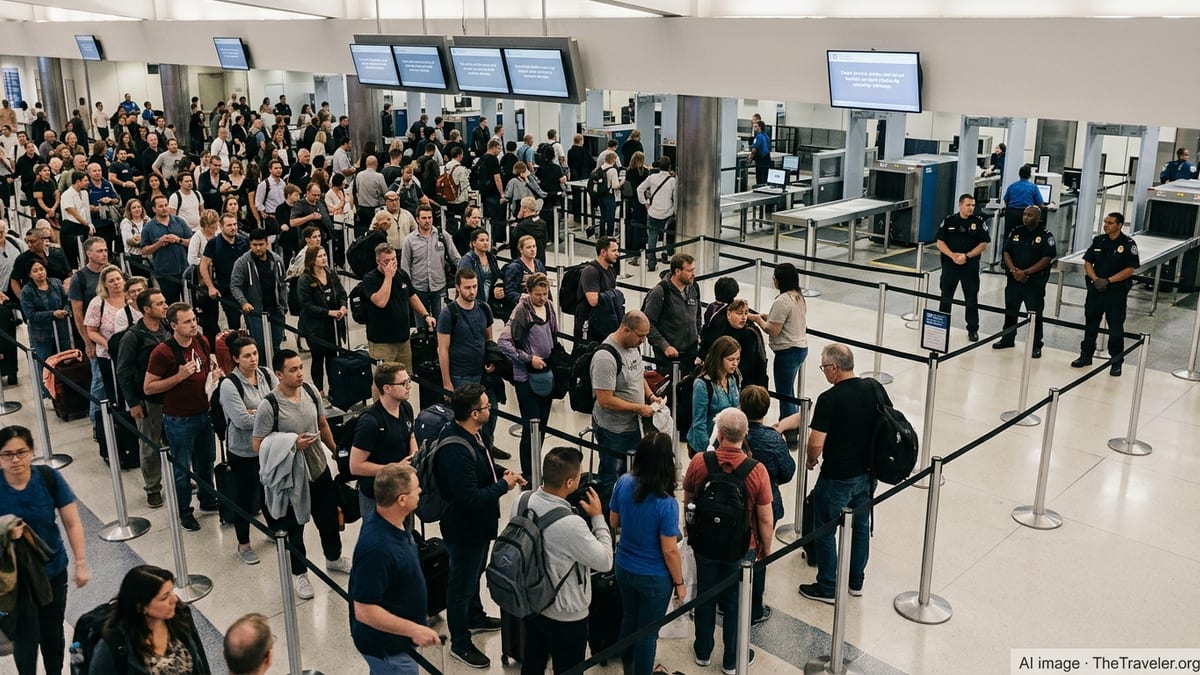
As of Tuesday, September 8, operations at Miami International are no longer under a full ground stop, but the system has not returned to normal. Local media describe long lines at airline counters, crowded departure halls, and passengers camped out near gates waiting for seats on later flights. Security wait times have fluctuated, with some checkpoints clearing quickly and others experiencing surges when multiple delayed flights board at once.
With part of the runway network closed, some aircraft are being sequenced into holding patterns on arrival or queued longer than usual for takeoff. This can translate into additional time on the taxiway or in the air, even when a flight leaves the gate close to its scheduled time. Travelers connecting onward from Miami or meeting ground transportation at specific times should factor in that possibility.
Weather and traffic at other airports can also affect how quickly MIA’s operation stabilizes. Airlines are redistributing aircraft across their networks, and any new disruption elsewhere can ripple back into South Florida. Industry coverage indicates that it can take several days for schedules to fully recover after a hub experiences an event that triggers a ground stop and large-scale diversions.
Inside the terminals, concessions and lounges have remained open, but crowds have swelled during peak hours as rebooked passengers converge on limited departure windows. Travelers may want to plan for longer walks, limited seating near some gates, and potential lines for food and customer service desks.
Practical steps for travelers heading to or through Miami
For those who still need to travel, preparation is key. Airlines are steering passengers toward self-service tools such as mobile apps and websites, where many customers can change flights, confirm rebookings, or request flight credits without standing in line. Using these tools as soon as a delay or cancellation appears can improve the chances of finding a workable alternative before remaining seats fill up.
Checking flight status with both the airline and Miami International’s own arrivals and departures information can provide a fuller picture. Some flights may show as operating but with significant delays, while others may quietly drop off the board as schedules are revised. Monitoring these changes up to the moment you leave for the airport can help you avoid unnecessary trips or long waits in the terminal.
Travelers who are not yet in motion may want to evaluate whether their trip can be shifted by a day or rerouted through an alternate airport in South Florida. Nearby Fort Lauderdale-Hollywood International and Palm Beach International are seeing knock-on demand, but some carriers are using them to accommodate disrupted passengers or to reposition aircraft.
Those already at MIA should keep boarding passes, identification, and any rebooking confirmations easily accessible, as gate and schedule changes are common during irregular operations. Keeping medications, chargers, and basic personal items in a carry-on rather than checked luggage can also make extended delays more manageable.
How long might disruptions last?
Investigations into the Amazon cargo plane accident are in the very early stages. Publicly available information shows that federal investigators have recovered the flight data and cockpit voice recorders and are working to document the wreckage before it is moved. That process can take several days at a busy hub like Miami, particularly when the aircraft came to rest near active areas of the airfield.
Local reporting indicates that the airport plans to reopen affected runways as soon as it is safe to do so, but no firm timeline has been announced. Historically, runway overrun events at major airports have led to several days of constrained capacity, followed by a gradual return to normal operations as debris is cleared, safety checks are completed, and any temporary repairs are made.
For passengers, that means disruptions could ease in the coming days but may not disappear immediately. Even after the physical runway is fully available, airlines will still be repositioning aircraft, crew, and passengers who were displaced by multiple rounds of cancellations and missed connections.
Travelers with flights later in the week should continue to monitor updates from both their airlines and the airport. While most flights are expected to operate, the residual effects of this crash may linger in the form of scattered delays, fuller-than-usual flights, and occasional schedule changes as Miami International’s complex operation works its way back to normal.
Local 10: Hundreds of flights delayed, cancelled at MIA 1 day after cargo plane crash
Aviation Week: Prime Air 767F overruns Miami runway, prompting ground stop