


More news on this day
Escalating conflict across the Middle East is disrupting operations at some of the world’s busiest hub airports, with rolling delays, cancellations and diversions at Dubai, Doha, Riyadh and Kuwait City now affecting travelers far beyond the region.
Get the latest news straight to your inbox!
Major Hubs Struggle With Repeated Airspace Closures
Publicly available aviation data and news coverage show that the latest phase of the Iran war, which intensified after February 28, 2026, has repeatedly restricted or closed key sections of Middle East airspace. Authorities in Bahrain, Iraq, Kuwait, Qatar, Syria and the United Arab Emirates have at times shut their skies to civilian traffic, forcing hundreds of flights to divert or cancel on short notice.
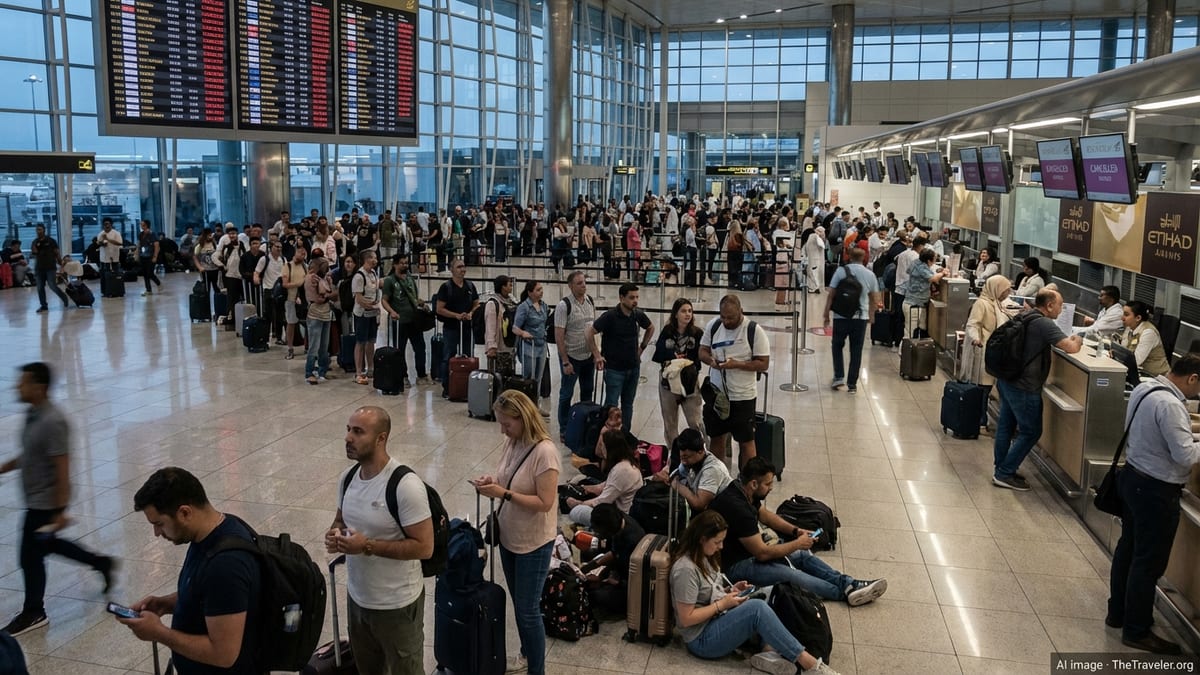
Dubai International Airport, one of the world’s busiest long haul hubs, has been among the most affected. Reports indicate that strikes and attempted attacks in and around the city have led to temporary airport closures and significant congestion as airlines work through backlogs once operations resume. Travelers describe sudden gate changes, last minute cancellations and long queues at rebooking desks as capacity struggles to match demand.
In Qatar, Hamad International Airport has faced its own waves of disruption following Iranian missile and drone strikes and periods when Qatari airspace was briefly closed. According to published coverage, flights have been diverted to alternate airports in the Gulf and beyond, while others have operated with extended routings to avoid higher risk corridors. Even when the airport remains open, reduced overflight options have narrowed scheduling flexibility.
Regional carriers based in Saudi Arabia, Kuwait and other Gulf states are experiencing similar volatility. Operational summaries from aviation groups describe a pattern of temporary suspensions on certain routes, followed by partial resumptions when airspace restrictions ease. This stop start environment has made reliable planning difficult both for airlines and for passengers trying to move through the region.
Ripple Effects Reach Europe, Asia and North America
The concentration of global traffic that normally flows through Dubai and Doha means that local disruption quickly becomes a worldwide issue. Schedule data and traveler accounts suggest that long haul services connecting Europe, North America, Africa and Asia have all seen knock on delays as aircraft and crews end up out of position.
International airlines including carriers from India, Europe and East Asia have suspended or sharply reduced services to certain Middle East destinations since late February. Some have rerouted flights around Iranian and neighboring airspace, increasing flight times and fuel burn. Others have temporarily removed Dubai, Doha or Riyadh from their networks, particularly where alternative hubs can be used instead.
Industry analysis from global airline associations notes that rerouting around conflict zones can add hundreds of kilometers to certain sectors, creating tighter aircraft rotations and narrower turnaround windows at downline airports. Even when a flight ultimately departs, passengers may face missed connections and overnight stays if onward services cannot wait for late arriving travelers.
North American and European carriers have introduced special travel waivers in recent months, allowing passengers booked through affected hubs to change dates, reroute via alternative cities or request refunds. While these policies provide flexibility, they also indicate the level of uncertainty airlines anticipate in the near term, with schedules still vulnerable to sudden changes in the security picture.
Passenger Experience Defined by Uncertainty and Congestion
For travelers on the ground, the most immediate impact is uncertainty. Social media posts and forum discussions from July and early August describe crowded terminals in Dubai and Doha, with many flights operating close to schedule while others are heavily delayed or suddenly canceled after passengers have already checked in.
Some travelers report largely normal experiences, particularly on days when no fresh security incidents occur and airspace remains open. Others describe being caught in rolling waves of disruption, where a short airspace closure or a single diversion cascades into missed connections, long waits for hotel vouchers and difficulty reaching airline customer service channels during peak periods.
At times, airlines have responded by shifting more activity to secondary airports, such as Dubai World Central, or by spreading connecting flows across a wider set of hubs outside the conflict zone. While this can keep journeys technically possible, it often lengthens travel times and increases the number of segments, raising the risk that a delay in one location will disrupt the entire itinerary.
Travelers with fixed commitments, such as cruise departures, large events or nonrefundable ground arrangements, are expressing particular concern. Many are weighing whether to rebook through hubs in Europe or South Asia, even when that means higher fares or more complex routings, in order to avoid the possibility of being stranded in the region if conditions change suddenly.
Operational Challenges for Airlines and Airports
From an operational standpoint, the current disruption is testing the resilience of Middle East hub models that rely on precise, banked waves of connecting flights. Aviation briefings from industry bodies highlight how even short closures or new restrictions can break these tightly timed banks, leaving aircraft in the wrong places and eroding the efficiency that normally underpins the region’s transfer traffic.
Airlines are having to reoptimize crew schedules, fuel planning and maintenance windows around longer, more circuitous routings. Some carriers are reportedly deploying larger aircraft on certain corridors to consolidate demand and cope with backlogs, while trimming frequencies on others. These shifts can leave smaller or leisure focused routes particularly exposed to cancellations.
Airports themselves must manage heavier than usual congestion at security, immigration and transfer checkpoints when flight banks are disrupted. Queue management becomes more complex when delayed arrivals collide with rescheduled departures, stretching terminal capacity and increasing the risk of missed flights even for passengers whose services are technically operating.
Ground handling and baggage systems are also under strain. With more diversions, short notice aircraft changes and overnighting passengers, the potential for delayed or mishandled luggage increases. Publicly available accounts from travelers mention extended waits at baggage belts and confusion over where bags have been offloaded when flights divert to secondary airports in the region.
What Travelers Can Expect in the Coming Weeks
Industry forecasts suggest that volatility is likely to persist as long as the regional security situation remains unstable. While some airlines are gradually reintroducing services to certain destinations and adjusting routings as new corridors open, most are still building additional buffer time into their schedules and advising passengers to remain flexible.
Travel professionals are emphasizing a few consistent themes. First, flight status can change rapidly, so checking airline apps and airport information boards frequently on the day of travel is essential. Second, itineraries that rely on tight connections through Middle East hubs carry higher risk than usual, especially where alternative routing options are limited or already heavily booked.
Passengers transiting through Dubai, Doha, Riyadh or Kuwait City in August are being encouraged to allow generous connection times, ensure that contact details in bookings are up to date and review both airline and travel insurance policies for coverage related to security events and airspace closures. Travel forums indicate that some policies offer only limited protection for disruption linked to war or conflict, prompting renewed scrutiny from frequent flyers.
For now, the picture across the region remains mixed. On many days flights operate close to normal and terminals feel busy but routine. Yet the potential for sudden disruption remains high, with each new flare up in the wider conflict capable of grounding aircraft, closing airspace and sending fresh waves of delays and cancellations through some of global aviation’s most important crossroads.