


More news on this day
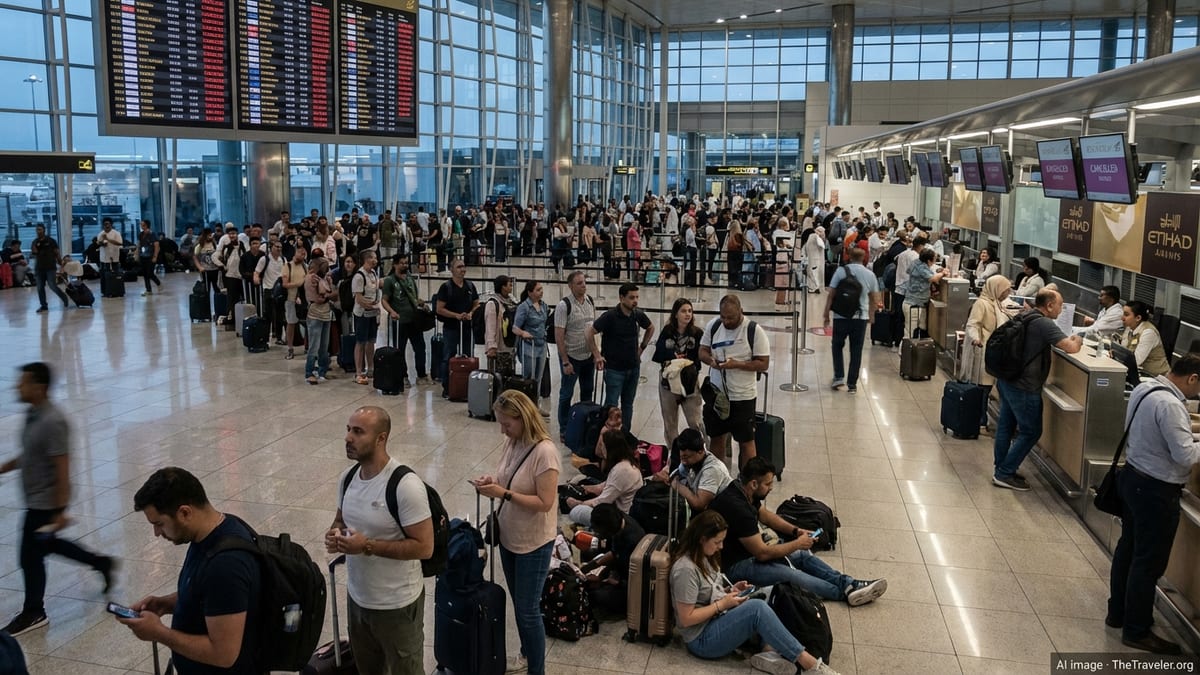
Travelers passing through the Middle East on August 28 are facing fresh disruption, with 52 flight delays and 18 cancellations logged across Dubai and several other Gulf airports, underscoring how regional tensions and tightly timed hub operations continue to strain schedules at one of the world’s busiest aviation crossroads.
Get the latest news straight to your inbox!
Concentrated Disruption Across a High-Volume Network
The disruption figure of 52 delays and 18 cancellations is modest in proportion to the thousands of daily movements handled across the Gulf, but it is significant for affected passengers and for airlines attempting to keep complex hub banks running to time. Dubai International Airport alone averages close to 600 departures and arrivals each day to more than 220 destinations, making even small schedule shifts highly visible in crowded terminals and connection queues.
Publicly available flight-status dashboards for Dubai and other Gulf hubs on Friday show the bulk of services operating on schedule, but with clusters of late departures and arrivals on Gulf-to-Gulf and short regional sectors. Specialist tracking sites that monitor disruptions over the month of August also indicate that Dubai has already logged dozens of cancellations, with regional routes to Kuwait, Bahrain, Dammam and other Gulf points among the most frequently affected.
While the current tally of 18 cancellations across the Middle East today does not indicate a systemic shutdown, the pattern mirrors recent weeks in which airlines trimmed or rescheduled select services while maintaining the core of their long-haul operations. For passengers, this means that a majority of flights still depart as planned, but pockets of disruption can quickly cascade through tightly timed connection waves.
Regional Security Tensions Shape Gulf Schedules
The latest disruptions come against the backdrop of heightened regional security concerns and intermittent airspace restrictions. Coverage from regional outlets in July described how renewed hostilities involving Iran led to temporary closures or tighter controls over segments of Gulf airspace, prompting airlines to suspend or reroute services to cities such as Kuwait, Bahrain, Doha and certain Saudi Arabian destinations. In some instances, airports temporarily halted take-offs and landings while missile or drone threats were assessed.
In response, carriers based in the United Arab Emirates and neighboring states selectively cancelled or extended the suspension of flights on particular routes, notably between Abu Dhabi and Kuwait, as well as some Dubai services to Bahrain, Kuwait and Dammam. Current-day data suggests many of those routes have since resumed, but lingering caution and ongoing monitoring of airspace conditions continue to influence frequencies and departure times.
Analysts cited in recent Middle East aviation coverage have noted that some international airlines never fully restored their pre-crisis Gulf networks after earlier rounds of tension, which reduces the number of flights available to cancel but also concentrates demand onto those that remain. This environment helps explain why on-time performance through Dubai and other hubs can appear robust overall even as select city pairs experience a higher rate of disruption.
Impact on Passengers and Connecting Itineraries
The practical effect for passengers transiting the Gulf on August 28 is most apparent in missed connections and extended layovers. Much of the region’s traffic flows through mega-hubs on tightly banked schedules, where a 30 to 45 minute delay on an inbound regional flight can cause entire planeloads of travelers to misconnect from long-haul services to onward short-haul legs, or vice versa.
Travel forums and social media posts from recent days describe travelers arriving in Dubai and Abu Dhabi to find onward flights to secondary Gulf cities delayed or cancelled, sometimes with rebooking offered on later same-day services or alternative routings via other hubs. Passengers heading to or from destinations such as Kuwait, Bahrain, Doha and Abha have reported particular uncertainty when airspace alerts prompt last-minute changes to routings, flight times or even operating days.
Industry-focused briefings on airline disruption emphasize that even a relatively small number of cancellations can lead to lengthy knock-on effects when aircraft and crew rotations are tightly scheduled. When one sector is scrubbed in the Gulf, the aircraft and crew slated for that flight may be repositioned to protect longer-haul services, leaving regional routes more exposed to rolling delays and day-of-travel schedule changes.
Dubai’s Operations Largely Stable but Under Strain
Operational data published for Dubai International Airport suggests that, despite today’s 52 delays and 18 cancellations across the wider region, the airport remains broadly stable. Live status boards and airline trackers show most long-haul services arriving and departing within acceptable delay windows, with the heaviest disruption concentrated on a smaller set of short- and medium-haul flights.
Weather does not appear to be a dominant factor at Dubai on August 28, with airport meteorological reports indicating clear visibility and typical late-summer heat. Instead, regional observers point to a mix of factors driving disruption, including changing routings to avoid sensitive airspace, congestion at neighboring hubs adjusting to security advisories, and aircraft being rotated to protect high-demand intercontinental routes.
Data compiled across August shows that Dubai has already experienced several spikes in cancellations this month, including days where more than a dozen flights were withdrawn from the schedule. On those days, the majority of cancellations involved regional services operated by Gulf carriers and focused on nearby destinations rather than long-haul trunk routes to Europe, Asia or North America.
Guidance for Travelers Crossing the Gulf
Travel advisories issued by regional media and airline updates continue to encourage passengers to monitor itineraries closely when flying to or through the Gulf, particularly on routes touching Bahrain, Kuwait, Qatar and parts of Saudi Arabia. While widespread shutdowns are not in effect, today’s 52 delays and 18 cancellations across Middle Eastern airports illustrate how quickly operational challenges can emerge in a high-density airspace and hub environment.
Passengers are being urged through publicly available channels to check live flight status on airline or airport websites before leaving for the airport, and to allow extra time for check-in, security and potential rerouting. Those booked on multi-leg itineraries through Dubai, Abu Dhabi or Doha may benefit from longer self-planned connection windows, especially when travelling onward to secondary Gulf or regional destinations that have fewer daily frequencies.
With peak summer travel still underway and regional security dynamics evolving, aviation experts expect that Gulf hubs will continue to operate near full capacity while maintaining a margin of flexibility to adjust schedules rapidly. For now, the picture across Dubai and neighboring airports is one of broadly resilient operations punctuated by localized pockets of disruption, reflected in today’s snapshot of 52 delayed flights and 18 cancellations across Middle Eastern gateways.
Dubai Airports live flight status
Monthly disruption overview for Dubai International (DXB)