


More news on this day
As summer and holiday air travel seasons fill airports on both sides of the Atlantic, the way airlines handle delays looks very different depending on whether a passenger is flying under U.S. or European rules.
Get the latest news straight to your inbox!
Two Systems, Two Expectations When Flights Run Late
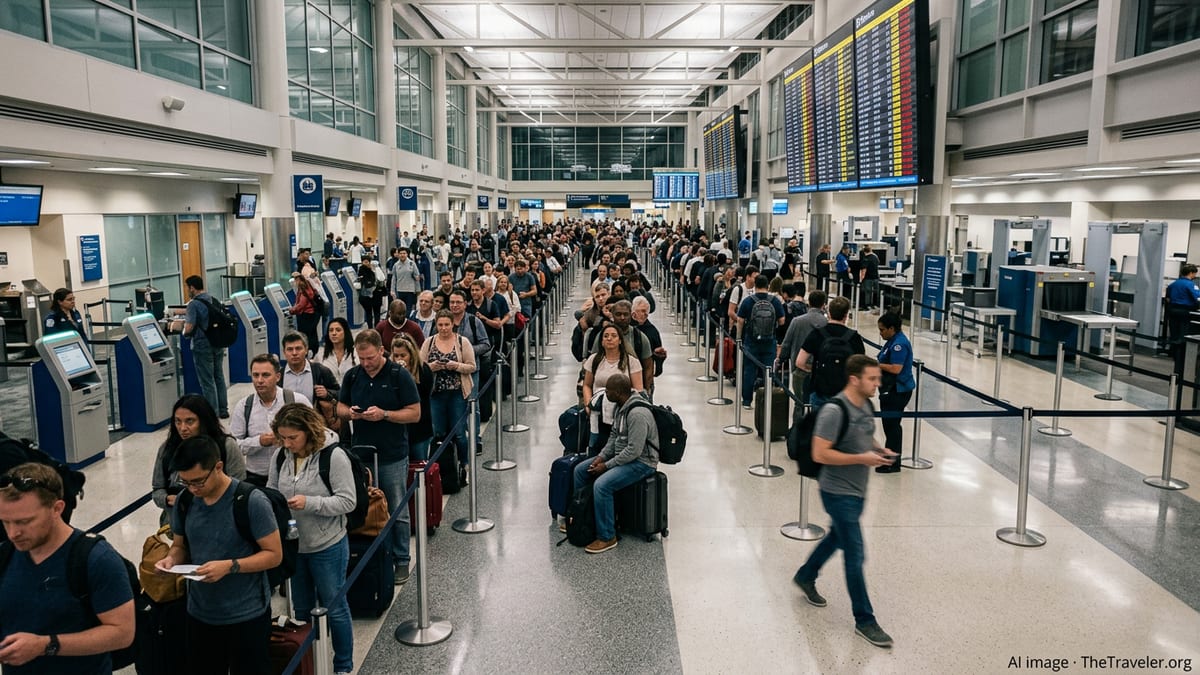
For passengers, a delayed flight can look similar in New York or Paris: crowded departure boards, long lines at service desks and frustrated travelers. Behind the scenes, however, airlines are operating within very different consumer protection frameworks. In Europe, a single regulation sets common standards for compensation and care across the European Union, Iceland, Norway and a few other linked countries. In the United States, there is no equivalent statute that guarantees cash compensation for most delays, and airlines largely decide individually what they will offer.
EU Regulation 261/2004, often referred to simply as EU261, creates harmonized rights when flights are significantly delayed, canceled or overbooked. The law applies to any flight departing an EU airport and to flights into the bloc when operated by an EU carrier, regardless of the passenger’s nationality. Public guidance from EU institutions describes a baseline of cash payments, meals, hotel stays and rerouting options when disruptions meet defined thresholds and are not caused by factors considered extraordinary, such as severe weather or air traffic control strikes beyond the airline’s control.
By contrast, U.S. law focuses on refunds when a carrier cancels or significantly changes a flight and the traveler chooses not to travel, but it does not set uniform rules on compensation when a passenger ultimately takes a delayed flight. The U.S. Department of Transportation’s consumer information pages emphasize that there are no federal requirements for airlines to provide cash, vouchers, meals or hotels during most delays, leaving those issues to airline policies and contracts of carriage.
Europe’s Structured Compensation: Cash, Care and Rerouting
Under EU261, passengers whose arrival at their final destination is delayed by at least three hours on an eligible flight may be entitled to a fixed cash payment, provided the disruption was within the airline’s control and not due to extraordinary circumstances. Fact sheets from EU institutions describe compensation bands that typically range from 250 to 600 euros per person, depending on flight distance and length of delay, in addition to rerouting or reimbursement options.
The same regulation sets out a separate “right to care” that kicks in earlier, based on how long passengers are kept waiting at the airport. Official summaries explain that airlines must provide meals, refreshments, access to communications and, where necessary, hotel accommodation and transport between the airport and the hotel once delays reach specific hour thresholds tied to route length. These obligations can apply even when the underlying cause is outside the airline’s direct control, such as prolonged air traffic management delays or weather-related ground handling issues.
Recent analysis from Eurocontrol, the pan-European air traffic management organization, shows that average departure delays remained elevated in 2023, with minutes lost to weather and air traffic flow management contributing to late arrivals. That environment has made EU261 a regular feature of the travel experience, particularly on dense intra-European routes where even modest operational disruptions can push flights over the three-hour arrival delay threshold and trigger compensation claims.
At policy level, the European Council and Parliament have periodically debated updates to clarify how EU261 applies in complex cases, such as missed connections or long diversions. Recent working documents from EU institutions indicate that officials are examining ways to streamline claims processes and enforcement so that passengers who qualify for compensation receive it more consistently, while airlines gain greater certainty about their financial exposure.
United States: Refund Rights but Few Guaranteed Payouts
In the United States, publicly available guidance from the Department of Transportation highlights a narrower set of hard rights for delayed travelers. When an airline cancels or significantly changes a flight and the passenger chooses not to travel, federal rules generally require a prompt refund of the unused ticket, even for nonrefundable fares. A final rule issued in 2024 strengthened those refund requirements and clarified when credits or vouchers must be offered for disruptions linked to serious communicable diseases and travel restrictions.
However, for passengers who accept a rebooked flight and ultimately reach their destination late, there is still no overarching federal requirement that airlines pay additional cash or cover hotels and meals, even if the disruption was within the airline’s control. The Department’s “Fly Rights” consumer page notes that each carrier sets its own policies on what it will do for delayed passengers waiting at the airport, and that these commitments are reflected in contracts of carriage and customer service plans rather than statutory obligations.
In response to extensive disruption during the 2022 travel rebound, the Department created an Airline Customer Service Dashboard that lists what the largest U.S. airlines voluntarily promise in the event of delays and cancellations they control. The dashboard shows that while carriers may offer meal vouchers, hotel accommodation and free rebooking in some circumstances, none of the major U.S. airlines currently commits to automatic cash compensation purely for a long delay. Advocacy groups and some policymakers have argued that the absence of such guarantees leaves U.S. passengers with less predictable protection than their counterparts flying under EU261.
The policy gap has prompted an active rulemaking discussion. In 2024, the Department launched a proceeding to consider requiring airlines to provide standardized cash compensation, free rebooking and specific amenities for significant delays and cancellations within the carrier’s control. Public filings describe the effort as an attempt to reduce financial losses for passengers and align expectations more closely with regimes in Europe and Canada, though any final rule is still subject to further analysis and potential legal challenge.
How Airline Practices Differ in Real Life for Travelers
For travelers, these structural differences translate into contrasting experiences at the gate and after trips go wrong. In Europe, once a disruption meets EU261 thresholds and is not attributed to extraordinary circumstances, the framework centers on automatic, standardized entitlements. Passengers are meant to be offered rerouting at the earliest opportunity, including on other airlines when appropriate, or a refund, along with care such as meals and hotel stays. Separately, eligible travelers can claim the fixed-sum compensation that is not tied to the ticket price and can significantly exceed the original fare on short-haul routes.
In the United States, airlines retain far greater discretion. Public dashboards and customer service plans show that many large carriers commit to rebooking stranded passengers on their own services at no additional cost when the disruption is within their control, and some offer overnight hotels or ground transportation to and from lodging in specific scenarios. Yet offers can vary by airline, airport and operational context, and passengers often must negotiate at the airport or through call centers rather than rely on standardized cash payments triggered by a delay threshold.
Another difference lies in how easily passengers can enforce their rights. In Europe, consumer organizations, national enforcement bodies and specialized claims firms routinely cite EU261 in disputes, and court decisions over the past decade have clarified that long delays can be treated similarly to cancellations for compensation purposes. In the United States, enforcement typically focuses on whether airlines comply with refund rules and accurately disclose policies, rather than on delay-specific payments. Travelers seeking additional redress beyond refunds may need to navigate individual airline complaint processes or pursue civil claims, which can be time-consuming.
With global air traffic continuing to recover and congestion persisting at many major hubs, these divergent approaches are likely to remain a defining feature of transatlantic travel. Passengers booking itineraries across both jurisdictions face a patchwork of protections that can change mid-journey depending on where their flight originates and which carrier operates each leg, making it important to understand in advance what local rules and airline commitments will apply if schedules unravel.
Policy Debates and the Push for Closer Alignment
Ongoing debates on both sides of the Atlantic suggest that flight delay protections may yet evolve. In Europe, recent Council working papers point to a focus on fine-tuning existing rules rather than abandoning the core EU261 model. Discussions have included how to better define extraordinary circumstances, ensure quicker handling of compensation claims and balance consumer interests with the financial pressures facing airlines after years of volatility.
In the United States, policymakers are weighing whether to move closer to the European approach by making certain forms of compensation and care mandatory when disruptions are within a carrier’s control. Analytical studies submitted to the Department argue that predictable compensation could improve on-time performance by altering airline incentives, though industry groups have warned that rigid obligations might also raise operating costs and, in turn, fares.
For now, travelers choosing between American and European airlines face not only different route networks and service cultures, but also fundamentally different safety nets when flights are delayed. As governments refine their rules and airlines adjust their customer commitments, the contrast between the two systems remains a central factor in how disruption is managed at the world’s busiest airports.
European Commission – Air passenger rights and EU261 overview
Council of the European Union – Air passenger rights policy page
U.S. DOT – Airline Customer Service Dashboard
U.S. DOT – Fly Rights consumer guide
U.S. DOT – Final rule on refunds and consumer protections (April 2024)