


More news on this day
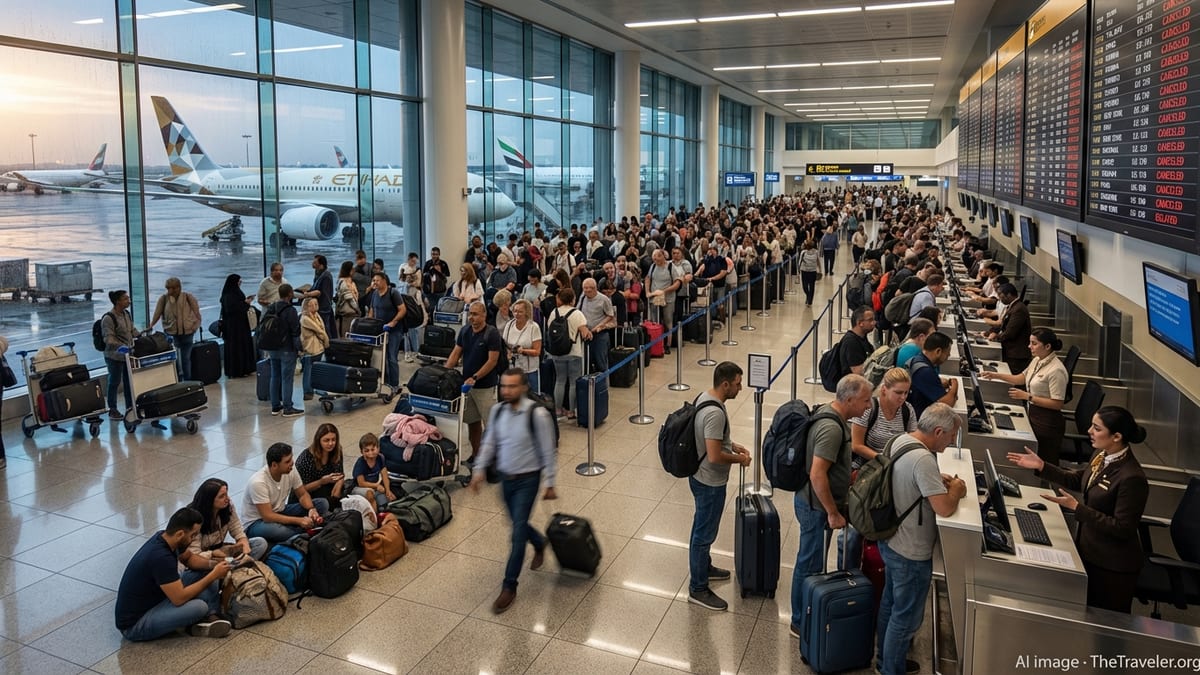
Airlines are cancelling and delaying flights across the Middle East as renewed regional tensions ripple through key Gulf hubs, with disruptions affecting itineraries that route through Abu Dhabi and Riyadh and prompting longer-term schedule changes by some international carriers.
Get the latest news straight to your inbox!
What’s driving the latest wave of cancellations
Published coverage over the past two weeks has linked the disruptions to a fresh escalation in regional security conditions, including missile activity over and near Jordan and wider hostilities involving the United States and Iran. The immediate effect for travelers has been a fast-moving mix of last-minute cancellations, holding patterns, and irregular operations that can change several times in a single day.
Unlike weather-related shutdowns that tend to be localized, security-driven disruptions often spread unevenly, with some routes operating normally while neighboring city pairs are cut or heavily delayed. That patchwork has been visible in Gulf operations where airlines have adjusted flight paths, trimmed frequency, or paused specific destinations while keeping other services running.
At the same time, not every cancellation is directly tied to the regional situation. Airline operational notes show some cancellations have also been attributed to routine issues such as aircraft technical problems, which can become harder to recover from when networks are already strained and aircraft are out of position.
Abu Dhabi: rolling delays and select cancellations at Zayed International
Travel updates tracking UAE operations have shown repeated periods of delays and cancellations at Abu Dhabi’s Zayed International Airport in early and mid-September 2026, with schedules described as subject to change. Coverage has pointed to widespread delays spanning routes across Europe, Asia, and the Middle East, reflecting how quickly disruption at a hub can cascade through a long-haul network.
On the airline side, Etihad’s own flight-status updates for mid-September included at least one cancellation tied to a technical issue on a Warsaw to Abu Dhabi service dated September 13, along with delays affecting other flights around September 12. For passengers, these notices matter because they can influence rebooking priorities and the availability of alternative routings on partner carriers.
Third-party tracking has also indicated a small number of cancellations logged at Abu Dhabi during September 2026 so far, while noting that such figures can be incomplete and should be treated as indicative rather than official. For travelers, the practical takeaway is that flight status can shift close to departure time, making airline apps and direct flight-status tools the most reliable sources immediately before leaving for the airport.
Riyadh: cancellations, suspensions, and shifting international schedules
Riyadh has been affected both by day-to-day irregular operations and by longer scheduling decisions. A prominent example is Cathay Pacific’s published travel advisory stating that its Dubai and Riyadh passenger flights have been cancelled up to and including November 30, 2026, with affected customers offered options such as rebooking, rerouting, or refunds.
That kind of multi-month suspension can reshape connectivity for travelers who typically rely on Gulf hubs to bridge Asia, Europe, and Africa, and it can also reduce seat availability during peak travel periods. It also adds pressure to remaining options via other hubs, particularly when carriers are already managing longer routings and tighter operational buffers.
Separate industry operational updates have also described cargo-side constraints affecting the region, including notes that certain carriers have suspended or restricted service to Gulf destinations including Riyadh, with some suspensions described as open-ended. While cargo disruptions are a different market, they can be another signal of how airlines are assessing operational complexity and risk across the same air corridors.
How Gulf hubs are handling air-traffic disruption risk
Publicly available aviation circulars in the UAE describe procedures designed to manage arrival capacity during disruption, including temporary stoppages of departures from specific regional airports destined for affected UAE airports when arrival delays reach certain thresholds. In more severe scenarios, the procedures describe denying entry into the Emirates flight information region for traffic bound for disrupted airports once holding capacity is reached, with coordination among neighboring control centers.
For travelers, these air-traffic management steps can translate into gate holds, delayed pushbacks, airborne holding, or diversions, even when an airport remains officially open. They also help explain why some flights may show “on time” earlier in the day and then slip significantly as traffic management measures are introduced or expanded.
Because these systems prioritize safety and orderly flow, passengers connecting through Abu Dhabi, Dubai, or nearby hubs may see missed connections even without a full-scale airport closure. In practice, airlines may proactively rebook customers onto later flights or alternative routings once the scale of delays becomes clearer.
What travelers can do now: rebooking, refunds, and timing your airport arrival
With disruption patterns changing quickly, travelers booked through Abu Dhabi, Riyadh, or nearby Gulf hubs may benefit from checking flight status repeatedly on the day of travel, including within a few hours of departing for the airport. Published travel advisories have repeatedly emphasized verifying the latest status directly with the operating carrier rather than relying on older itinerary emails.
If a flight is cancelled, many airlines’ disruption policies focus on rebooking, rerouting, or refunds, and some carriers have published flexible arrangements specifically tied to the current situation. Passengers with multi-leg itineraries should check whether all segments are on the same ticket, since that can affect re-accommodation options when a hub connection is missed.
Travelers with time-sensitive trips may also consider proactively choosing routings that reduce reliance on the most affected corridors, even if it means longer total travel time. In the current environment, the most useful planning approach is building more connection time, staying alert for schedule-change emails and app alerts, and keeping an alternative routing in mind before arriving at the airport.