


More news on this day
Two separate airport shutdowns in Europe this month have rippled into UK flight schedules, with a security-related closure at Berlin Brandenburg Airport and a temporary halt to departures at London Heathrow forcing cancellations, delays, and last-minute reroutes across short-haul networks.
Get the latest news straight to your inbox!
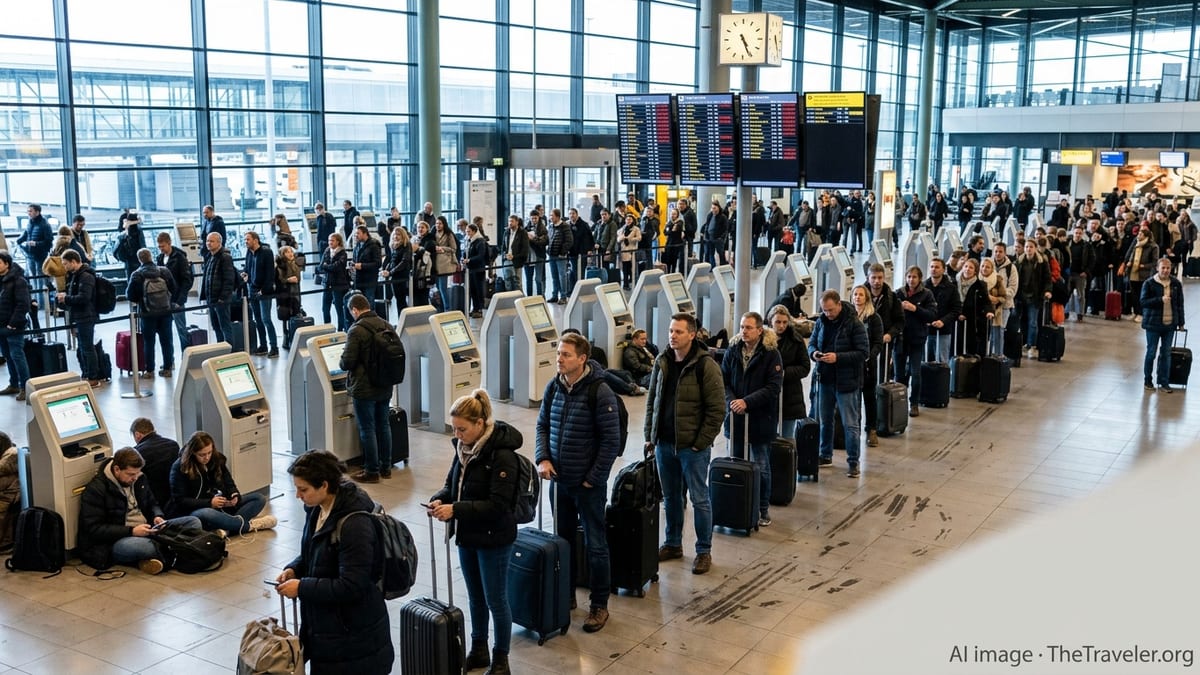
Berlin’s BER evacuation caused immediate short-haul disruption
Published coverage indicates Berlin Brandenburg Airport (BER) temporarily shut parts of its operation after an incident that led to the evacuation of Terminal 1. The disruption affected check-in and passenger processing and contributed to delays as the terminal was cleared and operations were brought back online.
For UK travelers, Berlin is a high-frequency market with multiple daily services to London-area airports and other UK cities, meaning even a short closure can cascade quickly. When departures are held, aircraft and crews can end up out of position for their next sectors, increasing the risk of later cancellations across the day.
Some passengers reported knock-on effects including rebookings and longer waits as airlines worked through the backlog after the terminal reopened. The immediate impact tends to be most visible on same-day turnarounds, where a delayed outbound departure from Berlin can later disrupt the inbound UK return, and then the aircraft’s subsequent rotation.
Heathrow departures were briefly halted after a drone-related alert
Separately, reports indicate London Heathrow temporarily stopped departures following a drone sighting near Terminal 5, prompting a safety response that included checks of the surrounding airspace. Even short ground stops at a hub like Heathrow can create wide network disruption because runway capacity is tightly scheduled and stands can fill quickly once aircraft are unable to depart.
For UK-bound travelers from Europe, the most common knock-on issue is not only the delayed arrival into London, but also missed onward connections and aircraft displacement. When an inbound flight is delayed arriving into Heathrow, the same aircraft may later operate another European service, spreading disruption to additional routes.
While flight tracking and airport status pages typically show the most current information, travelers often see the operational consequences for hours after a ground stop ends, as airlines rebalance aircraft, crews, and passenger loads across later departures.
Why two shutdowns can trigger days of knock-on effects
Airport closures and emergency halts tend to be brief, but the aftershocks can last longer than travelers expect. A single afternoon disruption can push a sequence of flights past crew duty limits, forcing cancellations later in the day even after normal operations resume.
Where airlines rely on aircraft to complete multiple rotations, a delay early in the schedule can break the day’s plan. This is especially noticeable on high-utilization fleets serving business-heavy routes between the UK and major European capitals, where turn times are short and spare aircraft are limited.
In early September, the UK also experienced a separate air-traffic technical disruption that caused widespread cancellations across major airports, with delays continuing into the following day as airlines repositioned aircraft and rebooked passengers. When multiple disruptions occur in the same month, recovery can be harder, since networks may already be operating with less slack.
What UK travelers can do now: rebooking, refunds, and care
UK travelers affected by cancellations should focus first on getting a confirmed alternative itinerary in writing through their airline channel, rather than relying on airport queues. Publicly available guidance from the UK Civil Aviation Authority (CAA) emphasizes that passengers are still owed assistance such as rerouting or refunds when flights are cancelled, and in many cases care like meals and hotel accommodation during extended delays.
Compensation rules can be more complex. The CAA has recently highlighted that disruption linked to an air-traffic technical outage is likely to be treated as “extraordinary circumstances,” which can affect cash compensation, while not removing the airline’s obligations around rerouting and care. For airport shutdowns tied to security incidents or airfield restrictions, eligibility can depend on the specific cause and the carrier’s ability to demonstrate the circumstances.
For travelers heading between the UK and Berlin, Amsterdam, Paris, or Rome, practical steps include monitoring the airline’s app for aircraft changes, allowing extra buffer time for airport processing after a disruption, and keeping receipts if the airline instructs passengers to arrange their own accommodation or meals during irregular operations. If travel is time-critical, checking same-day rail alternatives on certain routes, where feasible, can provide a backup when short-haul flights are unstable.