


More news on this day
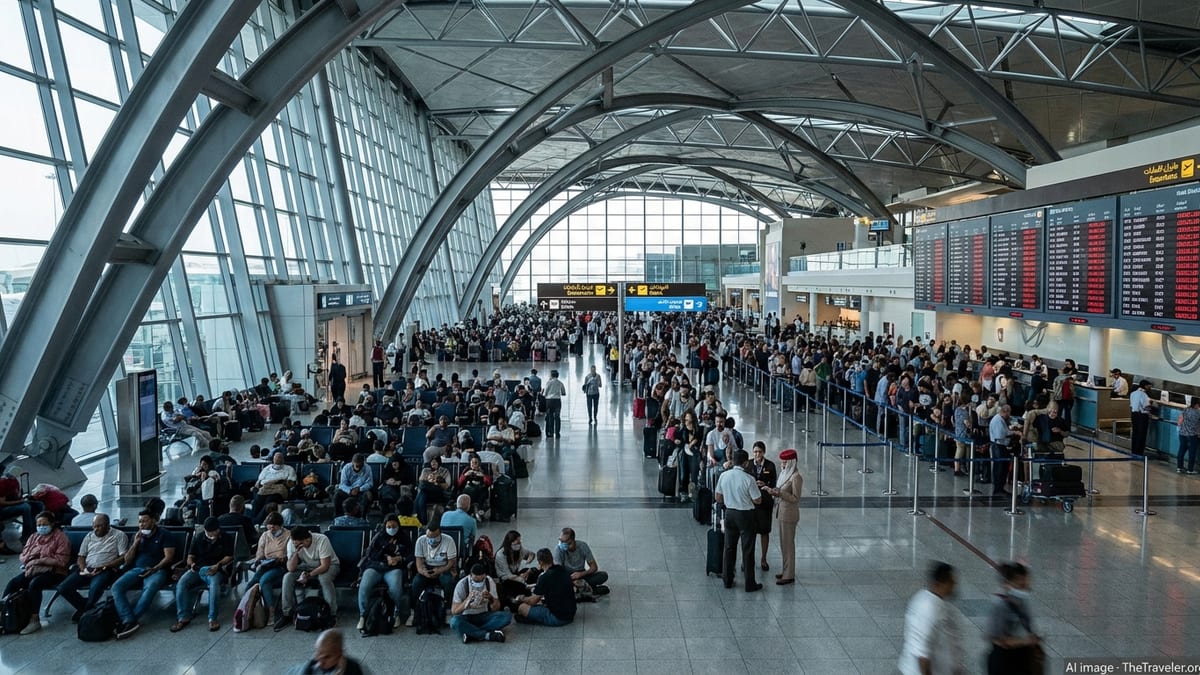
Air travel across the Gulf faced fresh disruption on July 16 as carriers in the United Arab Emirates, Saudi Arabia, Kuwait and Oman cancelled 249 flights and delayed a further 887, hitting operations at major hubs used by Emirates, Etihad, Saudia and other regional airlines.
Get the latest news straight to your inbox!
Regional Tensions Feed A New Wave Of Disruption
Publicly available flight tracking data and regional media coverage indicate that the latest wave of cancellations is closely linked to a deteriorating security backdrop, including recent attacks and airspace warnings affecting several Gulf states. The disruption has accelerated in mid July, with operations at Bahrain and parts of the wider Gulf airspace repeatedly highlighted as flashpoints.
Reports from regional outlets describe airports in the United Arab Emirates and Saudi Arabia operating under heightened alert amid the broader conflict involving Iran, the United States and Israel. Earlier phases of the crisis saw partial airspace closures and diversions across the Gulf, with exceptional or humanitarian services used to move stranded passengers. The current pattern of 249 cancellations and 887 delays across UAE, Saudi Arabia, Kuwait and Oman represents one of the sharpest single day shocks to regional schedules since the escalation began.
Analysts following the crisis note that Gulf hubs remain central to global connectivity between Asia, Europe and Africa, so even limited interruptions ripple far beyond the region. Reroutings around restricted airspace have already added flying time and fuel costs for many long haul services, while day of travel cancellations at Gulf hubs are forcing airlines to undertake costly reaccommodation efforts.
Emirates, Etihad, Saudia And Others Forced To Trim Schedules
Emirates and Etihad, the two largest carriers in the UAE, have been among the airlines most exposed to the latest disruptions. Public flight status pages and airport departure boards show a mix of cancellations and rolling delays across their networks, particularly on services touching Saudi Arabia, Kuwait and Bahrain, where security concerns and operational limits have been most acute.
In Abu Dhabi, Etihad has already been forced to turn back at least one flight in recent days after disruption at a nearby Gulf airport, with follow on services between the UAE and Bahrain cancelled as a precaution. Similar patterns are evident for selected routes linking the Emirates’ hubs with Saudi regional airports, especially those closer to conflict affected border areas.
Saudi flag carrier Saudia has also adjusted its schedules, with certain services into and out of Gulf neighbors, including the UAE and Kuwait, affected by the widened regional risk picture. Kuwait Airways and Oman Air, along with smaller regional operators, have reported a combination of outright cancellations and extended delays as they navigate intermittent airspace restrictions and congestion on alternative corridors.
For many carriers, the immediate response has focused on consolidating flights, prioritizing higher demand trunk routes and temporarily suspending more marginal services. Aviation analysts suggest that this approach is likely to continue as long as airspace advisories remain fluid and the threat level to civil aviation infrastructure across the Gulf stays elevated.
Airspace Warnings And Operational Bottlenecks
The latest cancellations come amid a series of advisories urging airlines, particularly from Europe, to exercise extreme caution or avoid parts of Gulf airspace altogether. Recent guidance for carriers to bypass airspace over or near the UAE, Bahrain, Kuwait and sections of the Gulf of Oman has added fresh complexity to route planning and flight operations.
Earlier in the year, large scale airspace closures across Iran, Iraq, Kuwait and several Gulf states forced thousands of daily cancellations and diversions. Although full closures have given way to more targeted restrictions, the system remains fragile. With Saudi Arabia currently serving as one of the principal remaining east west corridors, traffic has become increasingly concentrated, heightening the risk of delays triggered by air traffic control bottlenecks and congestion at key entry points.
Regional reporting notes that exceptional flights and ad hoc corridors have helped clear some of the backlog of stranded passengers since the spring. Even so, the cumulative effect of recurring restrictions, changing flight paths and intermittent airport disruptions is being felt anew in July as airlines once again pare back schedules to protect safety margins.
Knock On Effects For Passengers And Global Networks
The scale of the latest flight disruption has immediate consequences for passengers connecting through Gulf hubs. With 249 services cancelled and 887 delayed across the four countries, travellers face missed connections, unexpected overnight stays and reroutings via alternative hubs in Europe, Asia or Africa.
Travel advisories and airline updates consistently urge passengers to check their flight status before leaving for the airport, highlighting that schedules can change at short notice. Some carriers are allowing fee free rebooking or refunds on affected routes, while others are prioritising re accommodation on the next available service, though seat availability is tightening on popular corridors at the height of the northern hemisphere summer season.
Because Emirates and Etihad function as major transfer airlines linking long haul networks, disruption at Dubai and Abu Dhabi can quickly cascade into schedule changes in Europe, North America, Africa and Asia. Saudia and Kuwait based carriers play a similar role for regional and pilgrimage traffic, meaning that cancellations there can particularly affect religious travellers and migrant workers during peak periods.
Industry observers warn that if security conditions deteriorate further, airlines may be forced into deeper cuts or fresh suspensions on some routes, compounding the strain on already stretched contingency plans.
Outlook: Volatile Summer For Gulf Aviation
Aviation specialists describe the current environment as one of heightened but managed disruption, with airlines in the UAE, Saudi Arabia, Kuwait and Oman attempting to maintain core connectivity while responding to fast changing security assessments. The sharp spike in cancellations and delays on July 16 underscores how quickly operational conditions can tighten when incidents or new advisories emerge.
Medium term projections for Gulf aviation remain uncertain. On one hand, strong underlying demand for travel, the strategic geography of Gulf hubs and substantial fleet investments by Emirates, Etihad, Saudia and others support a rapid rebound once conditions stabilise. On the other, recurring conflict related shocks, higher insurance and fuel costs, and the possibility of further airspace restrictions have increased the risk profile of operating in the region.
For now, passengers planning to transit through the Middle East are being encouraged by publicly available guidance to build in additional flexibility, monitor airline communications closely and be prepared for last minute changes. The latest figures from the four Gulf states show that even as airlines work to keep planes in the sky, the margin for disruption remains narrow, and a single day of heightened tension can still translate into hundreds of cancelled and delayed flights across the region.