


More news on this day
A preliminary review by the Transportation Safety Board of Canada has identified several structural deficiencies on a Canadian National Railway track segment in Repentigny, Quebec, where a freight train derailed on July 5, raising fresh questions about track maintenance and safety oversight on a busy corridor northeast of Montreal.
Get the latest news straight to your inbox!
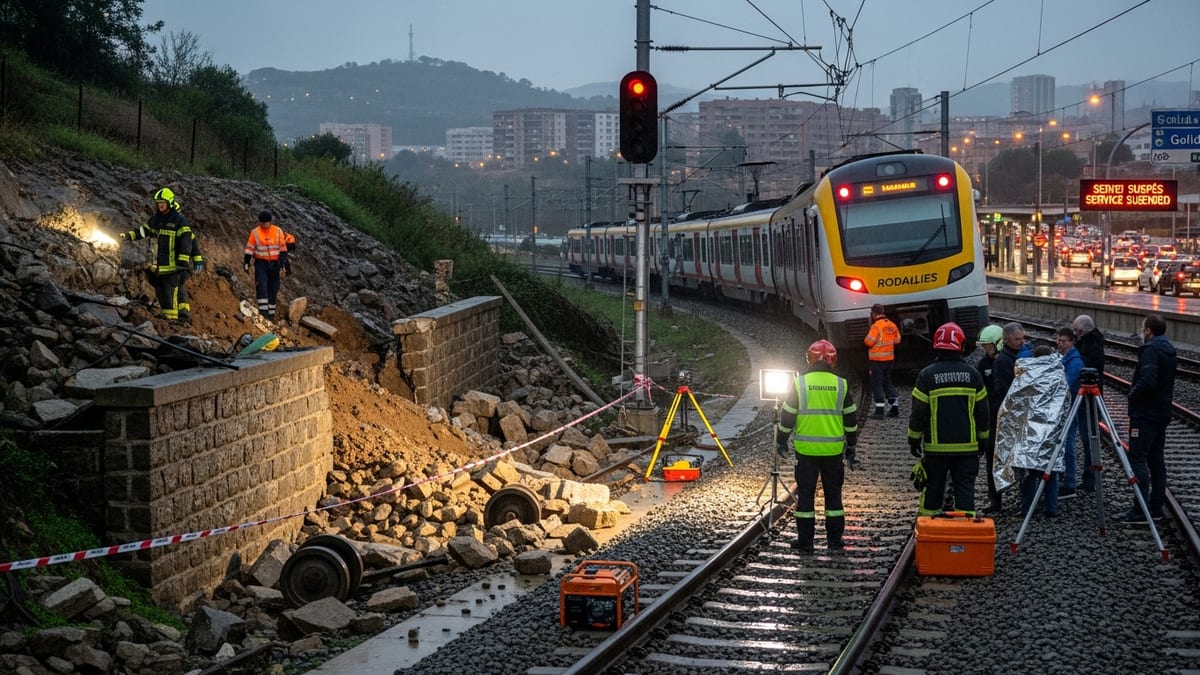
Preliminary findings highlight missing rail anchors and instability
According to publicly available TSB material and local media coverage, investigators examining the derailment site in Repentigny observed missing or displaced rail anchors on portions of the track where the CN freight train left the rails. Rail anchors are metal devices installed on the base of the rail to prevent longitudinal movement, particularly under heavy traffic loads and temperature fluctuations.
Technical explanations published by the board indicate that when anchors are absent or not properly positioned, stresses in the rail can redistribute, reducing both longitudinal and lateral stability of the track. In hot weather, this can heighten the risk of track buckling, a phenomenon in which rail segments deform under compressive forces and can lead to a sudden loss of alignment.
Initial information from the scene suggests that this kind of instability is a central line of inquiry in Repentigny. The freight consist, operated by Canadian National, derailed on a stretch of the company’s main line that runs through residential and commercial districts close to the St. Lawrence River, an area that sees regular freight and passenger traffic.
The TSB’s early observations have been communicated to federal regulators to support immediate risk mitigation, even as a full investigation into all causal and contributing factors continues.
Busy Montreal–Quebec rail corridor under renewed scrutiny
The derailment in Repentigny occurred on a key artery linking Montreal to eastern Quebec, a route that carries a mix of container traffic, bulk commodities and other freight. Publicly accessible route maps and past case summaries from the TSB show that this corridor, like many main lines in Canada, has been the subject of ongoing monitoring because of the volume of trains and the proximity of tracks to urban communities.
Residents in the Repentigny area reported rail traffic disruptions and visible emergency responses along the line following the July 5 incident. While no serious injuries were reported, images and accounts circulating in local coverage show derailed freight cars leaning or resting beside the track, underscoring the potential consequences if similar events were to involve hazardous materials or occur at higher speeds.
The incident adds to a series of derailments and near misses across the national rail network that have prompted the safety board to call attention to infrastructure condition, train handling and signal compliance. Recent TSB reports on occurrences in Ontario, Alberta and British Columbia have stressed that track geometry, rail wear and anchor conditions need ongoing assessment, particularly where climate and traffic levels are changing.
For travelers and tourism operators in the greater Montreal region, rail reliability is an important factor in perception of safety and connectivity, even when derailments involve freight movements rather than passenger services.
How the TSB investigation process works
The safety board’s documentation outlines a multi-stage investigation process that begins with deployment of investigators to the site to document the scene, recover on-board data and interview personnel. In Repentigny, this initial phase has already led to the identification of track-related deficiencies, but officials emphasize that these preliminary observations do not yet represent a final cause finding.
Subsequent phases typically involve laboratory analysis of rail components, review of maintenance records, examination of train handling data and assessment of weather and operating conditions at the time of the derailment. The board then evaluates whether the evidence points to systemic shortcomings in infrastructure maintenance, inspection practices, or broader regulatory frameworks.
Publicly available policy statements from the TSB indicate that when safety issues are considered urgent, the board issues advisories to industry and Transport Canada before a final report is published. In the Repentigny case, the advisory highlighting missing and displaced rail anchors is intended to support near-term action on similar track segments while the comprehensive report is prepared.
Final investigation reports, which can take months to complete, typically include detailed narratives of the sequence of events, technical analysis of contributing factors and formal recommendations addressed to railways, infrastructure owners and regulators.
Track maintenance standards and regulatory oversight in focus
Information published by the TSB and referenced in recent news coverage indicates that attention is now turning to whether existing inspection regimes and maintenance standards along the Repentigny corridor were sufficient to detect and correct the deficiencies identified on the CN tracks. In particular, questions are being raised about how frequently rail anchors and fastenings were checked and what criteria triggered repairs or slow orders.
National regulations set by Transport Canada establish minimum requirements for track condition, geometry and inspection intervals. However, enforcement relies partly on railway self-reporting and internal maintenance programs, which vary according to traffic volumes and route characteristics. Previous TSB investigations into derailments elsewhere in Canada have occasionally pointed to gaps between written standards and the state of tracks observed after an occurrence.
In this context, the Repentigny derailment is drawing attention from municipal leaders, local residents and transport observers who view it as another reminder of the need for sustained investment in rail infrastructure. Commentators in regional media have noted that as urban development intensifies near main lines, the consequences of any infrastructure failure can be magnified, even in incidents that do not result in injuries.
Industry analysts following the case suggest that the eventual report may provide further guidance on whether additional monitoring technologies, such as automated track geometry cars or hot-weather slow orders, should be more widely used on heavily trafficked lines through populated areas.
Implications for passengers and freight along the St. Lawrence
While the Repentigny derailment involved a freight consist, the line is part of a broader rail ecosystem that supports long-distance passenger services and regional commuter movements along the St. Lawrence corridor. Travel planners and tourism operators often rely on a perception of resilient rail infrastructure when promoting itineraries that combine urban stays in Montreal with visits to nearby riverside communities.
Public information from the TSB emphasizes that lessons learned from freight derailments are intended to enhance safety across all types of rail operations. By flagging deficiencies such as missing rail anchors on a mixed-use corridor, the board aims to encourage both infrastructure owners and regulators to review similar locations where track conditions and thermal stresses may interact in comparable ways.
In the near term, passengers may experience schedule adjustments or temporary speed restrictions as CN and other operators address any issues identified along the corridor. Although such measures can create delays, safety specialists generally regard them as an essential part of managing risk while longer-term infrastructure work is planned and implemented.
For Repentigny and neighboring communities, the investigation’s findings will likely inform future discussions about land use planning, emergency preparedness and the balance between freight capacity and community safety along one of Quebec’s most important rail routes.