


More news on this day
Airlines are redrawing flight paths across the Middle East after Israel issued a new regional aviation risk alert that now links Israel, Lebanon, the United States, Iran, Iraq, Jordan, Bahrain and several Gulf states in a single disruption corridor, just days after a US-brokered framework with Lebanon came under pressure amid renewed strikes in the country’s south.
Get the latest news straight to your inbox!
US-brokered framework tested by renewed strikes
Published coverage shows that Israel, Lebanon and the United States signed a trilateral framework agreement in Washington on June 26, intended to end months of fighting in southern Lebanon and create conditions for a phased Israeli pullback. Reports describe the framework as a step toward a broader peace arrangement, with Lebanese forces expected to assume control of designated pilot zones in the south while international partners monitor compliance.
Despite the diplomatic milestone, media reports from regional and international outlets indicate that Israeli air operations in southern Lebanon resumed within days of the signing. Coverage from Beirut and the border region points to new strikes on communities in the south, underscoring how fragile the arrangement remains on the ground.
Reports also highlight that Hezbollah was not a signatory to the framework and has publicly rejected its terms. Analysts quoted in global coverage suggest this exclusion has weakened implementation prospects and left a gap between commitments made in Washington and realities in southern Lebanon, where Hezbollah retains significant influence and military capability.
The result is an uneasy mix of diplomatic progress and continuing volatility that has quickly fed into aviation risk assessments, as airspace planners weigh the implications of renewed strikes along a key stretch of the eastern Mediterranean.
New multi-country flight disruption corridor
According to specialist travel and aviation media, Israel’s latest aviation risk notice effectively links Israel, Lebanon, the United States, Iran, Iraq, Jordan, Bahrain, Kuwait, Qatar, Oman, the United Arab Emirates and Saudi Arabia inside a single, interrelated “flight disruption” zone. The alert reflects the way multiple conflicts and political crises, from the Israel–Lebanon front to tensions with Iran, are interacting across regional airspace.
Publicly available information indicates that the notice does not close airspace outright but warns of heightened military activity, possible missile and drone operations, and rapidly shifting security conditions. Authorities in the United States and Europe are reported to be updating their own guidance to airlines, incorporating the implications of the Israel–Lebanon framework and subsequent flare-ups in the south.
Industry analysis suggests that this broad corridor is less a contiguous no-fly zone than a patchwork of overlapping advisories and dynamic risk areas. However, by defining a wide region in which military and political developments can quickly disrupt civil aviation, the notice is pushing carriers to reassess both overflight and destination choices on routes that traverse the Levant, Iraq and the Gulf.
The move comes at a time when global airline revenues are projected by industry bodies to exceed one trillion dollars in 2026, but with pressure on margins from higher insurance costs, fuel prices and operational disruptions. Expanded risk zones over the Middle East add another layer of uncertainty to an already complex operating environment.
Airlines reroute over the Levant and Gulf
Early indications from flight-tracking data and airline statements, as summarized in aviation and business media, show carriers trimming exposure to high-risk airspace near southern Lebanon and parts of northern Israel. Some long-haul services between Europe and the Gulf are reported to be shifting further south over Egypt or the Red Sea, adding distance and fuel burn but reducing proximity to active fronts.
Routes that previously transited Iraqi and Iranian airspace are also under renewed scrutiny. Coverage of recent attacks on commercial vessels near the Strait of Hormuz and the broader US–Iran confrontation suggests that airlines are once again weighing the security and insurance implications of flying near potential missile and drone activity. A number of operators have reportedly adjusted routings around the Gulf’s eastern approaches or increased altitude and timing buffers to mitigate risk.
Regional hubs such as Dubai, Doha, Abu Dhabi and Riyadh continue to function as major connecting points, but planners are factoring in the possibility of sudden restrictions or short-notice diversions if the Israel–Lebanon front or the Iran–US standoff escalates. This has led to more conservative schedule padding, the use of additional reserve aircraft on select routes, and closer coordination between operations centers and external security briefings.
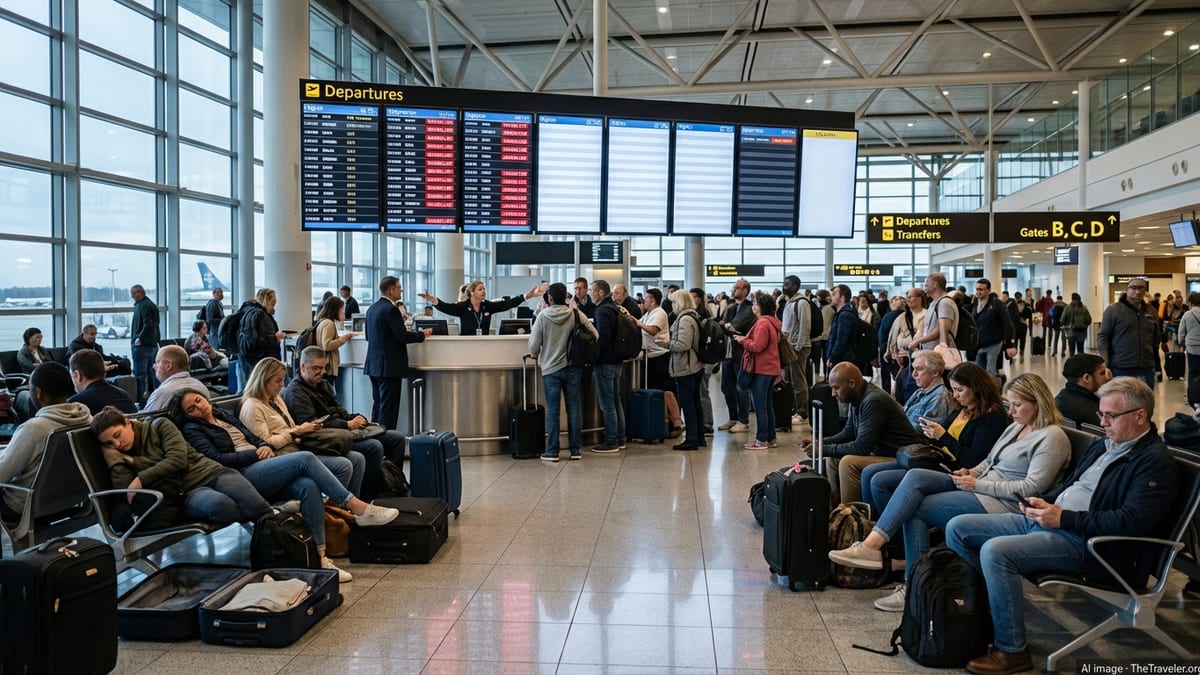
For passengers, the practical impact is currently seen more in longer flight times and occasional last-minute routing changes than in widespread cancellations. However, analysts warn that a further deterioration along the Israel–Lebanon border or a significant incident involving regional airspace could prompt sharper cuts, particularly on secondary routes.
Travelers face longer journeys and evolving advisories
Travel industry reports indicate that tour operators, corporate travel managers and online booking platforms are beginning to flag a higher likelihood of disruptions for itineraries that rely on tight connections through the Middle East. Longer block times, extended layovers and occasional missed onward flights are being noted as early consequences of more circuitous routings around sensitive airspace.
Insurers and risk consultancies are also updating country and corridor ratings for parts of the region. While major hubs remain open and functioning, travel advisories increasingly emphasize the importance of flexible tickets, real-time notifications from airlines and contingency planning, particularly for business travelers with time-critical appointments.
For leisure travelers, especially those combining Gulf stopovers with trips to Europe, Asia or East Africa, publicly available guidance recommends allowing additional connection buffers and monitoring airline communications closely in the days before departure. The situation is especially fluid for flights skirting Lebanon, northern Israel, western Syria and parts of Iraq, where operational decisions can change from one news cycle to the next.
Industry analysts quoted in recent coverage emphasize that, for now, commercial aviation remains resilient, with carriers adapting routes rather than suspending large numbers of services. But with the Israel–Lebanon framework under visible strain and wider regional tensions involving Iran, Iraq and Gulf states, the Middle East’s role as a critical aviation crossroads is likely to come with continued complexity for airlines and travelers alike.