


More news on this day
Rail travel around central Kyoto was disrupted early on June 29 after a Kintetsu Kyoto Line local train derailed within the Kyoto Station complex, with operators reporting no injuries among the roughly 30 passengers on board.
Get the latest news straight to your inbox!
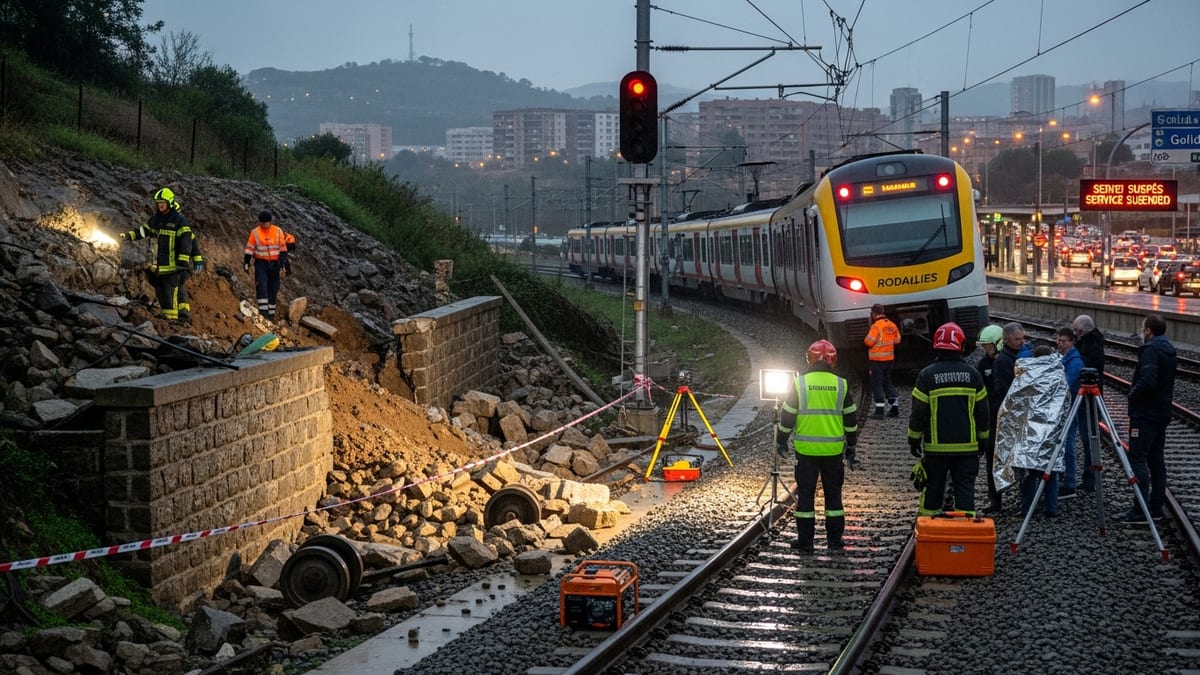
Early-morning derailment on Kintetsu Kyoto Line
According to widely circulated domestic reports, the incident occurred at around 5:13 a.m. on June 29, shortly after the four-car local service departed Kintetsu Kyoto Station bound for Kashihara Jingu-mae in Nara Prefecture. The train had just cleared the platform area and was navigating a set of points within the station premises when several wheels left the tracks.
Railway operator Kintetsu has reported that the second and third cars were affected, with some wheelsets derailing while the train was still moving at low speed. The driver is reported to have felt an unusual pulling sensation from the rear of the train and brought the service to a stop within a short distance of the station platforms.
No fire or structural damage to the car bodies was reported, and there were no immediate signs of damage to overhead power equipment. Visuals carried by Japanese television networks showed the affected cars slightly skewed relative to the rails, surrounded by maintenance staff and inspectors.
As of late morning local time, no injuries had been reported among passengers or crew. However, the derailment brought traffic on part of the Kintetsu Kyoto Line to a standstill at the start of the weekday rush, causing ripple effects for commuters and travelers connecting through one of Japan’s busiest rail hubs.
Service suspensions and disruption for commuters and visitors
Publicly available service bulletins showed that Kintetsu suspended operations between Kyoto Station and Kamitobaguchi or Shintanabe on the Kyoto Line in the hours following the derailment. Trains continued to operate on unaffected sections of the route, but frequencies were reduced and knock-on delays were reported across the wider network.
The Kyoto Line forms a key corridor linking Kyoto with Nara and other communities in southern Kyoto and northern Nara prefectures. The suspension left many early commuters searching for alternatives, including JR lines, local buses, and subway services running through Kyoto Station and the nearby Kyoto Municipal Subway Karasuma Line.
Domestic broadcasters reported scenes of passengers walking along the track from the immobilized train toward the station under staff guidance, a standard procedure in low-speed incidents when it is considered safe to evacuate onto the ballast. Others arrived at Kintetsu Kyoto Station to find platforms closed and were directed toward other rail operators’ concourses inside the sprawling station complex.
Tourists staying near Kyoto Station or traveling toward Nara and the Kintetsu-served districts of southern Kyoto also faced itinerary changes. With the derailment occurring well before the main sightseeing period of the day, some visitors were able to adjust plans by shifting to JR lines, but travelers on timed connections faced delays and missed reservations.
Investigation launched into cause of low-speed derailment
Japan’s national accident investigation framework calls for detailed inquiry into any passenger-train derailment, even when there are no injuries. Public information released so far indicates that specialists from the relevant transport safety bodies have been dispatched to the site to inspect the derailed cars, track geometry, and switch mechanisms involved.
Initial reporting suggests that the train derailed as it passed through a turnout within the station area at relatively low speed, shortly after departure. Investigators are expected to examine whether track conditions, maintenance records, rolling stock condition, or operational factors played a role, and to review data from onboard recorders and signaling equipment.
While the precise cause has not yet been made public, low-speed yard and station-area derailments in Japan have historically been associated with issues such as track irregularities at complex pointwork, component fatigue, or anomalies in wheel and bogie condition. The presence of multiple intersecting routes at Kyoto Station, which functions as a convergence point for JR, Kintetsu, and subway lines, adds an additional layer of operational complexity.
The investigation is likely to focus not only on what caused the wheels to leave the rails but also on how quickly the train was brought to a stop, how passengers were evacuated, and how information was communicated to the public. Findings from such inquiries often lead to updated inspection protocols or infrastructure upgrades on similar stretches of track elsewhere on the network.
Impact on Kyoto’s broader transport network
Kyoto Station is one of Japan’s major multimodal gateways, serving high-speed Shinkansen services, JR conventional lines, the Kintetsu network, and the city’s subway and bus systems. The derailment occurred on tracks used by Kintetsu rather than JR or Shinkansen services, and publicly available timetables and reports indicated that bullet train and JR operations continued largely unaffected.
Even so, the loss of a key private-rail corridor created additional crowding on JR lines that parallel part of the Kintetsu route. Local coverage described busy platforms and longer queues at ticket gates as commuters and students rerouted their journeys, particularly during the morning peak.
For Kyoto’s tourism sector, which relies heavily on fast rail links to neighboring prefectures, the disturbance served as a reminder of the vulnerabilities that can emerge even in a country known for punctual and safe railway operations. Travel advisories from various outlets encouraged visitors in the region to check real-time rail information and allow extra time for transfers through Kyoto Station while recovery work continued.
By midday, operational information from rail information portals pointed to a gradual restoration of services on unaffected tracks, though with residual delays. Cleanup and re-railing operations inside the station area were expected to continue into the day, with travelers advised that full normalization of the timetable could take additional time.
Safety record and traveler guidance
Japan’s passenger railways maintain one of the strongest safety records worldwide, with serious injury incidents remaining rare relative to the density of operations and passenger volumes. The Kyoto Station derailment fits a pattern of low-speed events in controlled environments where prompt stopping and coordinated evacuation help limit harm to passengers.
Published background information on comparable cases in Japan highlights that derailments within station limits or depots often lead to significant operational disruption but limited physical damage. In those instances, detailed technical analysis has typically resulted in infrastructure improvements, updated maintenance regimes, or refinements to operating procedures to reduce the likelihood of recurrence.
For travelers planning itineraries through Kyoto in the coming days, publicly available journey planners and operator notices remain the primary reference for updated schedules. Visitors moving between Kyoto and Nara or Osaka who normally rely on Kintetsu services may find it useful to familiarize themselves with JR alternatives and subway connections, particularly during early-morning and late-evening periods when frequencies are lower.
Travel organizations recommend that passengers who have same-day reservations for rural accommodations or time-sensitive excursions build in additional buffer time when transiting Kyoto Station while full Kintetsu services are being restored. While rail operations in the region are expected to return to normal, the derailment has underscored the importance of flexibility and contingency planning for those navigating Japan’s intricate rail network.