


More news on this day
Air travel to and through the Middle East is entering a new phase in late 2026, with airlines gradually restoring suspended routes, launching new services and adjusting schedules in response to evolving security guidance and higher fuel costs.
Get the latest news straight to your inbox!
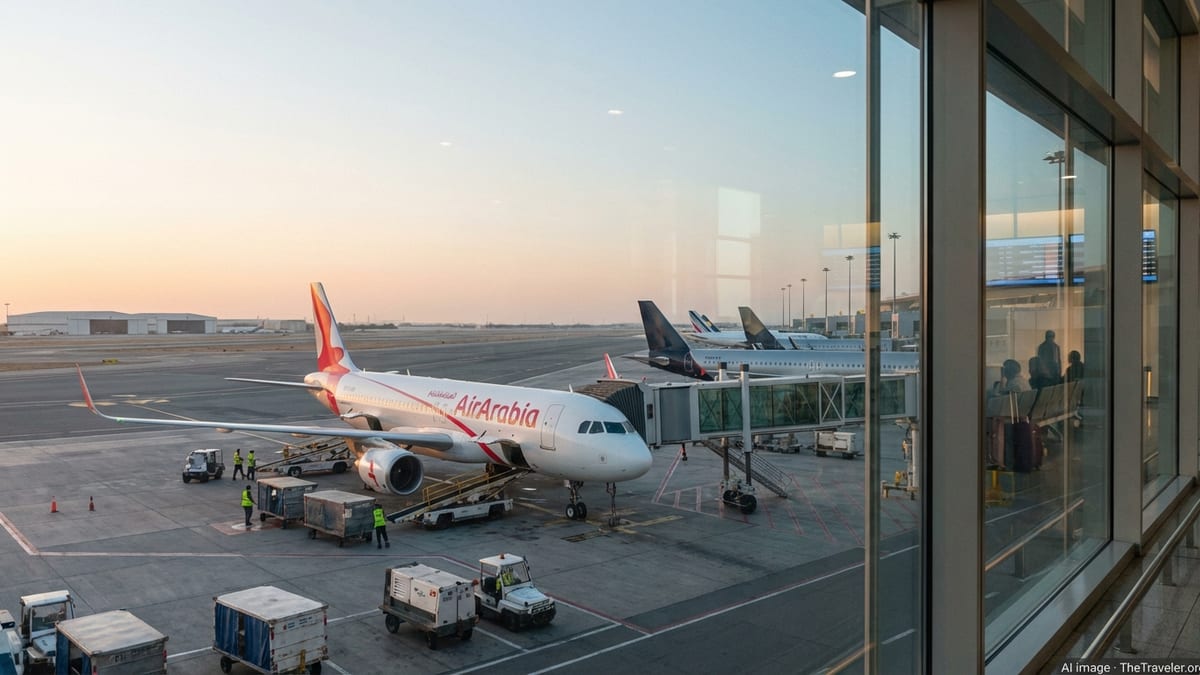
From crisis disruption to a phased return of services
Published coverage shows that airspace closures and missile strikes across parts of the Middle East in late February and March 2026 triggered one of the most severe shocks to the region’s aviation network since the pandemic, with temporary shutdowns at major hubs and thousands of cancellations across Gulf airports.
Analysis by Eurocontrol and other regional air traffic monitors indicates that in the immediate aftermath, flights between Europe and the Middle East fell sharply, with some reports citing reductions of more than half once overflights to and from North America were included. Carriers diverted traffic via alternative corridors or paused services altogether while regulators assessed the risks.
By mid-year, reports from Euronews and specialist aviation outlets noted that Gulf-based airlines such as Emirates, Etihad Airways and Qatar Airways had largely reinstated core routes, including long-haul links that connect Europe, Asia and North America through Dubai, Abu Dhabi and Doha. However, many European and some North American airlines maintained suspensions on certain Middle East destinations well into the summer timetable.
Euronews coverage in June 2026 highlighted how the Lufthansa Group, for example, concentrated on a limited restart through Austrian Airlines while keeping most other Middle East flights paused until the start of the winter 2026 season, reflecting a broader pattern of cautious re-entry rather than a rapid snapback.
Revised safety advisories reshape how airlines use regional airspace
A major development for late 2026 travel planning has been a change in official European guidance on flying over parts of the region. According to the European Union Aviation Safety Agency, the previous broad conflict-zone information bulletin covering large areas of the Middle East and Persian Gulf expired on 8 July 2026 and was not renewed in its original form.
Instead, EASA introduced a more targeted advisory structure that maintains high-risk warnings for operations in the airspace over Iran, Iraq and Lebanon while issuing separate information notes for countries including Bahrain, Israel, Jordan, Kuwait, Oman, Qatar, Saudi Arabia and the United Arab Emirates. Publicly available information shows that regulators now distinguish between airspaces where airlines are strongly advised to avoid operations and those where medium-level risks require enhanced monitoring and route planning.
This shift does not eliminate restrictions, but it gives carriers more flexibility to rebuild schedules using approved corridors that avoid the most sensitive zones. Aviation analysis from Eurocontrol suggests that long-haul flights between Europe and South or Southeast Asia are gradually reintroducing some Middle East waypoints, though routings remain longer than pre-crisis on certain city pairs due to residual closures.
Industry reports also indicate that airlines are coordinating closely with risk assessment teams to decide which flights to restore first. Routes with strong point-to-point demand, such as connections from major European capitals to Gulf hubs, have generally returned ahead of thinner secondary routes that rely heavily on transit traffic and require complex overflight planning.
New players and routes: Riyadh Air and selective expansion
Amid the turbulence, Saudi Arabia’s new carrier Riyadh Air has emerged as one of the most active airlines in opening fresh links within the wider region. Coverage in Aviation Week of August 2026 schedule changes notes that the startup has rolled out a series of new Boeing 787-9 routes from Riyadh to major South Asian cities, including Mumbai, Dhaka and Islamabad, alongside services to Lahore.
These additions are part of a wider Saudi strategy to position the capital as a long-haul hub connecting Asia, the Middle East and Europe. Network data cited in industry reports points to plans for Riyadh Air to expand from a single-digit destination list in 2026 to more than 20 routes by early 2027, with an eventual goal of serving over 100 cities worldwide by the end of the decade.
Elsewhere in the region, capacity trends are mixed. Aviation Week analysis of July and August 2026 schedules indicates that overall departing seat capacity from the Middle East has recovered to around or slightly above comparable 2025 levels, supported by domestic flying, low-cost carrier growth and the phased restart of suspended international routes. Etihad Airways, for example, is reported to have grown capacity compared with the previous year, while some other Gulf carriers are still slightly below their earlier peaks.
For travellers, this means that options are broadening beyond traditional mega-hubs. Regional carriers and new entrants are adding point-to-point services that bypass older routings, especially on high-demand labour and diaspora corridors between the Gulf and South Asia, which can indirectly free up capacity on long-haul flights linking Europe and North America to Middle Eastern gateways.
European and global policy responses affect fares and reliability
The crisis has coincided with tight global jet fuel markets and rising costs. The International Air Transport Association’s economic updates for the second quarter of 2026 note that robust demand and low inventories kept jet fuel prices elevated compared with early 2025, affecting carriers across all regions and feeding into higher operating costs per seat.
In early May 2026, the European Commission issued guidance to transport and tourism sectors outlining how existing consumer protection and competition rules apply when fuel supply from the Middle East is disrupted and certain routes are curtailed. The notice emphasised that passengers remain entitled to refunds, rerouting and airport assistance during cancellations within the scope of EU regulations, even when airlines face fuel shortages or must carry extra fuel on certain legs.
At the same time, Eurocontrol’s European Aviation Trends briefings warn that prolonged instability in Middle East airspace could continue to exert upward pressure on ticket prices, particularly on journeys that traditionally rely on Gulf hubs for competitive one-stop connections between Europe, Africa and Asia. Longer routings, constrained capacity and higher fuel costs all contribute to fares that are, in many cases, still above pre-crisis averages on these markets.
Labour and infrastructure constraints in Europe and beyond add another layer of uncertainty. A briefing from the European Parliament’s research service in 2026 notes that rising traffic volumes and staffing challenges at airports are likely to stretch ground operations, which could affect punctuality on already complex long-haul itineraries involving tight connections at Middle East and European hubs.
What travellers can expect on Middle East routes this winter
Looking ahead to the northern winter 2026 to 2027 season, schedule filings and public route announcements point to a patchwork recovery rather than a uniform return to pre-crisis patterns. Euronews reporting indicates that while some European carriers, including parts of the Lufthansa Group, plan to restart additional Middle East routes from October 2026, others such as Norwegian have suspended certain destinations, including Beirut and Tel Aviv, for an indefinite period.
Network updates compiled by specialist route trackers for October 2026 show that several airlines are adding frequencies or new city pairs to Gulf hubs, while maintaining temporary suspensions on flights that would require overflying the most affected conflict areas. In practice, travellers are likely to see more choice on mainstream corridors such as London, Paris, Frankfurt or Rome to Dubai, Abu Dhabi and Doha, but still-limited options to smaller gateways and destinations closer to active conflict zones.
For passengers originating in North America, publicly available schedule data suggests that the main US and Canadian airlines continue to rely heavily on partnerships with Gulf carriers and European allies to provide one-stop connections into the Middle East. Direct non-stop options remain relatively scarce outside a handful of large metropolitan gateways, reinforcing the importance of checking minimum connection times and potential rerouting policies when booking trips through regional hubs.
Travel analysts also highlight that conditions remain fluid. EASA has signalled that it will keep reviewing conflict-zone advisories in light of any new ceasefire developments or escalations, while Eurocontrol continues to track routeing patterns and delays. Airlines are therefore keeping some flexibility in their winter schedules, enabling swift capacity shifts if political or security conditions improve or deteriorate during the season.