


More news on this day
Delta Air Lines is moving ahead with plans to launch its first nonstop service between Atlanta and Riyadh in late October, even as a recent internal security alert advises company employees not to travel to the Saudi capital in the near term following a drone strike at King Khalid International Airport.
Get the latest news straight to your inbox!
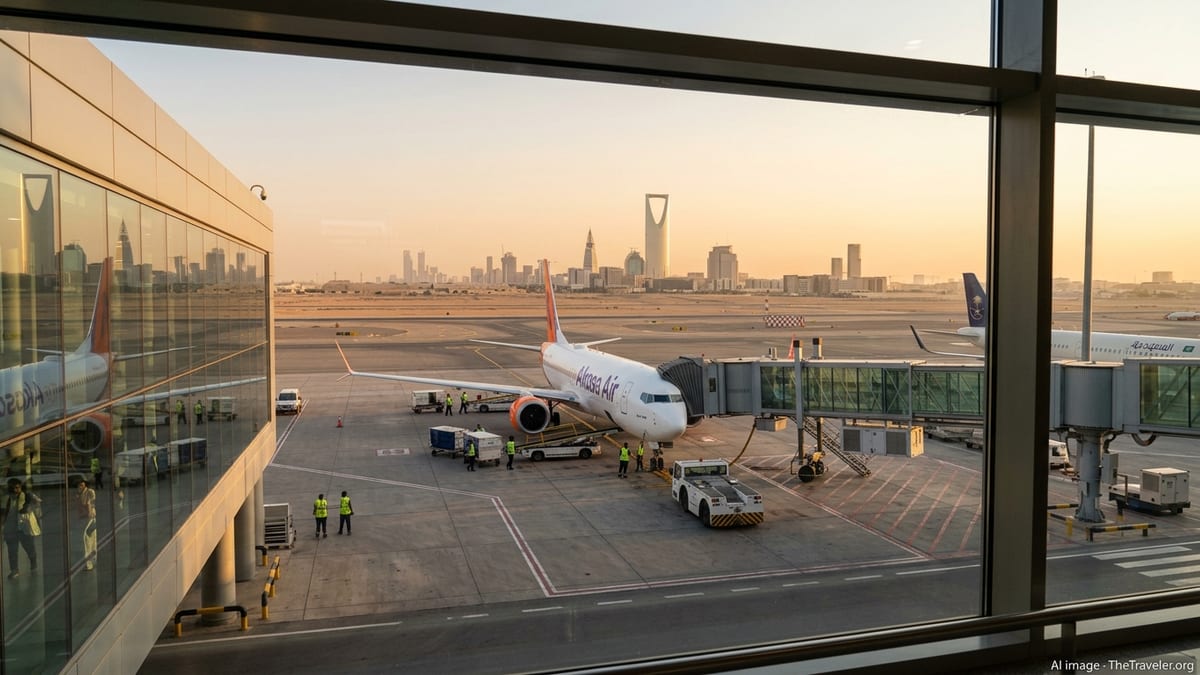
A New U.S.–Riyadh Link Amid Security Jitters
The Atlanta to Riyadh route is scheduled to begin on October 23, 2026, creating Delta’s first nonstop connection to Saudi Arabia and what industry reports describe as the first direct link by a U.S. airline between the United States and the Saudi capital. Public schedules show flight DL318 departing Hartsfield-Jackson Atlanta International Airport in the late evening and arriving in Riyadh the following evening, with Airbus A350-900 aircraft configured with Delta One business-class suites, premium economy and standard economy cabins.
Routing data published by aviation schedule trackers indicates that the service is planned as a near-daily operation at launch, then shifting to three flights per week from early November, reflecting a measured ramp-up strategy for a very long-haul market of more than 7,300 miles. The flight time is listed at just under 13 hours from Atlanta to Riyadh, positioning the service among Delta’s longest routes and offering one-stop access from Riyadh to more than 150 onward destinations in North America via the airline’s main hub.
Delta first outlined its intention to serve Riyadh in a corporate announcement in 2025, framing the route as part of a broader international growth plan that also includes new services to Marrakech, Melbourne, Sardinia, Porto, Hong Kong and Malta. Aviation-focused outlets note that the Riyadh launch also builds on a partnership framework between Delta and new Saudi carrier Riyadh Air, which is intended to provide regional feed beyond the Saudi capital once Riyadh Air begins operations.
Saudifocused business media in recent weeks have highlighted the route’s strategic role in Saudi Arabia’s Vision 2030 program, emphasizing that regulatory authorities granted Delta operating rights for the Atlanta–Riyadh link as part of efforts to increase long-haul connectivity and attract foreign investment and tourism. The nonstop service is being promoted locally as a step toward positioning Riyadh as a global business and transit hub alongside Gulf competitors.
Internal “Do Not Travel” Advisory Raises Questions
Even as the inaugural flight date approaches, travel industry commentary has drawn attention to an apparent disconnect between Delta’s commercial plans and its internal security posture. A report from frequent-flyer blog View From The Wing on October 9 describes an internal “active threat alert” from Delta corporate security that urges employees not to travel to Riyadh between October 8 and 12 following a drone attack that struck an aircraft parked at King Khalid International Airport.
Social media footage shared by aviation observers appears to show a Saudia Airbus A320 hit on the ground at Riyadh during what has been characterized as a one-way attack drone strike attributed to Houthi militants. Open-source reports indicate that at least one drone penetrated Saudi air defenses and reached the airport perimeter, underscoring ongoing regional security risks linked to the conflict in Yemen and broader Middle East tensions.
According to the View From The Wing coverage, the internal alert is limited in time but uses firm language discouraging any discretionary employee travel to Riyadh during the specified dates. The memo is described as including a “do not travel” instruction for the city, even as the airline continues marketing and selling seats on the inaugural Atlanta–Riyadh flights later in the month.
Delta has not issued any public statement altering the start date of revenue service on the route, and there is no travel advisory specific to the airline on its publicly accessible customer advisory pages related to the situation in Riyadh. As of October 9, standard flight search tools still display the first DL318 and DL317 rotations between Atlanta and Riyadh as operating as scheduled on and after October 23.
Official Travel Guidance and Risk Environment
The apparent inconsistency between a high-profile route launch and an internal “do not travel” alert is unfolding against a backdrop of heightened security guidance for Saudi Arabia from government authorities. The United States Department of State currently advises travelers to exercise increased caution in the country due to threats from missile and drone attacks and the risk of terrorism, with particular restrictions on U.S. government employee movements near the border with Yemen and in certain other regions.
The State Department’s advisory notes that attacks can occur with little or no warning, including against transportation infrastructure and in major cities. The Federal Aviation Administration has also issued airspace notices related to potential hazards from missile and drone activity in parts of the Middle East, including areas affecting routes over or near Saudi territory. While these notices do not prohibit commercial flights to Riyadh, they underline the need for airlines to conduct constant risk assessment and route planning.
Security analysts quoted in open publications over recent years have pointed out that major Saudi hubs such as Riyadh and Jeddah are generally considered better protected than facilities closer to conflict zones, but remain symbolically important targets. The recent drone incident at King Khalid International Airport appears to have reinforced those concerns, as evidenced by Delta’s internal response and by renewed discussion in aviation forums about risk tolerance for crew layovers and passenger operations.
Travelers weighing the new nonstop option from the United States to Riyadh must therefore navigate a layered picture: on one hand, a flagship route promoting closer economic ties and easier access for business and tourism; on the other, a security environment that continues to generate advisories and operational caution from both airlines and governments.
Commercial Stakes, Bookings and Pricing Pressure
Beyond security considerations, Delta’s Riyadh launch carries significant commercial implications. Aviation analysts have noted that the route is likely supported by Saudi incentives as part of a wider program to attract foreign carriers and strengthen Riyadh’s role as a long-haul gateway. Commentary on frequent-flyer and industry forums suggests that the airline is counting on connecting traffic beyond Riyadh, including flows between the United States and South Asia, to help sustain the long sector.
However, user posts on airline discussion boards over the summer indicated that early bookings on the inaugural flights were relatively light, with some contributors citing seat maps that appeared to show very low confirmed loads for the first week of service. In response, more recent posts highlight aggressive mileage redemption opportunities and sharply reduced cash fares on certain dates, implying that Delta has been using pricing levers to stimulate demand ahead of launch.
Specialist aviation sites that track schedules and capacity point out that the transition from daily to three-weekly frequencies in November gives Delta flexibility to match supply more closely with observed demand while retaining the strategic presence in the market. The use of the long-range A350-900, which offers operational efficiency and cargo capacity, may also help mitigate financial risk if passenger volumes grow more slowly than initially hoped.
Industry observers note that Delta’s partnership ambitions with Riyadh Air form a key part of the long-term business case. Once the Saudi carrier commences operations, coordinated schedules and reciprocal ticketing could feed passengers from secondary cities across the region into Delta’s Atlanta-bound flights and vice versa. For now, with Riyadh Air still in its start-up phase, the Atlanta–Riyadh route is launching primarily on Delta’s own strength and brand recognition among U.S.-based travelers.
What Travelers Should Watch In The Coming Weeks
For passengers booked on the first Atlanta–Riyadh flights, the central question is whether the recent drone incident and internal employee advisory will translate into any last-minute schedule changes. As of October 9, publicly available timetables from multiple flight information providers continue to list DL318 and its return counterpart DL317 as operating as planned from October 23 onward, and there have been no publicly reported changes to aircraft type or frequency beyond the previously filed shift to three-weekly service.
Travel reporting suggests that if Delta were to alter the launch, affected customers would typically be offered rebooking on alternative routings via partner carriers in Europe or the Gulf, or refunds in line with the airline’s standard policies for significant schedule changes. For now, there is no sign in public booking systems of a pause or suspension, and travel bloggers continue to discuss plans to fly on the inaugural service.
Prospective travelers are being encouraged by independent travel advisories to monitor both airline communications and government travel guidance closely in the days leading up to departure. Given that the internal “do not travel” notice for employees currently appears limited to a specific period in early October, the key issue is whether any further security developments in Riyadh prompt an extension of that window or a broader rethink of crew layover arrangements that could affect operations.
As Delta pushes ahead with one of its most high-profile new long-haul links in years, the Atlanta–Riyadh route has quickly become a test case in how global airlines balance commercial expansion, strategic partnerships and evolving risk assessments. Travelers watching the countdown to the first departure will be gauging not only fares and schedules, but also how the carrier adapts to a security environment that can shift in a matter of days.