


More news on this day
Canadian travelers bound for Mexico and the southern United States are being urged to monitor their itineraries closely, as Air Canada and WestJet activate storm policies in response to an intensifying hurricane in the Gulf of Mexico and a strengthening system off Mexico’s Pacific coast.
Get the latest news straight to your inbox!
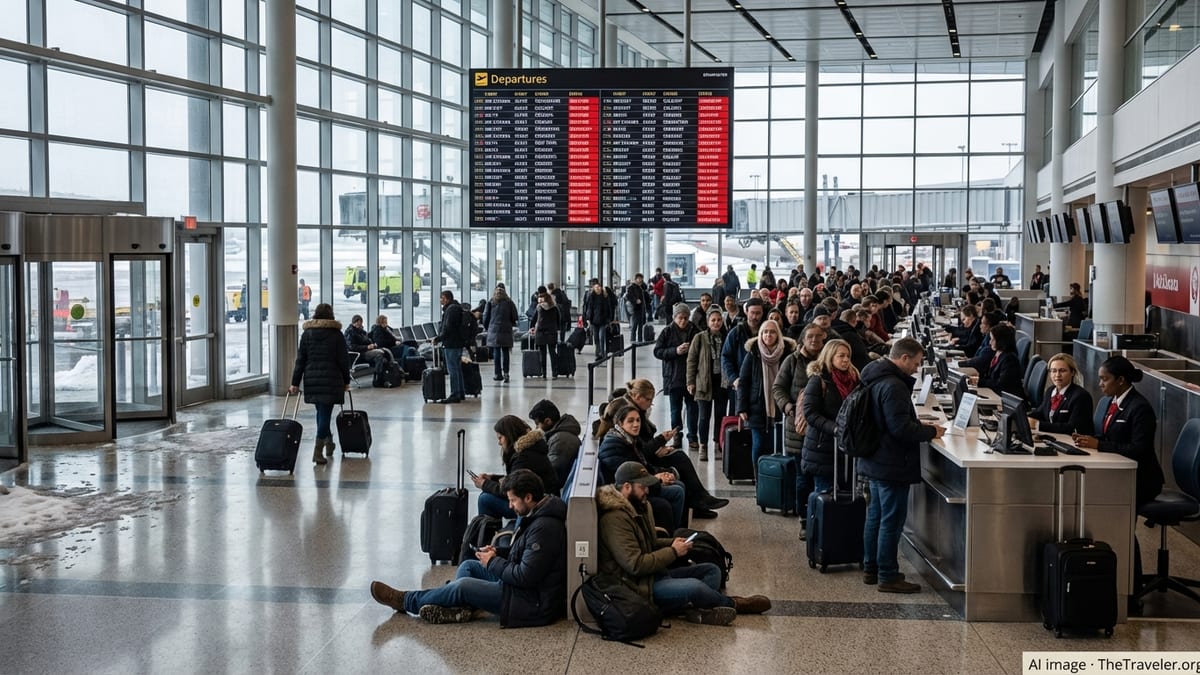
Storms Intensify Near Key Sun Destinations
Publicly available forecasts from meteorological agencies show Hurricane Isaias strengthening over the Gulf of Mexico in early October, placing parts of the U.S. Gulf Coast on alert for life-threatening storm surge and high winds. At the same time, Hurricane Simon is tracking toward Mexico’s Pacific coast, with projections indicating significant strengthening as it nears the state of Jalisco and the popular resort area around Puerto Vallarta.
Recent updates cited in international news coverage on October 9, 2026, describe Isaias as a powerful hurricane moving toward the northern Gulf Coast, while Simon is forecast to gain intensity as it approaches sections of Mexico’s western shoreline. Travel industry reports indicate that these twin systems are already affecting flight schedules and prompting airlines to activate their hurricane provisions.
Mexico’s Pacific resorts such as Puerto Vallarta and Mazatlán, along with Gulf-facing destinations in the southern United States, are especially popular with Canadian leisure travelers during the fall shoulder season. As the current storms evolve, aviation and tourism operators are adjusting operations and advising customers to remain alert to changes that can occur with limited notice.
Canadian government travel advisories and foreign-travel bulletins from other countries have highlighted the risk of heavy rain, flooding and landslides in affected coastal regions, noting that storm tracks can shift quickly and that conditions may deteriorate even in areas not directly in the path of the hurricane’s eye.
WestJet Issues Tropical Storm Advisories for Mexico
WestJet has posted specific tropical storm advisories covering Puerto Vallarta in the state of Jalisco and Mazatlán in Sinaloa, reflecting the expected impact of Hurricane Simon along Mexico’s Pacific coast. The airline’s advisory page lists Puerto Vallarta travel between October 9 and October 12, 2026, under an active notice, and a separate advisory for Mazatlán covering travel between October 9 and October 10, 2026.
According to information on WestJet’s advisory portal, customers holding flight-only bookings directly with the airline can use the Manage Trips tool to change or cancel their itineraries within the affected dates. Travelers who booked through WestJet Vacations are directed to contact the tour arm directly, while those who purchased travel via third-party agencies are instructed to work with their original point of sale.
WestJet’s broader hurricane and tropical storm policy, described in publicly available company materials, indicates that when an official storm-related advisory is issued for a customer’s origin or destination on the relevant travel dates, a range of options may be available. These can include the ability to modify travel plans, shift dates, or cancel certain WestJet Vacations packages without standard change penalties, depending on the fare type and package conditions.
The airline maintains a significant network to Mexico, including coastal destinations such as Puerto Vallarta and Mazatlán. Industry observers note that this has made clear communication around storm-related options a priority, especially during the peak of the Atlantic and eastern Pacific hurricane seasons, which typically run through October.
Air Canada Activates Hurricane Policy Framework
Air Canada has not published a destination-specific advisory for the current Mexico Pacific storms on the same level of detail as WestJet’s Puerto Vallarta and Mazatlán notices, but its vacation arm continues to highlight a standing hurricane policy that applies when formal tropical storm or hurricane alerts are in place. Publicly accessible guidance from Air Canada Vacations explains that if the U.S. National Hurricane Center issues a Tropical Storm Warning, Hurricane Watch or Hurricane Warning for a booked destination within seven days of departure, customers may access flexible rebooking or change options.
Examples provided in the company’s advisory archive show how this framework has been used for previous storms in other regions during 2026. In an August 15, 2026 advisory related to Tropical Storm Lala in Honolulu, Air Canada Vacations outlined options such as modifying bookings to new travel dates or choosing a future travel credit valid for one year from the original departure date. Similar language appears in other advisories, suggesting a consistent approach when severe weather threatens vacation destinations.
Separate Air Canada documentation describing the carrier’s general travel advisory procedures indicates that, when advisories are in place and flights are not yet cancelled, customers can often be rebooked on alternate Air Canada flights within a defined travel window. Specific conditions depend on the advisory and the fare rules attached to each ticket.
In the current environment, travel industry analysts expect Air Canada to continue monitoring storm developments in the Gulf of Mexico and near Mexico’s Pacific resorts, updating advisories or rebooking rules as local conditions and official forecasts evolve over the coming days.
What Affected Travelers Can Expect
For travelers booked to or through affected regions, the most immediate impact is likely to be schedule disruptions, including delays, advance cancellations or rerouted services. Airline operational planners may adjust departure times, consolidate flights, or temporarily suspend service into airports where high winds, heavy rain or reduced visibility are anticipated.
Both Air Canada and WestJet encourage customers, through their public channels, to check flight status frequently on the day of travel and avoid heading to the airport until flights are shown as operating. When storms are forecast several days in advance, many passengers choose to move their travel earlier or later to avoid the window of peak impact, using the fee-relief options outlined in the carriers’ advisories when those apply.
Travel insurance providers often treat named storms as specified events, and policy coverage may vary depending on when the insurance was purchased and the exact wording of trip interruption or cancellation clauses. Consumer advocates recommend that travelers review their policy documents closely and retain receipts if they incur extra accommodation or transportation costs as a result of weather-related changes.
Airports in coastal regions have also been preparing for potential disruptions. Publicly available hurricane guides produced by U.S. agencies, such as the National Weather Service for Gulf Coast states, emphasize that even areas hundreds of kilometers from a storm’s center can experience hazardous conditions, including localized flooding and tornadoes embedded in rain bands.
Planning Ahead for Late-Season Travel
The overlapping storms come late in the traditional Atlantic and eastern Pacific hurricane seasons, which historically remain active through October. Climate and weather agencies note that in recent years some of the most damaging events impacting Mexico’s coasts, including sudden-intensification hurricanes on the Pacific side, have occurred toward the end of the season.
For Canadian travelers considering upcoming trips to the Gulf of Mexico, the Caribbean or Mexico’s Pacific resorts, current events reinforce the importance of flexible planning. Public information from airlines and tour operators shows a growing emphasis on hurricane guarantees, flexible date changes, and clear communication about what happens if a destination falls under an official storm warning within a week of departure.
Experts in risk and emergency management advise that travelers build additional time into itineraries, especially when connecting through major hubs in storm-prone regions, and that they store airline apps, hotel contacts and local emergency information on their phones before departure. They also recommend monitoring official forecast sources in the days leading up to travel, rather than relying solely on social media or informal reports.
As Hurricane Isaias and Hurricane Simon continue to evolve, Canadian airlines and travelers alike are watching forecast updates closely. The next several days will determine the scale of disruption across key sun destinations in Mexico and the southern United States, and whether further advisories or schedule changes will be required.