


More news on this day
Travelers at Hartsfield-Jackson Atlanta International Airport faced another day of disruption as 13 flight cancellations and 226 delays rippled across key routes linking the United States with Canada, Mexico, the United Kingdom, Germany, France and the United Arab Emirates.
Get the latest news straight to your inbox!
Wide Impact Across Major U.S. and International Carriers
Operational data and live tracking tools show that the latest wave of disruption at Atlanta is affecting a broad mix of full service and low cost airlines, including Delta Air Lines, Frontier Airlines, Southwest Airlines, American Airlines, United Airlines, Lufthansa, Air France and Etihad Airways. The cancellations and delays are concentrated at the airport’s domestic concourses and international terminal, where long-haul departures connect Atlanta with major hubs in Europe and the Middle East.
Publicly available airport traffic reports confirm that all of these carriers maintain scheduled operations at Hartsfield-Jackson, underlining the extent to which even a relatively modest cluster of cancellations and delays can affect a wide portfolio of destinations. As a result, disruptions today have not been confined to any single airline or alliance, but instead have touched multiple networks and passenger segments, from budget leisure travelers to premium long haul customers.
While the total of 13 cancellations is small compared with the airport’s typical daily movement count, the additional 226 delayed flights point to a slow and uneven operational day. Aviation analysts often note that at a hub as busy as Atlanta, relatively few outright cancellations can still translate into thousands of disrupted passenger journeys once missed connections and rolling delays are taken into account.
For travelers, the most visible signs of strain have been extended waits at departure gates, shifting boarding times displayed on terminal screens and tight transfer windows for those attempting to connect from delayed inbound flights to international departures.
Key Routes Linking North America, Europe and the Middle East
The disruption has been particularly noticeable on routes that tie Atlanta to major international markets. Delta’s extensive hub operation at Hartsfield-Jackson feeds long haul flights to European cities including London, Frankfurt and Paris, where it overlaps with joint venture partners such as Air France and codeshare operators like Lufthansa. Etihad’s relatively new nonstop service to Abu Dhabi adds another critical long haul link, providing one-stop connections from the southeastern United States to destinations across the Middle East, Asia and Africa.
Travel trackers and airline schedules indicate that today’s delays have affected departures and arrivals serving the United States, Canada, Mexico, the United Kingdom, Germany, France and the United Arab Emirates. For passengers booked on transatlantic services, even modest schedule slippage in Atlanta can cascade into missed onward flights in European hubs, complicating itineraries that rely on tight connections.
Similarly, travelers heading to and from Canadian and Mexican destinations on U.S. carriers, or connecting via Atlanta from secondary American cities, may encounter rebookings, overnight stays or rerouted itineraries. In many cases, airlines attempt to recover by swapping aircraft, adjusting departure times or shifting passengers to alternative routings through other hubs.
For long haul travelers bound for Europe or the Gulf region, disruption in Atlanta can also impact the availability of premium cabins, as rebooked passengers compete for limited seats on later departures or alternative airlines. This dynamic can push some travelers onto indirect routings that add many hours to total journey times.
Recent Strains at the World’s Busiest Passenger Hub
Hartsfield-Jackson is widely recognized as one of the world’s busiest airports by passenger volume, and its role as Delta’s largest hub means that small operational shocks can quickly spread across the carrier’s domestic and international network. Recent months have highlighted how weather events, air traffic control constraints, infrastructure work and staffing pressures can converge to create clusters of delays and cancellations in Atlanta.
Published accounts earlier this year detailed long security lines and intermittent federal staffing shortfalls that prompted waivers from at least one major carrier for affected travelers. Separate coverage and passenger reports have also described days with significant numbers of weather related cancellations and mass delays concentrated at Hartsfield-Jackson, which then propagated to airports across the United States as aircraft and crew went out of position.
Industry observers note that Atlanta’s layout, with multiple parallel runways and high-intensity ramp operations, is engineered to handle very high volumes when conditions are stable. However, once irregular operations are underway, clearing backlogs can take many hours because so many flights are interconnected through the hub’s tightly timed banks of arrivals and departures.
Today’s figures of 13 cancellations and 226 delays therefore fit into a broader pattern in which the airport can appear to be operating normally, yet still experience patches of serious disruption for certain carriers, routes or times of day.
What Travelers Are Experiencing on the Ground
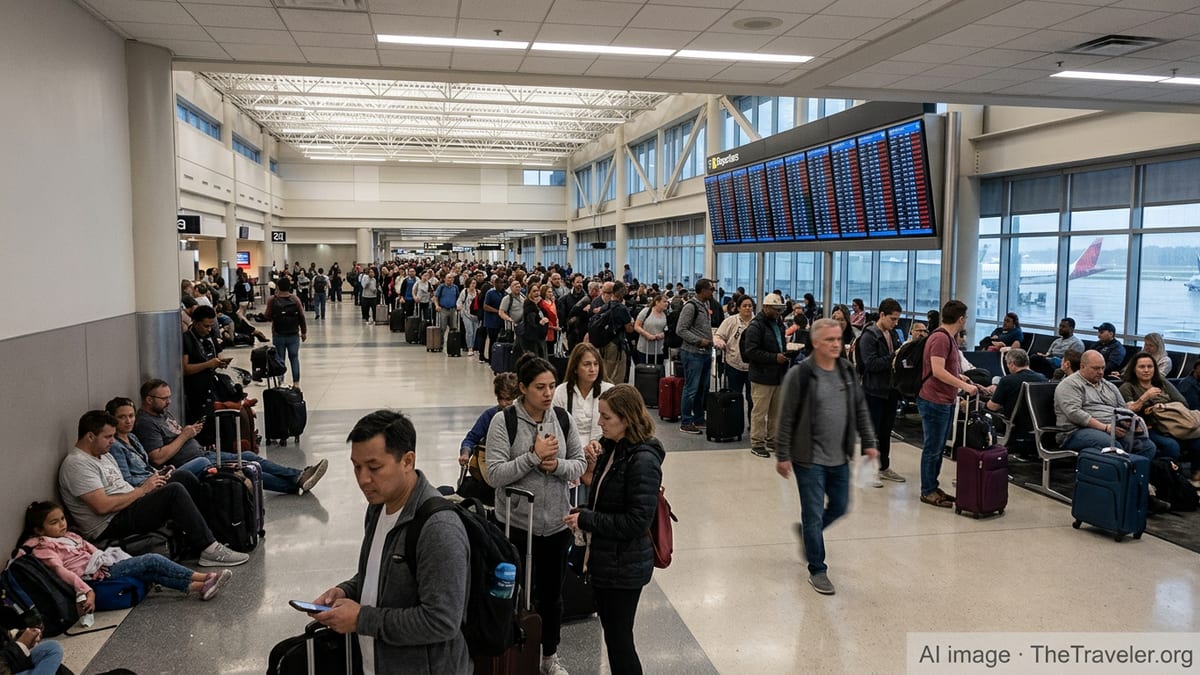
By mid to late day, passenger experiences at Atlanta included longer than usual waits for departure information, crowded seating areas around busy gates and more frequent use of rolling estimated departure times. Travelers on some domestic routes reported relatively minor delays measured in minutes, while others encountered lengthier setbacks as aircraft arriving late from other cities caused knock-on effects.
International passengers faced particular uncertainty, as some long haul flights remained on schedule while others operated with substantial delays. For those connecting from delayed domestic flights into transatlantic or Middle East departures, rebooking options could be constrained by aircraft capacity and the limited frequency of certain routes, especially to European secondary cities and to Abu Dhabi.
Families and business travelers alike have turned to airline mobile apps, airport displays and third party flight tracking platforms for real time information. In many cases, these tools provided earlier notice of gate changes or revised departure times than could be gleaned from public address announcements alone, allowing some passengers to adjust plans such as ground transport, hotel reservations or meeting schedules.
Despite the disruptions, operations at security checkpoints and in many terminal concessions appeared to be functioning near normal levels, reflecting the fact that the overall number of cancellations remained relatively modest compared with major weather or system outage events seen in previous years.
Guidance for Passengers Navigating the Disruption
Consumer advocates and travel industry specialists consistently advise passengers facing days like today in Atlanta to monitor their flights closely through airline channels and independent trackers, arrive early for departures and maintain flexible expectations about routing. With 226 delayed flights recorded, same day schedule changes remain possible even for services that appear to be running on time at the start of the travel day.
Travelers connecting through Hartsfield-Jackson are encouraged to pay special attention to minimum connection times, particularly when linking a delayed domestic arrival to an international departure on carriers such as Delta, Air France, Lufthansa or Etihad. Where possible, rebooking onto slightly later flights can reduce the risk of misconnecting and being stranded overnight.
For journeys touching countries such as Canada, Mexico, the United Kingdom, Germany, France and the United Arab Emirates, passengers should also consider entry rules, required documentation and any time sensitive commitments at their final destination, as even a single missed connection can add a full day to travel time. Travel insurance and credit card protections that cover delays and missed connections may offer some financial relief for meals, lodging or alternative transport when itineraries are significantly disrupted.
With Atlanta continuing to serve as one of the world’s key aviation crossroads, today’s disruption illustrates how even a relatively contained set of cancellations and delays can reverberate across multiple continents in a matter of hours, affecting travelers from short haul business commuters to long haul international tourists.