


The walk up to Clingmans Dome, the highest point in Great Smoky Mountains National Park, is only about half a mile one way. Yet many visitors are surprised by how demanding it feels. The path is wide, paved, and family friendly, but the steady, steep grade at more than 6,000 feet of elevation can leave even reasonably fit travelers pausing to catch their breath. If you are planning a trip to the Smokies and wondering how hard the walk really is and what to expect on the day, this guide breaks it down in clear, realistic terms.
Get the latest updates straight to your inbox!
Where Is Clingmans Dome and What Is the Walk Like?
Clingmans Dome, also officially recognized by its Cherokee name Kuwohi, sits along the border of Tennessee and North Carolina in the middle of Great Smoky Mountains National Park. At 6,643 feet, it is the highest point in the park and in Tennessee, reached by a spur road that leaves Newfound Gap Road (US 441) and climbs seven miles to a large parking area near the summit. The “walk” most people talk about is the paved trail that runs from this parking lot to the concrete observation tower on top of the mountain.
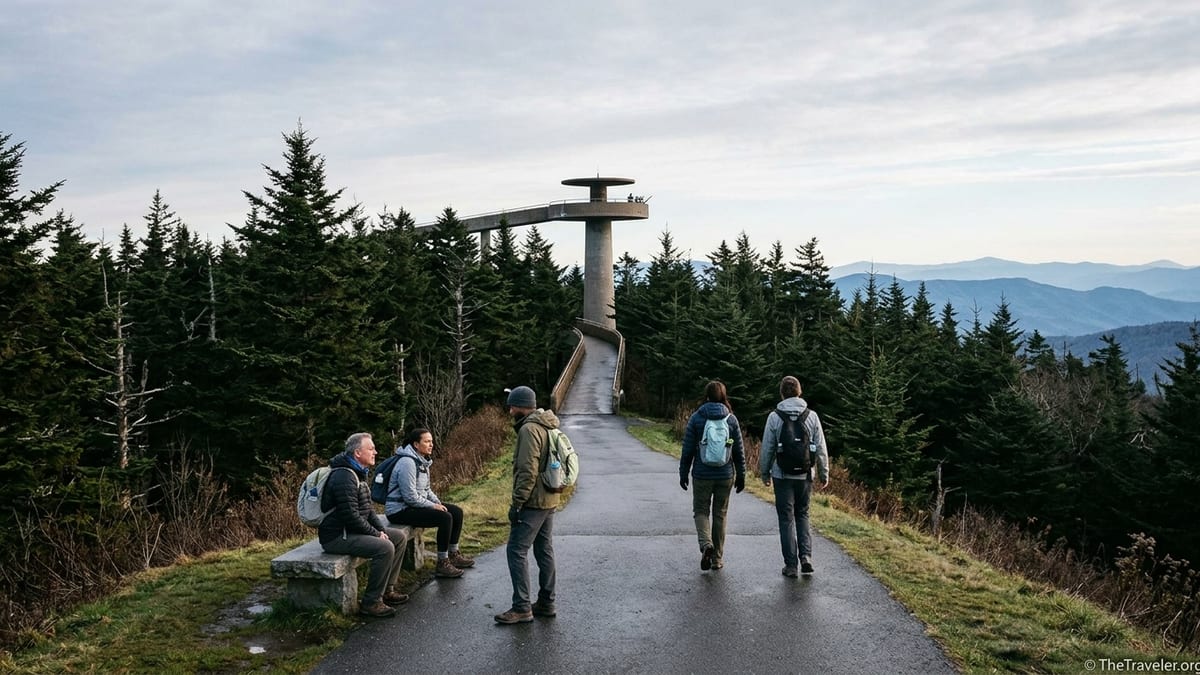
The trail from the parking area to the tower is short: about 0.5 mile one way, or roughly 1 mile round trip. It is paved its entire length, wide enough for two or three people to walk side by side, with benches at intervals. On paper, the numbers look easy: the elevation gain is only a few hundred feet. In reality, the grade is consistently steep, often in the range of roughly 12 to 15 percent, and there are no switchbacks to ease the climb. Visitors often compare it to walking up a long, sloping ramp rather than a staircase, with almost no flat sections for recovery.
Because the trail starts at more than 6,000 feet above sea level, the air is cooler and a bit thinner than in nearby Gatlinburg or Cherokee. Travelers who feel fine on river trails near Sugarlands Visitor Center or at Cades Cove sometimes notice they get winded faster here. Combined with the steep pitch and the fact that many visitors arrive after a long drive, the walk can feel surprisingly strenuous, particularly for those who are not used to hills.
Despite this, the Clingmans Dome walk is one of the most approachable ways to reach a major summit in the Southern Appalachians. You do not need hiking boots or backcountry experience, and you are never far from your car or other people. Families regularly push strollers partway up, and older visitors tackle the trail at a slow, steady pace, using the stone benches to rest as they go.
How Hard Is the Walk, Really?
Difficulty is subjective, but a useful way to think about the Clingmans Dome trail is as a “short but sharp” urban hill climb rather than a wilderness hike. If you can comfortably walk around a neighborhood with some hills for 30 minutes, you can probably make it to the tower, though you may need to pause several times. Many visitors in average health reach the top in 15 to 30 minutes, then take less than 15 minutes to walk back down.
Travelers who hike often describe the path as easy to moderate because of the short distance and smooth surface. For people who are largely sedentary, recovering from illness, or coping with heart or respiratory issues, it can feel tough. Online trip reports frequently mention visitors in their 20s and 30s being surprised by how out of breath they become after only a few minutes of climbing. Others note that children run ahead cheerfully while their parents lag behind, stopping at nearly every bench to rest.
A practical comparison: imagine walking up the ramps of a multi-story parking garage without stopping, equivalent to about 30 to 40 floors of climbing spread over half a mile. Some sections feel as if you are pushing a heavy shopping cart up a long incline at a big-box store. It is not technical or dangerous in good weather, but your calves and lungs will feel it. The descent is significantly easier but can be hard on knees or ankles for visitors with joint problems because of the continuous downhill slope and hard pavement.
The psychological factor is also important. Because the trail is straight and there are no big switchbacks, you can usually see a good portion of the climb in front of you. On a busy summer afternoon, lines of people inching uphill can make the walk look more intimidating than it is. On the other hand, watching small children, seniors, and people carrying picnic bags make steady progress can be reassuring if you are unsure about your own fitness.
Accessibility, Strollers, and Who Should Think Twice
The Clingmans Dome trail surface is technically accessible in that it is paved and free from steps, roots, and rocks. However, the grade is well above what many wheelchair users and people with limited mobility can safely manage on their own. The National Park Service notes that the steepness makes the path challenging for wheelchairs and strollers. Manual wheelchair users often require strong companions to assist, particularly on the return descent where maintaining control can be difficult on the smooth, sloping pavement.
Families with small children frequently bring strollers to Clingmans Dome, especially travel strollers or jogging strollers with good brakes. Pushing a stroller uphill at this grade feels like a workout on a gym treadmill set to its maximum incline. Parents sometimes use a tag-team approach, with one adult pushing for part of the climb and another taking over at the halfway benches. On the descent, keeping both hands on the stroller and using wrist straps can be helpful to prevent it from rolling too fast.
Travelers with heart conditions, serious breathing problems such as uncontrolled asthma or COPD, or recent surgery should talk to a medical professional before attempting the walk. It is very common to arrive at the parking lot, walk a short distance up the trail, and decide that enjoying the views from lower viewpoints or the parking area is enough. In clear weather, ridge-line vistas and layers of blue mountains are already visible from the lot and the short spur paths near the information center, allowing less mobile visitors to enjoy the scenery without tackling the full climb.
If you are traveling with elderly relatives, consider their pace and needs realistically. A grandparent who comfortably walks around a flat shopping mall for an hour might manage the Clingmans Dome trail with multiple breaks and perhaps a trekking pole or cane for balance. Someone who avoids stairs at home or uses a mobility scooter in everyday life may prefer to skip the main climb and explore the boardwalks and overlooks at lower elevations instead.
What Conditions Will You Face on the Day?
Conditions at Clingmans Dome are often very different from what you experience in nearby gateway towns like Gatlinburg, Pigeon Forge, or Cherokee. Because of the elevation, the summit area is usually about 10 to 20 degrees Fahrenheit cooler than the valleys. In April or October, it is common for visitors in T-shirts and sandals to arrive from sunny, mild weather below and find themselves walking into chilly fog, with temperatures in the 40s or low 50s and a sharp breeze across the parking area.
Fog and low clouds are frequent, particularly in spring and during humid summer afternoons. Travelers sometimes drive all the way up expecting sweeping panoramas and instead find visibility of only a few dozen yards. On these days, the walk can feel more like a misty forest stroll than a mountain vista outing. The pavement may be wet and occasionally slick with algae in shaded areas, so shoes with some grip are helpful. Even when there is no rain in the forecast for Gatlinburg, scattered showers at the higher elevations are not unusual.
Wind is another factor. The parking lot and lower trail are partially sheltered by spruce and fir trees, but as you approach the open concrete tower, wind can be brisk. A light windbreaker or fleece packed in a day bag can make the difference between a quick, shivery visit and a comfortable 30 minutes of lingering on the tower to watch the clouds move through the valleys. In winter, Clingmans Dome Road normally closes to vehicle traffic, and the area can be snow-covered or icy; during that season reaching the summit involves a much longer walk or ski from Newfound Gap Road, which is a very different, more demanding outing suited to prepared winter travelers.
Season also affects crowding. On clear weekends in June, July, and October, the seven-mile access road regularly backs up with traffic by late morning. Visitors report taking 30 to 45 minutes just to cover the final couple of miles to the parking area, and the lot itself can fill completely by midday. On these peak days, you may wait for a parking spot, then join a continuous stream of people on the trail. In contrast, a cool, drizzly weekday in May or September might see only a handful of visitors at the tower, giving the walk a much quieter feel even though the grade is unchanged.
How to Prepare: Clothing, Footwear, and What to Bring
Because the trail is paved and short, many visitors underestimate the need for basic hiking preparation. Tennis shoes, trail runners, or light hiking shoes with decent tread are usually sufficient. Flip-flops and fashion sandals are common on the trail but not ideal, especially in wet or foggy conditions when the pavement can become slick. Travelers who arrive after walking around Dollywood or Gatlinburg all day sometimes find that tired legs and thin-soled shoes make the climb feel harder than it needs to be.
A small daypack with water and an extra layer is usually enough. Even on a short half-mile climb, you will sweat on warm days, and simple 16-ounce disposable water bottles often get drained by the time people reach the tower. Carrying at least one bottle per person is a good baseline, more in midsummer or if you are hiking with young children who tend to drink more. There are restrooms and a small bookstore or information contact station at the parking area in season, but there are no concessions or water fountains at the tower itself.
In terms of clothing, plan for conditions to feel like an entirely different season compared with nearby towns. For example, in July, visitors leaving air-conditioned cabins in Pigeon Forge in shorts and T-shirts often find the air at Clingmans Dome pleasantly cool but windy enough to warrant a light sweatshirt. In October, when Gatlinburg is crisp and sunny, the summit area can be cold enough that gloves and a knit hat feel welcome while you lean on the concrete rail of the observation tower and wait for the clouds to break.
Simple extras can make the experience more comfortable. A folding trekking pole or walking stick, purchased at an outdoor store in Gatlinburg or Cherokee, gives a bit of extra support on the steep sections, especially for visitors with mild balance or knee issues. Sunglasses and sunscreen are useful on clear days when the sun reflects off the pale concrete tower, while a compact umbrella or packable rain jacket pays off if a passing shower sweeps across the ridge. Most people find that a modest level of preparation turns what could feel like a lung-busting trudge into a manageable and even enjoyable outing.
Planning Your Visit: Timing, Parking, and Road Access
Reaching Clingmans Dome involves a scenic drive on Newfound Gap Road to the signed junction for Clingmans Dome Road, then a winding seven-mile spur along the ridge. Under light traffic, it typically takes about an hour to drive from downtown Gatlinburg to the parking lot and around 45 minutes from Cherokee. Because Great Smoky Mountains National Park has introduced parking tags for many areas, visitors should be prepared to purchase a day or week-long tag at a visitor center or kiosk before heading up, or at pay stations that serve some busy trailheads and overlooks.
Clingmans Dome Road is usually open seasonally, often from around April through late November, but exact dates vary based on weather and maintenance. Heavy snow, ice, or storm damage can lead to temporary closures at any time, particularly between late fall and early spring. Before committing a morning or afternoon to the drive, it is wise to check the park’s official road status information or recorded phone line for current conditions. When the road is closed, some visitors still choose to walk or bike the seven miles from the gate to the parking area, turning the outing into a much more strenuous trip of more than 16 miles round trip, plus the steep summit path.
Parking at the top is in high demand during busy seasons. The lot includes standard car spaces arranged along loops and a few pull-through spaces, but it does not accommodate oversize vehicles such as large motorcoaches. Tour buses often have to drop passengers near the information center and then park elsewhere in the park. During peak foliage in October and on summer weekends, it is common to see drivers circling for a spot or waiting in their vehicles for other visitors to return from the tower. Arriving early in the morning, close to sunrise, or later in the day towards sunset usually offers a calmer experience, shorter lines for restrooms, and more room on the trail.
For many travelers, timing the visit around other activities helps spread out the exertion. A typical day might involve leaving Gatlinburg around 7 a.m., driving up to Clingmans Dome for the morning walk while temperatures are cool, then descending to hike an easier waterfall trail like Laurel Falls or to visit the Oconaluftee Visitor Center and Mountain Farm Museum in the afternoon. This schedule lets you tackle the steepest walk of the day while you are fresh and avoid the thickest midday crowds.
What to Expect at the Observation Tower and Surrounding Trails
At the end of the paved trail, a spiraling concrete ramp leads to the top of the distinctive Clingmans Dome observation tower. The ramp rises gently but steadily around the central pillar until you reach a circular platform with a waist-high wall. On clear days, interpretive panels help you identify ridges and peaks in Tennessee and North Carolina, and the view can extend for dozens of miles in all directions. The experience is very different from a wooded overlook lower in the park: it feels high, exposed, and expansive, with distant layers of mountains fading into blue.
The tower platform can become crowded at times, especially in midafternoon when tour groups and family road trips converge. People usually move around the circle, snapping photos and taking short videos, then drift back down the ramp after a few minutes. If you are prone to vertigo, you may find the combination of open railings and distant views slightly unsettling, though the structure is solid and the walls are high enough that most children cannot easily peer over without help.
For those with energy left after the climb, the Clingmans Dome parking area also serves as a trailhead for longer hikes. The Forney Ridge Trail departs near the start of the paved path and leads to Andrews Bald, a rolling grassy summit with wildflowers in summer and quieter crowds compared with the tower. The Appalachian Trail also crosses near the parking area, offering options for short out-and-back walks along the famous long-distance route. These side trips are more rugged and rooty than the main paved path and generally suit visitors who are comfortable on uneven ground.
Even if you do not venture onto longer trails, spending a few minutes off the main path can be rewarding. Short spur paths lead to viewpoints where you can photograph the curving tower against a backdrop of spruce-fir forest, and small clearings near the parking loops give glimpses of the Smokies that are often overlooked in the rush to reach the top. Many visitors find that sitting on a rock or low wall near the lot, sipping water and watching the clouds move, can be just as satisfying as the few extra degrees of panorama from the tower itself.
The Takeaway
The walk to Clingmans Dome is a study in contrasts. It is short but steep, paved yet demanding, crowded in peak season but capable of feeling remote on a foggy weekday morning. For most reasonably active travelers, it is a manageable challenge rather than an extreme undertaking, provided you respect the grade, the elevation, and the rapidly changing mountain weather.
If you arrive with realistic expectations, give yourself enough time, and prepare as you would for a slightly longer hike, the climb to the tower can become a highlight of a Great Smoky Mountains trip. You will likely breathe hard, maybe stop more often than you expected, and share the path with visitors from all over the world. At the top, on a clear moment between passing clouds, you may find that the effort of that half-mile uphill walk feels like a small price to pay for a 360-degree view over one of America’s most beloved national parks.
FAQ
Q1. How long does it take to walk to the top of Clingmans Dome?
The paved trail from the parking lot to the observation tower is about half a mile one way. Most visitors in average condition take 15 to 30 minutes to reach the top, with faster walkers arriving in around 10 minutes and those taking frequent breaks needing closer to 30.
Q2. Is the walk to Clingmans Dome suitable for beginners?
Yes, many first-time hikers and casual walkers complete the trail every day, but the grade makes it feel more demanding than the distance suggests. Beginners should plan to go slowly, use the benches to rest, carry water, and avoid attempting the climb if they feel unwell or are not cleared for moderate exertion.
Q3. Can you push a stroller or use a wheelchair on the trail?
The path is paved and free of steps, so strollers and wheelchairs are technically possible. However, the steep grade means pushing a stroller is strenuous, and wheelchair users generally need strong assistance both uphill and downhill. Families often find a solid stroller with good brakes and two adults to share the effort makes the outing more manageable.
Q4. What is the best time of day to visit to avoid crowds?
Early morning around sunrise or later in the afternoon near sunset usually offers fewer people, easier parking, and a more relaxed walk. Midday in summer and during peak fall foliage is typically the busiest, with crowded parking, lines for restrooms, and a steady stream of visitors along the trail and on the tower.
Q5. What should I wear for the walk to Clingmans Dome?
Wear comfortable walking shoes or light hiking footwear with good grip, along with layered clothing. Even in summer it can be 10 to 20 degrees cooler than in nearby towns, and wind or fog is common. A light jacket or fleece and a hat often make the difference between an enjoyable visit and an uncomfortably chilly one.
Q6. Are there bathrooms or water available at the top?
Restrooms and a small seasonal information contact station are located near the parking area, not at the observation tower. There are no bathrooms, water fountains, or food stands along the trail or on the summit, so plan to use the facilities and fill water bottles before you begin the walk.
Q7. Is the walk safe for children and older adults?
Yes, children and older adults routinely complete the trail, but each person’s abilities and health conditions should be considered. Children often handle the grade well but may need reminders to stay on the paved path and away from steep edges. Older adults should take their time, rest often, and consider a walking stick or trekking pole for added stability.
Q8. What happens if the weather turns bad while I am on the trail?
Fog, drizzle, and sudden showers are common at high elevation. If conditions worsen, you can usually return to the parking lot in 10 to 20 minutes by following the same paved trail downhill. In cases of thunder or lightning, it is wise to leave the open observation tower and descend promptly to lower, more sheltered ground.
Q9. Is the Clingmans Dome road open year-round?
No, the access road is typically closed in winter due to snow and ice and may close temporarily in other seasons because of storms or maintenance. When the road is closed, reaching the summit on foot or bike involves a long, strenuous journey from the gate. Travelers should check current park road conditions before planning their visit.
Q10. Do I need any permits or passes to hike to Clingmans Dome?
There is no separate hiking permit required for the paved trail, but Great Smoky Mountains National Park uses a parking tag system in busy areas. You may need to purchase a day or weekly parking tag and display it in your vehicle while you are at Clingmans Dome. Tags are typically available at visitor centers and designated kiosks within the park.