


More news on this day
The Middle East’s post-pandemic travel rebound, once one of the brightest spots in global tourism, is losing steam again, according to the latest readings from the Skift Travel Health Index and related industry data sets.
Get the latest news straight to your inbox!
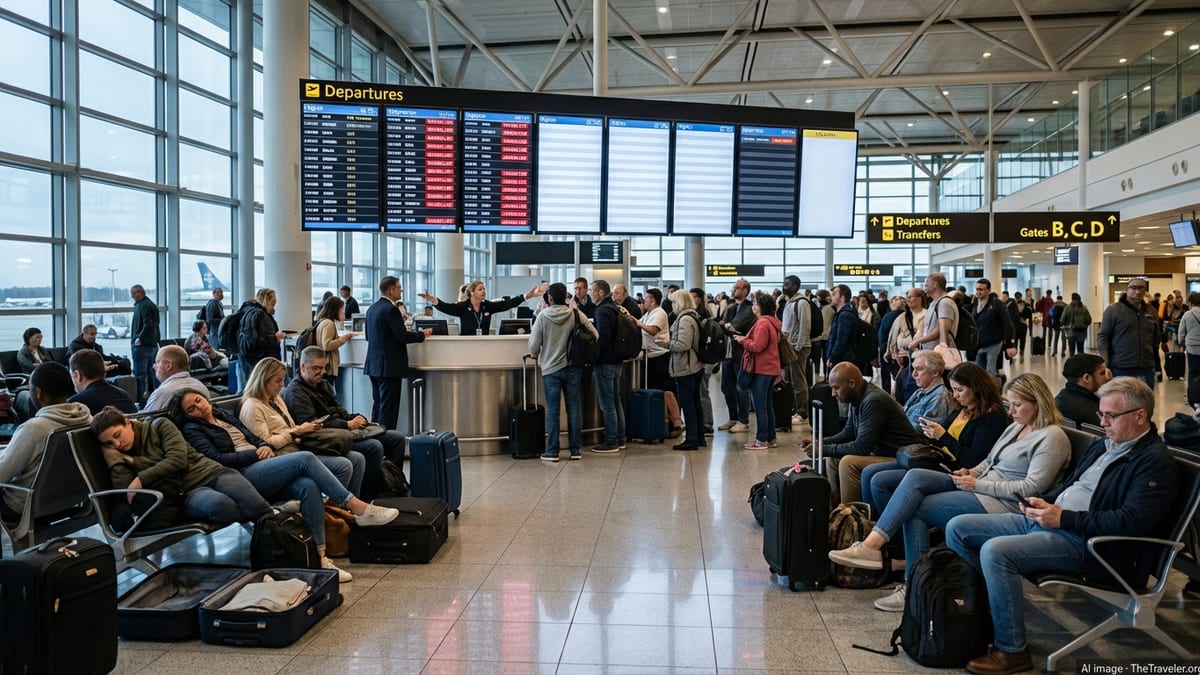
Fresh Skift Data Points to Renewed Weakness
The Skift Travel Health Index, which tracks travel performance across regions relative to 2019 and year-earlier levels, shows a clear cooling in Middle East and Africa momentum through early and mid-2026. Publicly available summaries of the index indicate that after entering 2026 with solid growth, the region’s composite score weakened as the year progressed, slipping below both global and Asia Pacific readings.
An earlier Skift analysis of March 2024 performance already highlighted the vulnerability of the Middle East and Africa segment, with its index score falling more sharply month over month than other regions and remaining below 2023 levels even as Asia Pacific stayed well ahead of its prior-year benchmarks. Subsequent State of Travel research through mid-2024 showed the regional index hovering in the mid‑90s on a 2023 equal‑100 basis, underlining a fragile, stop‑start recovery compared with other parts of the world.
By early 2026, partner reports drawing on Skift Research data referenced the Middle East and Africa index dropping to the high‑80s, with one April 2026 snapshot citing a reading of about 87, equivalent to a double‑digit year‑on‑year decline. That deterioration contrasts with relative stability in the global index and a mid‑100s score in Asia Pacific, underscoring how quickly sentiment and bookings can reverse in a region deeply exposed to geopolitical risk.
Geopolitics and Safety Perceptions Hit Demand
Escalating conflict has been central to the latest setback. Coverage from Skift and risk consultancies links a renewed downturn in 2026 to the U.S.-Iran war and associated tensions across the Gulf, the Levant, and key transit corridors. Analysis of airline schedules and hotel performance indicates that widespread flight cancellations, rerouted traffic, and rising insurance and fuel costs have weighed on both direct arrivals and connecting passenger flows through major hubs.
Parallel research into incentive and business travel demand shows that corporate planners have pulled back sharply from the broader Middle East in 2026, citing concerns about perceived instability and the optics of high‑profile events in conflict‑adjacent destinations. A Skift Meetings survey of incentive professionals found net sentiment toward Middle East destinations deeply negative, with respondents in North America and Europe in particular reporting a strong shift to alternatives such as Canada, Southern Europe, and parts of Africa and Latin America.
Security perception indices and hotel demand trackers for Gulf Cooperation Council markets suggest that the February 2026 escalation produced a sharp initial shock, followed by partial rebounds during brief de‑escalation phases. Yet analysts note that the renewed collapse of a ceasefire in July had a more muted impact on hotel stays than the initial flare‑up, hinting at a complex mix of risk tolerance, necessity travel, and price‑driven opportunism that continues to underpin some demand.
Diverging Fortunes Within the Region
Aggregate index scores also mask a widening gap between individual Middle East destinations. Detailed coverage of Gulf tourism performance in 2026 depicts what one recent Skift feature described as a “lost year” for parts of the United Arab Emirates, where hospitality revenues have been hit hard by both occupancy setbacks and steep rate cuts. Industry figures cited there show UAE hotel occupancy plunging in March before recovering to around 60 percent in July, still markedly below the previous year, while average daily rates in some segments have fallen by as much as half.
Saudi Arabia, by contrast, has remained more insulated thanks to large-scale domestic and religious travel linked to Hajj, Ramadan, and year‑round pilgrimage flows. Recent data from the World Travel & Tourism Council’s regional economic impact report indicates that Saudi Arabia’s travel and tourism GDP expanded at more than 7 percent in 2025, nearly double the global pace and ahead of the wider Middle East average. That resilience has helped offset some regional weakness, even as international leisure and business segments become more cautious.
North African markets introduce another layer of divergence. The World Economic Forum’s Travel & Tourism Development Index shows that only a handful of Middle East and North Africa economies score above the global average on enabling conditions such as infrastructure, business environment, and safety. Saudi Arabia has logged the strongest improvement in the region since 2019, while several Levant and North African destinations continue to lag on both competitiveness and stability, constraining their ability to capture displaced demand from more volatile parts of the Middle East.
Global Demand Is Strong, but Flows Are Rerouting
The latest Skift Travel Health Index readings also emphasize that the Middle East’s setback is not primarily a demand‑destruction story at the global level. Rather, it is a reallocation of flows. Asia Pacific and selected European and Latin American destinations continue to post index scores above their 2023 baselines, supported by expanded air capacity, visa easing and the reopening of important outbound markets like China and Japan.
Industry presentations drawing on Skift data for 2025 and early 2026 highlight that many travelers and tour operators are swapping Middle Eastern itineraries for Mediterranean, North African, or transatlantic options. Spain, Italy, and Morocco, for example, have benefited from diverted demand, particularly among European and North American travelers seeking perceived safer and more predictable environments. These shifts are also visible in airline booking data, with long‑haul routes that previously relied on Gulf hubs seeing more traffic routed through European and Asian gateways.
At the same time, growth in digital travel adoption and direct‑to‑consumer channels gives travelers more flexibility to reconfigure trips at short notice in response to headlines. A global digital travel report released in early 2026, using Skift’s Travel Health Index as a performance benchmark, noted that the Middle East and Africa recorded one of the largest year‑on‑year swings in overall travel performance, moving from outperformance in late 2025 to underperformance by the second quarter of 2026 as conflict risk intensified.
Prospects: Volatile Path Ahead for Middle East Recovery
Forward‑looking assessments for Middle Eastern tourism in 2026 and 2027 remain cautious. Country risk outlooks from major forecasting houses warn that continued military skirmishes, sporadic attacks on energy and shipping infrastructure, and elevated fuel prices could keep the region’s travel recovery on an uneven trajectory, even under scenarios that assume no major escalation from current hostilities.
Some analysts argue that the same factors that drove the region’s post‑pandemic surge remain in place over the medium term. Structural investments in airports, mega‑events, new tourism districts, cruise ports, and entertainment districts in Saudi Arabia, the UAE, and Qatar are expected to support a return to growth if security conditions stabilize. However, the Skift Travel Health Index’s latest readings serve as a reminder that outperformance can quickly reverse when geopolitical risk flares, particularly in destinations heavily reliant on discretionary international travel.
For now, publicly available index snapshots and related tourism indicators point to a stalled or at best sputtering recovery across much of the Middle East, even as parts of the region such as Saudi Arabia continue to post strong domestic‑led numbers. With traveler sentiment fragmented and flight paths still in flux, industry observers expect the Middle East’s position in the global travel hierarchy to remain unusually volatile through at least the end of 2026.
Skift Travel Health Index Shows Softening Trend