


More news on this day
Passengers arriving at Toronto Pearson International Airport are facing unusually long waits at customs after a technical outage disrupted Canada Border Services Agency primary inspection kiosks in both Terminal 1 and Terminal 3.
Get the latest news straight to your inbox!
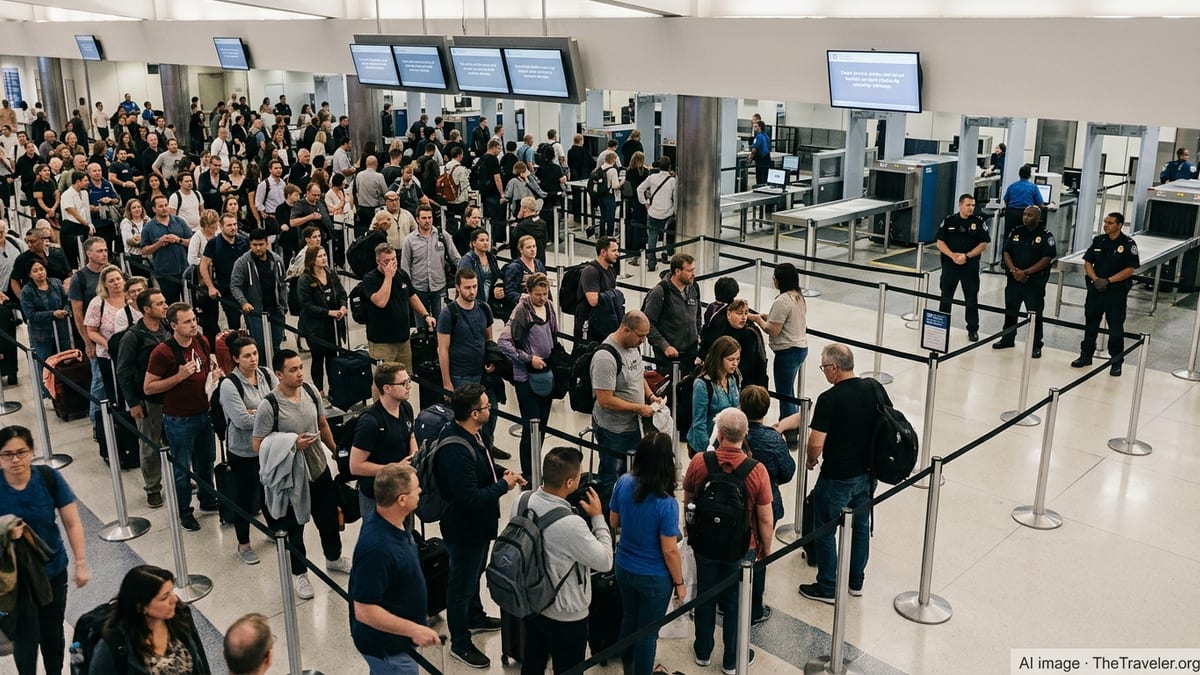
Technical outage hits border inspection kiosks
Publicly available information from Toronto Pearson Airport indicates that Canada Border Services Agency (CBSA) primary inspection kiosks have been affected by a systems outage in both main terminals, significantly reducing automated processing capacity for international arrivals. The airport’s advisory notes that passengers may encounter longer than normal wait times at customs while the issue persists.
CBSA’s primary inspection kiosks and eGates are normally used to capture traveller information, verify identity and produce a receipt that is presented to a border services officer. According to CBSA guidance, these kiosks operate at all major Canadian hubs, including Toronto Pearson’s Terminals 1 and 3, and are designed to speed up arrivals processing by shifting much of the data entry and document scanning away from officers’ desks.
When kiosks are unavailable, travellers must complete the inspection process fully with an officer, which reduces throughput across the customs hall. Pearson’s own digitization material shows that pre-kiosk steps, kiosk use and officer interaction are all factored into wait-time modelling, meaning that a kiosk outage removes a key element of the airport’s border modernization strategy.
Reports circulating on social platforms on the day of the outage describe full customs halls, extended queues and passengers held on arriving aircraft while space is managed inside the arrivals area. Some accounts describe waits approaching or exceeding an hour from landing to clearance, particularly in Terminal 3.
Impact on wait times and passenger experience
Toronto Pearson publishes an airport wait time dashboard to give travellers a live snapshot of security and customs conditions, but the airport also cautions that these figures are estimates and that actual times may be longer during operational disruptions. During the kiosk outage, several travellers have highlighted a disconnect between the relatively modest waits displayed online and the lengthier queues they encountered in person.
Airports often respond to severe congestion in customs halls by metering passenger flows off arriving aircraft, effectively turning planes into temporary holding areas until space becomes available. Social media posts referencing the Pearson outage describe passengers being kept on board after reaching the gate, sometimes for close to an hour, as CBSA processing areas reached capacity.
For many visitors and returning residents, the bottleneck has added significant time to already long journeys. Toronto Pearson has previously identified border processing as a critical element shaping the overall passenger experience, noting in corporate reports that wait times at security and customs strongly influence when travellers choose to leave home and how they perceive the airport.
Although the outage has mainly affected arriving passengers, knock-on effects can extend to baggage delivery and ground transport, as large groups of travellers emerge from customs in waves rather than steadily. This can strain car parks, rideshare pickup areas and public transit connections beyond the customs hall itself.
Why kiosk failures matter at Canada’s busiest hub
Toronto Pearson is Canada’s largest airport and one of the country’s primary international gateways. In recent years, the Greater Toronto Airports Authority has invested in additional primary inspection kiosks, eGates and monitoring tools intended to improve resilience during system issues and to keep passengers moving through customs more quickly.
CBSA documentation describes the kiosks as a core part of border technology at major Canadian airports, capturing passport details, travel histories and declarations before travellers reach an officer. Pearson’s own modernization reports highlight these systems as central to reducing face-to-face processing time and improving the identification of higher-risk travellers.
When that layer of automation is removed, the volume of passengers who can be processed each hour falls sharply. Historical outages cited in media coverage and online forums have produced multi-hour queues at Pearson and other Canadian hubs when multiple wide-body international flights arrive close together, particularly at peak times.
The timing of the latest outage is especially sensitive as international travel through Toronto recovers and large events in the city, such as festivals and conferences, draw additional overseas visitors. Travellers with tight onward connections within Canada or to the United States are among those most exposed to the consequences of unexpected slowdowns at the border.
Guidance for travellers heading through Pearson
Toronto Pearson’s travel preparation pages advise passengers to consult the airport’s live wait time tools before heading to the airport and to allow extra time during peak periods. In light of the kiosk outage, adding further buffer time for international arrivals and connections is prudent, particularly for those landing in the late afternoon and evening when traffic often peaks.
CBSA information on border technology explains that, when kiosks are operational, travellers can speed their processing by having passports ready, knowing the address of their stay, and completing any required customs declarations in advance. During an outage, those same preparation steps remain useful, as clear, complete information can help officers process each traveller more efficiently at the counter.
Some passengers with trusted-traveller memberships, such as NEXUS, have reported comparatively shorter waits during outages, reflecting the use of separate infrastructure and dedicated lanes in some areas. However, capacity in these programs is limited, and not all kiosks or eGates used by trusted travellers are insulated from broader CBSA system issues.
Travellers with imminent itineraries through Toronto Pearson are encouraged by publicly available advisories to monitor airport and airline channels for updates on wait times, potential flight holds and any restoration of kiosk service. Even once systems are brought back online, it can take additional time for queues to clear and for operations in the customs halls to return to normal patterns.
Longer-term questions about resilience and capacity
The current kiosk outage adds to an ongoing conversation about the resilience of Canada’s border technology and the capacity of major airports to absorb system shocks without significant disruption. Previous CBSA systems issues have prompted questions in public forums about redundancy, backup procedures and communication with travellers.
Toronto Pearson’s corporate updates describe investments in tools designed to monitor kiosk status, enable some offline operations during CBSA outages and provide more accurate wait-time information within customs halls. These initiatives are intended to reduce the impact of technical incidents and give passengers clearer expectations while they are in the arrivals area.
Nonetheless, the latest disruption underlines that, at current passenger volumes, technical problems affecting border automation can quickly cascade into lengthy waits, missed connections and strained airport facilities. As travel demand continues to grow, pressure is likely to increase on both CBSA and the airport operator to further strengthen contingency plans and to expand capacity where possible.
For now, travellers arriving in Toronto during the outage period should be prepared for the possibility of extended customs processing and to adjust onward plans accordingly, particularly where tight schedules or same-day connections are involved.