


More news on this day
Alderney Airport is set to receive up to £24 million for a major runway rehabilitation programme, after Guernsey’s parliament backed revised plans intended to secure the Channel Island’s fragile air connectivity and bring its aging infrastructure up to modern safety standards.
Get the latest news straight to your inbox!
Revised funding package ends years of uncertainty
The decision by the States of Guernsey to authorise funding of up to £24 million for Alderney Airport’s runway marks the culmination of a protracted and sometimes contentious debate over how best to secure the island’s only airfield. According to parliamentary records, members agreed in early 2026 to delegate authority for releasing the funds once a detailed business case for the rehabilitation design is approved, with the money coming from the jurisdiction’s General Revenue Reserve.
Publicly available information shows that Alderney’s runway has been under review for much of the past decade, with earlier proposals linked to a larger expansion scheme that would have lengthened the runway and delivered a new terminal and fire station. Those earlier plans, known locally as “Option C+”, were dropped in 2025 after tender prices pushed projected costs to around £36–38 million, far above the originally approved £24 million budget.
The new package restores the £24 million funding ceiling while scaling back ambitions to what political papers describe as a “most practical and pragmatic” solution focused on keeping the existing aerodrome operational, rather than courting larger aircraft or significant new traffic. Local media coverage indicates that business groups and community organisations on Alderney have broadly welcomed the renewed commitment, seeing it as a long-awaited step toward ending uncertainty over the runway’s future.
Reports from the Channel Islands suggest that concerns about affordability among taxpayers in Guernsey have persisted throughout the debate. The revised approach has been framed as a compromise designed to balance fiscal pressures with the obligations of Guernsey’s government under long-standing constitutional arrangements to provide certain essential services for Alderney, including airport operations.
What the £24m runway rehabilitation will deliver
The latest design, set out in a January 2026 policy letter from Guernsey’s Policy & Resources Committee, centres on reconstructing Alderney’s current paved runway rather than extending it. The asphalt strip, which is around 877 metres long, is described in official documentation as being near the end of its operational life, with repeated patching and temporary repairs no longer considered sustainable.
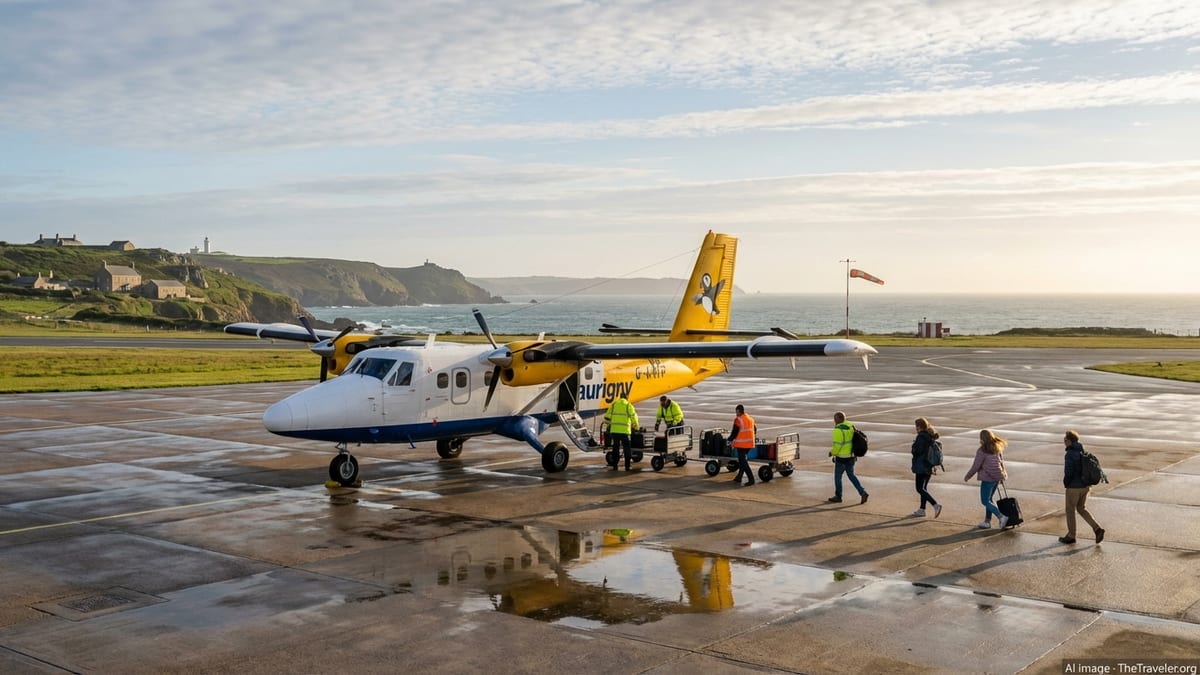
Under the preferred option, the runway will be rebuilt to its existing length but widened to meet contemporary Code 2B standards, suitable for regional aircraft such as the Twin Otter that now serve the island. Supporting works include resurfacing and minor realignment of the main taxiway and apron, improved drainage to cope with heavy rainfall, and upgraded airfield lighting including centreline and modern approach guidance systems.
Policy papers indicate that the scope is deliberately limited to core safety and compliance measures. The grass runway will be retained primarily as a taxiway, and there is no longer provision within the £24 million envelope for a new passenger terminal or fire station buildings, which may be considered separately in the future. The emphasis is on meeting regulatory requirements set by the Channel Islands’ aviation authorities and reducing the risk of enforced closure because of pavement deterioration.
Information shared by Alderney’s business community notes that a full reconstruction will also provide an opportunity to address long-standing resilience issues. A newly built surface is expected to cut unplanned closures caused by potholes or water damage and give airlines greater confidence in planning schedules, a notable concern on an island heavily dependent on air links for residents, visitors, and freight.
Strategic lifeline for island connectivity and tourism
Alderney’s airport is often described in local briefings as a “lifeline” asset, underpinning everything from medical transfers and education travel to tourism and small-business logistics. The island has no ferry link comparable to larger Channel Islands, and weather-related challenges in the English Channel mean reliable air services are considered essential rather than optional.
According to information sheets circulated by Alderney organisations in support of the project, the runway rehabilitation is presented as critical to maintaining year-round links with Guernsey and Southampton. These routes support commuting, visiting friends and relatives, and short-break tourism, all of which contribute to the island’s hospitality and retail sectors. The expectation among local stakeholders is that a secure, compliant runway will make it easier for the resident carrier and potential future operators to maintain regular timetables.
Economic analysis referenced in earlier option appraisals suggested that, although capital costs are substantial for a community of Alderney’s size, the benefits to the wider Bailiwick economy are material. The island’s finance and e‑gaming sectors, along with its visitor economy, depend on predictable access for staff, regulators, and clients. Reports indicate that decision-makers in Guernsey ultimately took this broader economic context into account when revisiting the business case within the tighter £24 million envelope.
There is also a wider tourism dimension. Travel industry observers in the Channel Islands note that Alderney’s wildlife, heritage sites, and slower pace of life offer a distinct proposition compared with busier neighbours. A modern, reliable runway is seen locally as a foundation for attracting higher-value visitors, including walkers, birdwatchers, and yachting guests who rely on convenient air connections.
Timeline, construction challenges and possible delays
Local news coverage indicates that the rehabilitation work is currently expected to begin in spring 2027, following completion of design, regulatory approvals, and tendering. Once underway, construction is likely to be staged to keep some level of air service running where possible, though travellers can expect periods of disruption and carefully scheduled closures while key phases of resurfacing are carried out.
More recent reporting has pointed to emerging questions over whether the schedule can be maintained. A July 2026 update from regional media described delays to the “£24 million new runway” as likely, citing programme risks and the complexity of planning major construction on a small island with limited alternative transport options. Project teams are reported to be working on mitigations, but there is acknowledgment that timelines may need to flex.
Managing the balance between safety, continuity of service, and cost control will be a central challenge. Freight capacity is limited, specialist materials and equipment must be shipped in, and weather windows in the Channel Islands can be short. These practical constraints have been highlighted in previous infrastructure schemes across the region and are once again part of the planning assumptions for Alderney.
For airlines and passengers, clarity on phasing will be crucial. Travel businesses in the Bailiwick are already advising customers to keep a close eye on schedules and booking conditions for 2027, particularly during shoulder seasons when construction activity may peak. Industry watchers suggest that, if handled transparently, the works could be accommodated with manageable disruption, but prolonged uncertainty could weigh on confidence.
What the runway upgrade means for future air services
While the revised £24 million package is not expected to transform Alderney Airport into a substantially larger regional hub, aviation analysts in the Channel Islands see it as a stabilising step that should secure the island’s position on existing networks. A compliant Code 2B runway with upgraded lighting and drainage should improve operational resilience, especially in challenging weather, and reduce the risk of diversions or cancellations linked directly to pavement condition.
The focus on a like‑for‑like reconstruction also means that the airport will remain tailored to smaller regional aircraft. This aligns with the current fleet strategies of airlines serving Alderney, which rely on versatile turboprops capable of operating in short-field environments. Public commentary suggests this is regarded as a realistic approach, recognising that consistent, affordable services are more important to residents than attracting significantly larger jets.
At the same time, the project potentially lays a platform for incremental improvements over time. With core infrastructure renewed, attention may later turn to terminal facilities, passenger experience, and connections with other Channel Island and UK destinations. Business groups on Alderney have argued in public forums that a dependable runway is a prerequisite for any such future enhancements, making the present funding decision a pivotal moment in the island’s transport story.
For travellers, the main takeaway is that Alderney’s only airport is set to undergo its most significant upgrade in decades, backed by a firm financial commitment from Guernsey’s government. The coming years will test how smoothly the region can deliver a complex infrastructure project on a small island, but the long-term prize is a safer, more reliable gateway to one of the Channel Islands’ most distinctive destinations.
Guernsey Parliament – Alderney Airport Runway Rehabilitation policy letter
ITV News – £24 million plans to upgrade Alderney Airport approved