


More news on this day
A newly finalized federal rule is reshaping when U.S. airlines must step in to help stranded passengers, carving out more situations where carriers will no longer be expected to provide meal vouchers or other assistance during lengthy delays.
Get the latest news straight to your inbox!
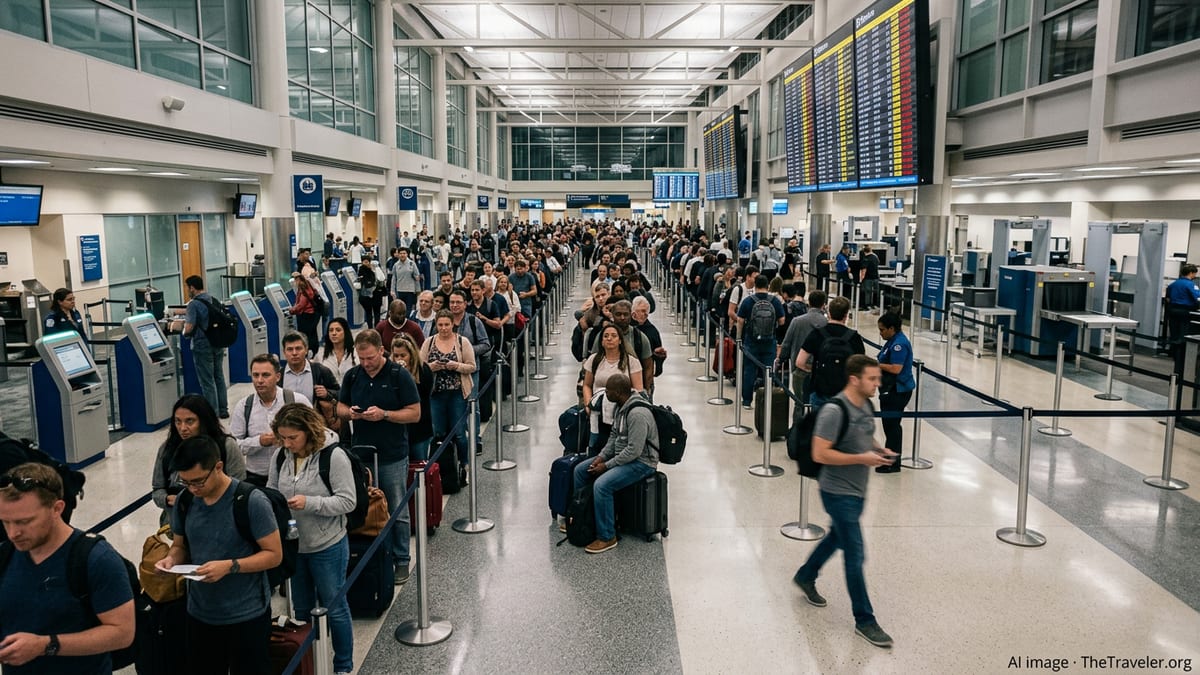
A technical shift with big stakes for travelers
The Department of Transportation (DOT) has been revising a web of consumer rules that govern refunds and customer service when flights are disrupted. A key piece, part of an ongoing rulemaking process known as “Airline Refunds and Other Consumer Protections,” tightens the definition of what counts as a disruption within an airline’s control and, by extension, when carriers are expected to provide compensation or amenities such as meals and hotel stays.
According to recent regulatory filings and published coverage, the latest changes flow from a requirement in federal law that DOT adjust its delay and cancellation categories used in public reporting and on the department’s Airline Cancellation and Delay Dashboard. Under the revisions, a new category is being created for events that Congress directed be removed from the long standing “Air Carrier” bucket that historically covered problems viewed as within an airline’s control. ([regulations.justia.com](https://regulations.justia.com/regulations/fedreg/2025/12/10/2025-22415.html?utm_source=openai))
Consumer advocates warn that narrowing the list of disruptions deemed controllable could have a direct effect on passengers’ ability to claim meals, hotel nights or other help during long waits. Many major U.S. airlines currently link their customer service commitments to whether a delay is categorized as within their control, an approach DOT itself has encouraged through prior dashboard initiatives. ([regulations.justia.com](https://regulations.justia.com/regulations/fedreg/2025/12/10/2025-22415.html?utm_source=openai))
Ten disruption types moved off the “controllable” list
Reports on the new rule indicate that DOT is implementing a statutory directive to pull ten specific causes of disruption out of the “Air Carrier” category. Those causes, which had previously been recorded by airlines as carrier related in their monthly data submissions, will now sit in a separate bucket that is not treated the same way for customer service purposes. ([knopnews2.com](https://www.knopnews2.com/2026/09/10/new-federal-rule-could-leave-airlines-off-hook-certain-delays/?utm_source=openai))
In practical terms, that means certain kinds of schedule changes or delays that once would have been counted against the airline may no longer show up as controllable on federal dashboards or in carrier policies keyed to those definitions. Because many contracts of carriage and service plans point to DOT’s categorizations when describing when travelers can expect meal vouchers, hotel rooms or ground transportation, the reclassification could reduce the number of situations in which passengers are eligible for those benefits. ([uscode.house.gov](https://uscode.house.gov/view.xhtml?req=%28title%3A49+section%3A42308+edition%3Aprelim%29&utm_source=openai))
The rule does not alter weather related disruptions or traditional “force majeure” events, which have long been treated as outside an airline’s control. Instead, it affects edge cases that often sit in a gray area between operational issues and broader system constraints, such as some types of unscheduled maintenance or delays linked to air traffic management directives. Moving those events out of the controllable bucket is expected to lower the share of delays categorized as carrier related in federal statistics. ([regulations.justia.com](https://regulations.justia.com/regulations/fedreg/2025/12/10/2025-22415.html?utm_source=openai))
Interaction with refund rules and paused protections
The shift comes as DOT is simultaneously reshaping its refund framework. In April 2024, the department issued a sweeping final rule that, for the first time, defined what counts as a “significant change” to a flight and required automatic cash refunds when airlines cancel or significantly alter an itinerary. That refund rule, often described as “Refunds I,” remains in effect and is distinct from customer service commitments such as meal vouchers. ([ltnr.ca](https://ltnr.ca/morty/?mortyurl=https%3A%2F%2Fwww.federalregister.gov%2Fdocuments%2F2026%2F07%2F07%2F2026-13675%2Fairline-refunds-and-other-consumer-protections&utm_source=openai))
At the same time, DOT has stepped back from a separate initiative that would have required airlines to provide a broader package of care during major disruptions. In late 2025, the department formally withdrew an advance notice of proposed rulemaking on airline passenger rights that had sought input on mandating cash compensation, meals, lodging and ground transportation when travelers face significant delays and cancellations. That withdrawal reflected a shift in policy away from EU style compensation models that tie payments directly to long waits. ([transportation.gov](https://www.transportation.gov/regulations/federal-register-documents/2025-20042?utm_source=openai))
The combined effect is a patchwork in which passengers retain stronger refund rights when a flight is canceled or significantly changed, while potential obligations for airlines to provide additional care during many lengthy delays are being narrowed. Published analyses note that the latest rule on controllable disruptions is being implemented under a different administration than the one that advanced the earlier compensation proposal, reinforcing how quickly the regulatory landscape can change. ([regulations.justia.com](https://regulations.justia.com/regulations/fedreg/2025/12/10/2025-22415.html?utm_source=openai))
What this may mean at the gate
For travelers, the changes are unlikely to be visible in a single dramatic shift but could alter the outcome in close calls. Under existing dashboard commitments, most large U.S. airlines say they will provide meal vouchers for passengers who face delays of three hours or more when the cause is within the carrier’s control, and hotel accommodations when an overnight stay is required. As more events are recategorized into a new, non controllable bucket, carriers may have a wider basis for declining those benefits. ([regulations.justia.com](https://regulations.justia.com/regulations/fedreg/2025/12/10/2025-22415.html?utm_source=openai))
Some analysts compare the emerging framework to regimes in other countries where carriers are not obligated to compensate travelers when delays are outside their control, and where airlines and regulators frequently debate what falls into that category. In Canada, for example, consumer complaints have focused on how broadly airlines interpret exemptions tied to safety or operational necessity. Passenger advocates caution that similar disputes could grow in the United States as more disruption types are explicitly moved off the list of controllable events. ([en.wikipedia.org](https://en.wikipedia.org/wiki/Rule_240?utm_source=openai))
Travel experts increasingly recommend that passengers closely review airline customer service plans and consider independent travel insurance, especially for itineraries with tight connections or during peak travel seasons. With federal rules carving out more exceptions, the burden may fall more heavily on individual travelers to secure backup options if a disruption is classified as outside the airline’s responsibility.
Next steps in the rulemaking process
The rule adjusting delay categories fits into a broader series of aviation consumer actions that continue to move through the federal pipeline. DOT’s public agenda lists an additional rulemaking phase, informally dubbed “Airline Refunds and Other Consumer Protections III,” aimed at refining definitions of cancellations, significant changes, timely baggage delivery and automatic refunds of certain fees. That proposal remains at the pre final stage, and the department has indicated that it is considering how best to balance consumer protections with regulatory burdens on carriers. ([reginfo.gov](https://www.reginfo.gov/public/do/eAgendaViewRule?RIN=2105-AF36&pubId=202510&utm_source=openai))
Future steps could include further clarification on how airlines must disclose their obligations during disruptions and how DOT will enforce dashboard commitments related to controllable delays. For now, however, the immediate effect of the new rule is to narrow the circumstances in which disruptions will be treated as squarely the airline’s fault for the purpose of customer service promises, potentially leaving more travelers to navigate cancellations and long waits without guaranteed assistance.
Federal Register: Airline Refunds and Other Consumer Protections
DOT notice withdrawing Airline Passenger Rights ANPRM
Reginfo: Airline Refunds and Other Consumer Protections III
KNOP News: New federal rule could leave airlines off the hook for certain delays