


More news on this day
Travel plans across the Middle East are under renewed scrutiny after a missile strike on Riyadh’s King Khalid International Airport killed at least 12 people and injured hundreds, prompting temporary closure of the Saudi capital’s main gateway and fresh government warnings about transit through the region.
Get the latest news straight to your inbox!
What happened at Riyadh’s main airport
Published coverage from international and Saudi outlets indicates that King Khalid International Airport, Riyadh’s primary international hub, was struck by a missile on Saturday, 10 October 2026. Reports describe an explosion affecting a passenger terminal complex handling domestic flights, with debris and shattered glass injuring people inside the building. Earlier in the week, Saudi Arabia’s General Authority of Civil Aviation reported two separate attacks on the same airport facilities, including damage to a Saudia aircraft on the ground.
Casualty figures have risen over several days. Initial civil aviation updates cited three Saudi nationals killed and multiple injuries of varying severity. Later tallies from widely cited news agencies reported at least 12 fatalities and more than 300 people wounded, some critically, after the weekend strike on the terminal area. Imagery from the scene shows damaged facades, blown-out windows and emergency crews working around affected gates.
Saudi aviation authorities stated in Arabic-language bulletins that emergency plans were activated immediately and that operations at King Khalid International were restored after the earlier 8 October incidents. Following the larger weekend strike, however, additional reports on 11 October describe the airport as remaining closed while damage assessments continue and while armed groups in Yemen publicly threaten further attacks on airports and infrastructure across the kingdom.
The missile attack is the latest escalation in a broader regional conflict that has seen drones and ballistic projectiles launched toward Saudi territory in 2026. Since the outbreak of hostilities between the United States and Iran in late February, government and independent security assessments have repeatedly warned of the risk of strikes against airports, oil facilities and military sites in Riyadh and other cities.
How governments are updating travel advice
Major outbound tourism markets have moved quickly to adjust their official advice on Saudi Arabia following the Riyadh airport incidents. As of 10 and 11 October 2026, the United States continues to classify Saudi Arabia at Level 3, “Reconsider travel,” citing the risk of drone and missile attacks, armed conflict, terrorism and complex exit procedures. The advisory explicitly highlights threats to American interests and warns that missile and drone attacks may occur with little or no warning, including in Riyadh.
Canada’s travel advice, updated on 8 and 10 October 2026, now tells citizens to avoid non-essential travel to all of Saudi Arabia due to the volatile security environment. Separate regional guidance urges travellers to avoid all travel to the southern provinces bordering Yemen because of frequent cross-border strikes, drone activity and the risk of falling military debris. Canadian officials also draw attention to the distance between strike locations and their embassy in Riyadh, underlining the potential for sudden incidents away from traditional conflict zones.
In the United Kingdom, the Foreign, Commonwealth and Development Office has progressively tightened language on Saudi Arabia throughout 2026. Change logs and current pages indicate advice against all but essential travel to Riyadh Province and parts of the Eastern Province, alongside specific warnings about a heightened threat to airports and aviation infrastructure in Riyadh, Jeddah, Abha, Jizan, Najran and Yanbu. The guidance stresses that further attacks are possible and that the security situation across the wider Middle East remains unpredictable, even after periodic diplomatic announcements.
Australia’s Smartraveller service continues to advise travellers to reconsider their need to visit Saudi Arabia, referencing recent military strikes and reprisal attacks in multiple regions, including the capital. Several European foreign ministries, as collated in regional advisory trackers, echo these themes by urging maximum caution in Riyadh, discouraging non-essential movement near key infrastructure and reiterating long-standing prohibitions on travel close to the Yemen border.
Impact on flights, transit and itineraries
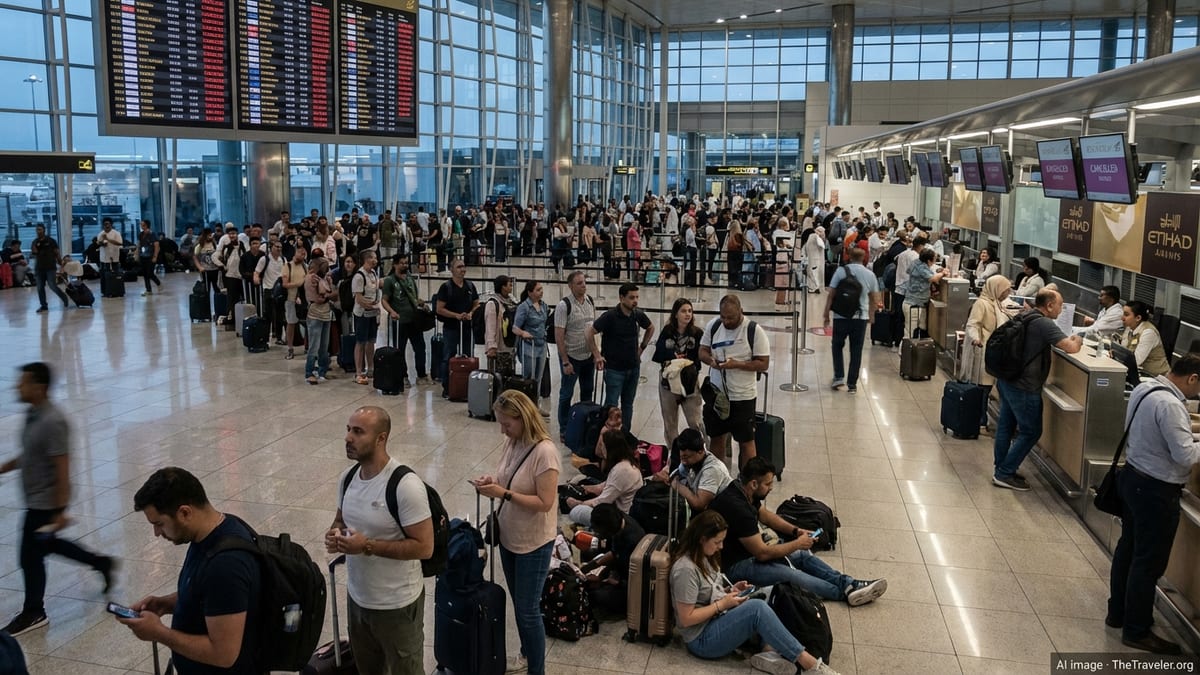
For travellers already holding tickets through Riyadh, the most immediate effect of the weekend strike is disruption to scheduled flights. International media reports and regional travel advisories state that Saudi Arabia has temporarily closed King Khalid International Airport following the deadly terminal hit, with airlines expected to cancel, re-time or reroute services while the closure remains in place. Some passengers have begun discussing on public forums whether to rebook via alternative hubs such as Jeddah or Dammam.
Riyadh is a key node in Saudi Arabia’s aviation network and a transfer point for regional and long-haul itineraries. During earlier phases of the 2026 conflict, some Gulf carriers briefly shifted operations to secondary airports when airspace closures affected particular cities. Industry bulletins and corporate travel trackers from March 2026 show that airlines operating across the Gulf have, in past incidents, consolidated services in less-affected airports while offering visa support or ground transfers for stranded passengers. Travellers can expect a similar pattern now, with short-notice adjustments playing out over days rather than weeks.
Despite the strikes, publicly available aviation and government data suggest that Saudi airspace as a whole has not been completely closed. Commercial flights continue in and out of other Saudi airports, although timetables are subject to change and some carriers may temporarily avoid specific routes. Travel management firms and risk consultancies note that ground transport inside Riyadh has at times continued with little visible disruption outside the immediate impact zones, even as security alerts remain elevated.
Passengers holding non-refundable tickets or multi-stop itineraries routed through Riyadh are being advised, in airline notices and travel-industry guidance, to monitor their booking portals closely and to wait for confirmation of cancellations before making independent changes. When a departure or connection is officially cancelled, most international carriers have been offering rebooking or credit options since the broader Middle East crisis began, but exact policies vary by airline and fare class.
Practical guidance for travellers considering the region
Publicly accessible travel advisories across multiple governments converge on similar practical recommendations for anyone already in Saudi Arabia or planning to travel there in the coming weeks. Travellers are urged to register with their embassy or consulate, ensure that contact details are up to date, and closely monitor official alert systems for rapid changes in the security situation, particularly in major cities such as Riyadh and Jeddah.
Staying informed about airport operations is essential. Because King Khalid International is currently reported as closed following the latest strike, travellers should consult airline communications and local airport announcements before heading to the terminal. In previous incidents, authorities and carriers have sometimes advised passengers to arrive earlier than usual when operations resume because of reinforced security screening and potential congestion at check-in and security checkpoints.
Security-focused advisories recommend that visitors in Riyadh limit non-essential movements, avoid large gatherings and high-profile government or military sites, and remain alert to the presence of security checkpoints and road closures that can appear with little notice after attacks. Many governments also advise against travel within roughly 20 miles, or 30 kilometres, of the Yemen border and flag particular provinces in the south as areas where all travel should be avoided.
Entry rules for Saudi Arabia, such as passport validity of at least six months on arrival and visa or e-visa requirements, remain in force alongside the new security-focused guidance. Prospective visitors are encouraged to check both the security and entry-requirement sections of their own government’s travel portals on the same day they book or change flights, as updates during the 2026 crisis have sometimes been issued multiple times in a single month.
Broader Middle East transit considerations
The Riyadh airport strike has renewed wider concerns about using Middle Eastern hubs during an active regional conflict. While there is no blanket prohibition on transiting Gulf airports for most nationalities, travel advisories and crisis notices from countries including Kenya, Canada and several European states now reference a general need for caution across Gulf airspace and for contingency planning when routing through the region.
General regional advisories issued in 2026 recommend that travellers keep flexible itineraries where possible, including booking changeable fares, allowing longer connection times and maintaining access to funds for unexpected overnight stays. They also suggest carrying printed copies of onward tickets and accommodation details, which can help expedite processing if a sudden wave of schedule changes leads to long queues at transfer desks.
For those who decide to postpone or reroute trips that involve Saudi Arabia, travel-insurance policy wording has become a critical factor. Some policies treat official government advice against non-essential travel as a trigger for limited cancellation cover, while others classify conflict-related disruption under exclusions. Travellers are being encouraged by consumer groups and insurance comparison services to confirm, in writing where possible, how their insurer handles claims linked to missile attacks, airspace closures or rapid escalation of hostilities in the Middle East.
In the short term, the situation around Riyadh’s King Khalid International Airport remains fluid. With at least one major terminal damaged and the facility temporarily closed after a mass-casualty strike, travellers and travel planners are relying heavily on official advisories, airline statements and airport updates to make decisions about routing through the Middle East in the weeks ahead.