


More news on this day
Rail traffic and a rural highway in northern Caddo Parish experienced temporary disruption on June 29 after a minor freight train derailment was discovered near Oil City, with early reports indicating no injuries or hazardous material release.
Get the latest news straight to your inbox!
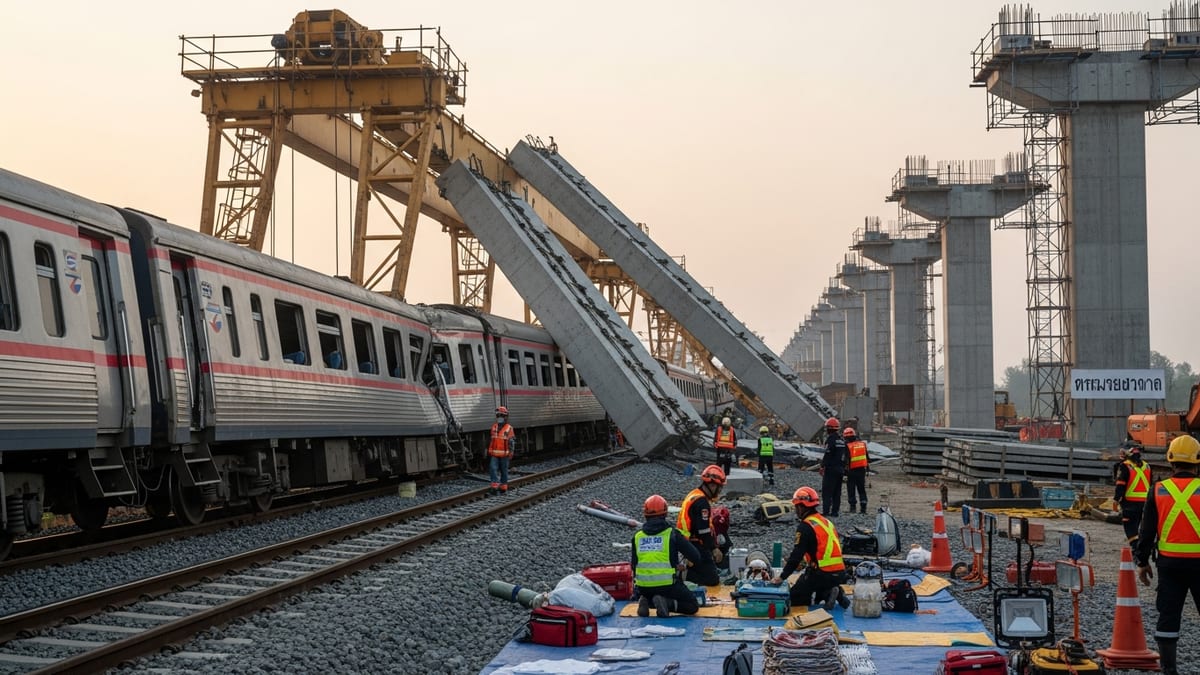
Freight Cars Leave Tracks Near Oil City
Publicly available information from parish officials and local outlets indicates that the incident was first noted shortly after 6 a.m. along U.S. Highway 1 in the Oil City area of North Caddo. A deputy on patrol reported seeing several railcars off the tracks near the 13700 block of the highway, prompting an immediate response from parish agencies and railroad personnel.
Initial descriptions classify the event as a minor derailment involving a freight consist traveling through the largely rural corridor north of Shreveport. Early assessments suggest that only a limited number of cars left the rails and that the train remained largely upright, reducing the risk of a more serious crash or extended closure.
Rail traffic through the area was halted while responders assessed the scene. The affected stretch of track serves regional freight operations and runs parallel to sections of Highway 1, a key connector for small communities scattered across northern Caddo Parish.
Law enforcement and other responders established a perimeter around the site to keep onlookers and motorists at a safe distance while railroad inspectors and cleanup crews began detailed checks of the train, track and surrounding right of way.
No Injuries or Hazardous Materials Reported
According to published coverage and parish-level updates, no injuries have been reported among train crew or nearby residents. There were no immediate indications of damage to homes or businesses in the vicinity of the tracks, which cut through sparsely developed areas north of Oil City.
Available information also indicates that the train was not transporting hazardous materials in the derailed railcars. That factor significantly lowered the overall risk to the public and environment compared with higher profile derailments in other parts of the country that have involved chemical cargoes and extended evacuations.
Emergency management personnel and railroad representatives conducted visual checks for fuel leaks, damaged equipment and potential fire hazards. With no leaks or smoke observed and no hazardous cargo reported among the affected cars, on-scene activity focused primarily on stabilization and planning for rerailing operations.
Local reports note that responders continued to monitor the area for several hours to ensure that conditions remained stable while specialized rail recovery teams mobilized to the site.
Highway 1 Closure and Local Traffic Impacts
The derailment prompted a temporary closure of a portion of Highway 1 near the incident location. Public messages from parish agencies urged drivers to avoid the area and to consider alternate routes while crews worked around the tracks adjacent to the roadway.
In this part of North Caddo Parish, Highway 1 serves as a primary north south corridor for residents, commercial traffic and service vehicles traveling between Oil City, Vivian and smaller unincorporated communities. Even a short closure can result in delays, particularly for early morning commuters and local freight deliveries.
Based on information shared in regional media, detours were informal and largely routed motorists onto nearby parish roads. Because the derailment was limited in scope, traffic disruptions were measured in hours rather than days, and by midday the focus had shifted from road management to ongoing rail equipment recovery along the right of way.
There were no immediate reports of secondary crashes or incidents attributed to the closure or to drivers attempting to circumvent barricades in the area.
Investigation and Rail Recovery Efforts
Railroad personnel have begun an internal review of the incident, examining the condition of the track, the derailed cars and operating records from the train involved. While no official cause has yet been publicly detailed, investigators typically look at track integrity, equipment condition and train handling when determining the sequence of events leading to a derailment.
Minor derailments of this type often involve issues such as a damaged rail, a track component failure or problems with an individual railcar’s wheels or suspension. In many cases, the findings lead to targeted repairs or maintenance changes rather than broader systemwide overhauls.
Recovery teams are expected to use heavy equipment to lift and rerail the affected cars or move them to a secure siding for inspection. Once debris is cleared and tracks are checked for structural damage, train movements can resume at reduced speed until permanent repairs are completed and safety checks are verified.
Publicly available information from the parish notes that additional updates on the cause and precise damage costs may be released after the railroad’s assessment and any state or federal reviews reach preliminary conclusions.
Community Concerns and Safety Context
The North Caddo incident comes at a time of heightened public attention to rail safety, following several higher impact derailments elsewhere in the United States that have involved hazardous cargo, prolonged evacuations and complex environmental cleanups. National reports in recent months have renewed scrutiny of track maintenance practices, railcar design and inspection regimes across the freight rail industry.
Local residents in Caddo Parish live with regular train movements that share corridors with key roadways, particularly in communities such as Oil City and Vivian where tracks run close to homes and small businesses. While this latest derailment appears to have resulted only in property and infrastructure impacts, it reinforces long standing concerns about what could happen in a more severe event.
Available state traffic safety summaries for Caddo Parish show a modest but persistent number of train related incidents over recent years, though most have involved grade crossing crashes or minor operational disruptions rather than large scale derailments. Transportation planners and emergency managers often use such data to guide training exercises and to refine response plans for both minor and major rail emergencies.
For now, residents in North Caddo are contending mostly with residual delays and the sight of cleanup crews along the tracks. As rail service returns to normal, attention is likely to shift to the findings of the derailment review and to any recommendations that emerge for further reducing the risk of future incidents along this busy freight corridor.