


More news on this day
More than 1,100 flights across the United States were delayed and at least 43 were canceled today, as a fresh wave of operational strains and weather disruptions tested the resilience of the country’s air travel system and left passengers facing long lines, missed connections and rapidly changing itineraries.
Get the latest news straight to your inbox!
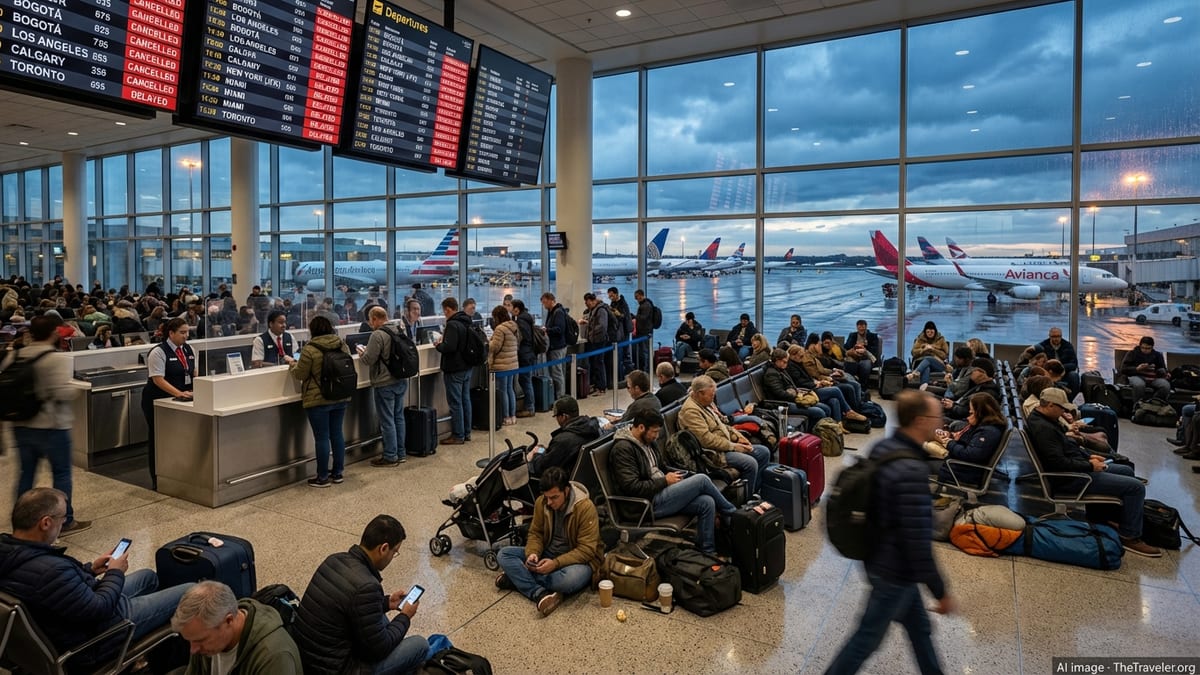
Flight delays mount across major hubs
Tracking data from flight-monitoring services showed over 1,122 delays and dozens of cancellations within, into or out of U.S. airports, with the impact concentrated at the country’s busiest hubs. Large connecting airports saw departure banks pushed back by 30 minutes or more as carriers attempted to reset schedules and manage aircraft and crew constraints.
While the total number of disrupted flights remained below the worst chaos seen during major storms or system outages in recent years, today’s figures underline how quickly pressure can build across the network. Once departure banks begin to slip, aircraft and crews can fall out of sequence, amplifying problems for flights later in the day and on subsequent days.
Publicly available information from flight-tracking platforms indicated that many of the delays clustered in the afternoon and evening peak, when aircraft utilization and gate capacity are already stretched. As a result, relatively modest schedule disruptions at a few key airports translated into missed connections and overnight stays for travelers across multiple regions.
Smaller and mid-size airports were not immune. As airlines prioritized scarce aircraft for high-demand routes, some regional services experienced extended delays or cancellations, complicating travel plans for passengers who rely on those flights to access the broader network.
Weather, congestion and tight staffing combine
Reports from aviation data providers and recent government analyses suggest that today’s disruptions reflect a familiar mix of triggers: localized storms, airspace congestion, and continuing tightness in staffing at airlines and air traffic facilities. Even short bursts of convective weather near major hubs can force ground stops, reroutes and spacing restrictions that ripple across hundreds of flights in a matter of hours.
In recent months, federal aviation data and airline operational statistics have highlighted how high summer and early autumn demand can strain systems that are still working through post-pandemic staffing and training backlogs. When flights are already scheduled near the limits of available crews, any disruption can quickly erase built-in buffers and leave aircraft and staff out of position.
The recent history of large-scale events, including IT outages and winter storms that have produced thousands of cancellations over several days, has prompted carriers to add more reserve crews and spare aircraft where possible. However, today’s pattern of more than a thousand delays and several dozen cancellations indicates that the system remains vulnerable whenever multiple stressors appear at once.
Operational experts cited in prior government and industry reports have noted that longer-term solutions, such as modernizing air traffic control technology and reworking crew scheduling practices, are progressing but have not yet fully insulated passengers from days of widespread disruption.
Passengers face missed connections and crowded terminals
For travelers, today’s figures translated into crowded departure halls, long lines at customer service desks and frequent gate-change announcements. With more than 1,122 flights running late, relatively minor schedule slips early in the day often escalated into missed onward connections by late afternoon, especially at major hubs where itineraries depend on tightly timed banks of arrivals and departures.
Travel forums and social media posts described travelers scrambling to rebook, sometimes queuing for extended periods at airport counters while simultaneously trying airline apps and call centers. Many passengers reported that rebooking options quickly narrowed on popular routes as delayed aircraft created knock-on effects deep into the schedule.
Published guidance from consumer advocates emphasizes that travelers affected by delays and cancellations should monitor their flights proactively, use airline mobile apps where possible and document disruption details for any future claims. On days like today, when cancellations remain relatively low but delays are widespread, rebooking onto alternative same-day flights can be especially challenging.
The uneven impact across airports also meant that some travelers encountered relatively normal operations at origin points, only to be swept into the disruption upon arrival at hub airports with mounting delays. That pattern, seen in previous periods of strain, underscores how interconnected the domestic flight network has become.
Data underscores a broader pattern of strain
Today’s disruption figures fit into a wider pattern identified in federal transportation statistics and independent aviation analyses. Over the past several years, U.S. carriers have operated a larger share of their schedules with thinner margins for disruption, while passenger volumes have climbed back to or above pre-pandemic levels on many routes.
Government air travel consumer reports have pointed to a modest but persistent increase in overall cancellation rates compared with the years immediately before the pandemic, along with consistently elevated levels of flight delays during peak travel seasons. Industry datasets from schedule and performance providers similarly show that on-time performance remains under pressure at several major hubs.
Analysts reviewing recent summers and holiday periods note that many of the worst multi-day meltdowns stemmed from one triggering event, such as a severe storm or an IT failure, colliding with already tight schedules. While today’s tally of more than 1,122 delays and 43 cancellations does not approach those extremes, it reflects the same underlying fragility in a complex, highly optimized system.
As airlines plan upcoming holiday schedules and federal agencies continue work on modernization projects, today’s wave of disruptions offers another reminder that even a single difficult travel day can disrupt plans for hundreds of thousands of passengers across the United States.