

More news on this day
More than 110 flights were canceled across Pittsburgh International, Westchester County, Louis Armstrong New Orleans International and Raleigh-Durham International airports on March 16 and 17, stranding travelers and adding fresh disruption to an already turbulent late-winter travel period.
Get the latest news straight to your inbox!
Storm Systems and Operational Strains Trigger New Wave of Cancellations
Published coverage and airline status boards on March 17 indicate that a combination of severe weather and operational constraints drove the latest round of flight cancellations at Pittsburgh, Westchester, New Orleans and Raleigh-Durham. The disruptions followed a series of powerful winter and early spring storm systems that have swept across large portions of the United States since late January, repeatedly stressing airline schedules and airport operations.
In the Northeast and Mid-Atlantic, lingering instability after major winter storms has left airlines with thinner schedule buffers, meaning that localized thunderstorms or low ceilings can more quickly cascade into cancellations. Publicly available information shows that the affected airports are not among the largest national hubs, which can make them more vulnerable when carriers consolidate operations at bigger nodes to recover from system-wide shocks.
At the same time, industry data over recent weeks points to elevated levels of delay and cancellation nationwide, as carriers juggle winter-weather diversions, rolling crew misplacement and high spring-break demand. The result at these four airports over March 16 and 17 was a critical mass of more than 110 cancellations that left many travelers facing sudden overnight stays, missed connections and long waits for alternatives.
Airport-by-Airport: Where Travelers Were Hit Hardest
At Pittsburgh International Airport, tracking data on Sunday and Monday showed clusters of cancellations affecting both inbound and outbound flights, particularly on routes connecting through major Midwest and East Coast hubs. Some flights into Pittsburgh were canceled preemptively as airlines sought to keep aircraft and crew positioned at larger bases, while others were scrubbed later in the day after upstream delays made schedules untenable.
Westchester County Airport, which operates with a compact runway layout and tight curfews, saw a noticeable share of regional flights dropped as thunderstorms and low visibility created narrow operating windows. Runway work and airfield constraints that have been highlighted in recent local bulletins added further limits on flexibility, leaving carriers with fewer options to absorb disruptions when weather or air traffic control restrictions developed along the corridor to Boston, New York and Washington.
In New Orleans, Louis Armstrong New Orleans International experienced cancellations layered on top of a busy spring travel period. Recent days had already brought reports of heavy crowds, extended security lines and weather-related delays across the Gulf Coast. As storm cells swept through key connecting cities and along Gulf and East Coast routes, some New Orleans departures and arrivals were canceled outright, while others suffered rolling delays that ultimately forced airlines to reset their schedules.
Raleigh-Durham International, a fast-growing airport with significant connecting traffic, was hit by cancellations tied to East Coast thunderstorms and temporary ground delays at other regional hubs. Publicly posted airline waivers for the broader East Coast on March 16 and 17 specifically included Raleigh-Durham, signaling that carriers anticipated significant disruption and encouraged travelers to rebook in advance where possible.
What Travelers Experienced on the Ground
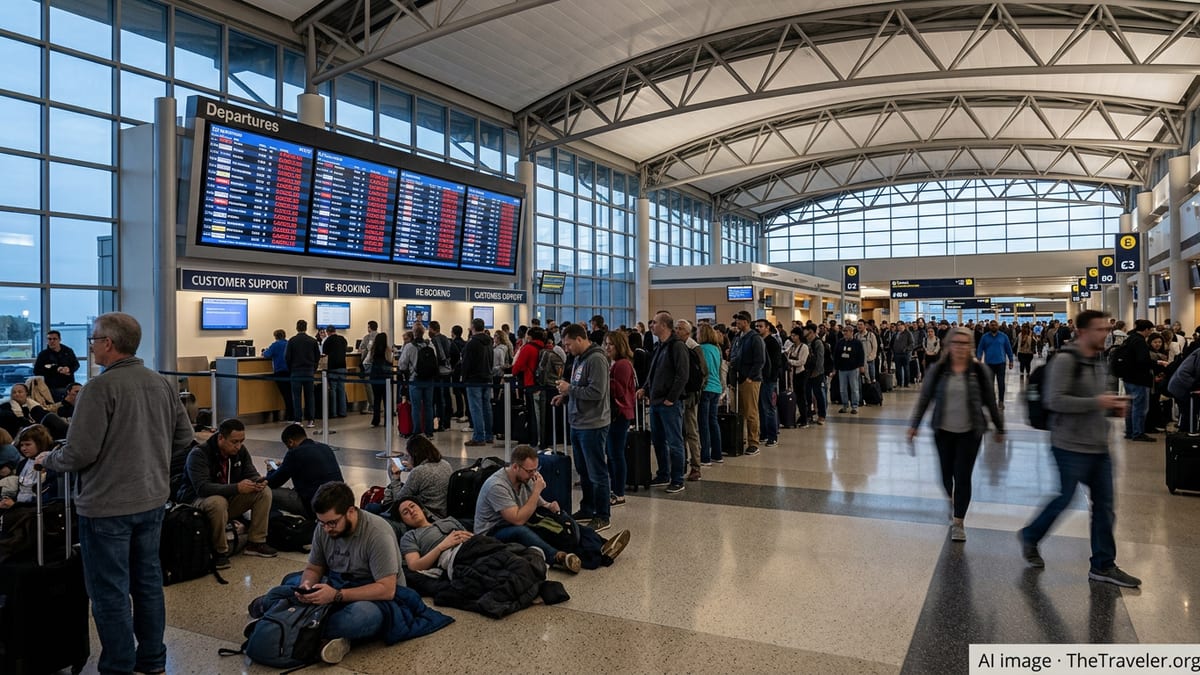
Across all four airports, passengers reported crowded gate areas, long customer-service lines and difficulty securing timely rebooking options. With many flights over the next 24 to 48 hours already heavily booked for spring travel, same-day alternatives were limited, especially for those relying on smaller regional routes or late-evening departures.
At Pittsburgh and Raleigh-Durham, travelers connecting from other storm-affected cities often arrived to find their onward flights canceled or heavily delayed, creating bottlenecks at rebooking desks and baggage claim. Some passengers opted to rent cars and drive to nearby cities when short-haul flights were repeatedly scrubbed or when only multi-stop itineraries remained.
At Westchester, where the terminal footprint and gate count are modest, cancellations quickly led to tight seating, crowded check-in areas and limited food and retail capacity to absorb the surge of stranded travelers. In New Orleans, images and descriptions circulating on social media pointed to long queues at security and customer-service counters, as well as packed hold rooms while travelers waited for updated departure information.
In many cases, overnight accommodation became a challenge. With local hotels near airports filling rapidly during major disruption events, some travelers reportedly chose to stay in terminal seating areas until morning departures, particularly where carriers were not obligated to cover lodging due to weather clauses in their contracts of carriage.
Airline Waivers, Rebooking Options and Passenger Rights
Airlines serving the four airports responded by issuing or expanding travel waivers for parts of the East and Gulf Coasts, allowing affected customers to change flights without additional change fees, provided they kept the same origin and destination and rebooked within specified date ranges. These waivers, published on carrier websites, were designed to encourage proactive changes and reduce last-minute crowding at airport service counters.
Travelers whose flights were canceled because of weather-related reasons generally received the option of rebooking on the next available flight or obtaining a refund for the unused portion of their ticket, in line with standard U.S. Department of Transportation guidance. However, compensation for meals or hotels remained limited, since weather disruptions are typically categorized as outside an airline’s control.
For passengers whose cancellations were linked to crew availability or aircraft repositioning not directly caused by weather at their departure or arrival point, some carriers offered additional vouchers or hotel assistance on a case-by-case basis. Publicly available customer-service advisories urged travelers to use airline mobile apps, websites and call centers rather than relying solely on airport desks, where lines stretched for hours at peak disruption times.
Consumer advocates consistently emphasize that travelers should retain boarding passes, receipts and written notices of cancellations in case they need to pursue refunds or file complaints later. They also recommend monitoring real-time flight-tracking tools, which can reveal when an incoming aircraft is delayed or canceled well before gate announcements are updated.
What to Expect Next and How to Prepare if You Are Traveling
Looking ahead to the remainder of the week of March 17, publicly available forecasts suggest that unsettled weather may continue to affect parts of the East Coast and interior regions, raising the possibility of additional localized disruptions. While the worst of the recent major winter storms has passed, even scattered thunderstorms or coastal systems can trigger new rounds of delays and cancellations when airline networks are already stretched.
Travelers flying through Pittsburgh, Westchester, New Orleans or Raleigh-Durham over the next several days are being urged by airport and airline advisories to build in extra time at the airport, closely monitor their flight status and consider earlier departures if their plans are flexible. Those with tight connections, evening departures or travel involving smaller regional jets may face higher risk of disruption if conditions worsen.
Industry analysts note that the cluster of more than 110 cancellations at these four airports is part of a broader pattern of weather-driven volatility in early 2026, following major storm systems in January and February that already produced some of the highest nationwide cancellation totals in years. With spring-break travel volumes rising, even routine operational challenges can quickly spill over into significant passenger impacts.
For now, the clearest guidance for travelers is to stay informed, keep alternative options in mind and be prepared for schedule changes at short notice. As airlines work to reset their networks after the latest round of storms, the experience of passengers at Pittsburgh, Westchester, New Orleans and Raleigh-Durham serves as another reminder that late-winter and early-spring flying across the United States remains highly vulnerable to sudden disruption.