


More news on this day
Travelers moving through Cancún, Monterrey and Mexico City airports are facing significant disruption after a wave of delays and cancellations rippled across domestic and international routes, with around 70 flights delayed and 11 reportedly canceled in a single operating window.
Get the latest news straight to your inbox!
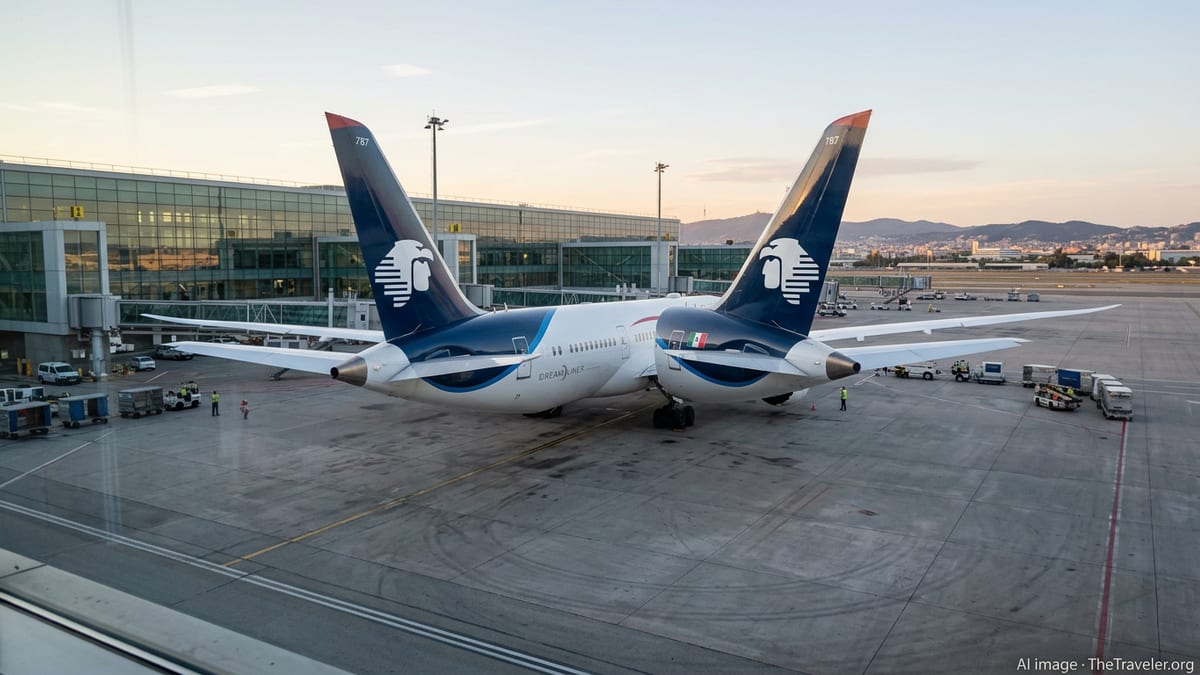
Delays Mount Across Mexico’s Busiest Air Hubs
Published operational data and flight-tracking snapshots from mid-June indicate that services at Cancún International Airport, Monterrey International Airport and Mexico City International Airport have been hit by a mix of extended delays and targeted cancellations affecting both domestic and international routes. While the vast majority of flights are still operating, the cumulative effect of roughly 70 delayed departures and arrivals, alongside 11 cancellations, has created noticeable congestion at check in, security and boarding gates.
The pattern of disruption has not been limited to a single carrier. Schedules show Aeroméxico, low-cost operators such as Viva Aerobus and Volaris, and foreign airlines including major North American and European brands all registering off schedule departures on routes linking Mexico with Canada, the United States, Central America and Europe. Flight-monitoring boards from Cancún list services to Mexico City, Monterrey and U.S. hubs such as Denver and Kansas City operating behind schedule, while Mexico City and Monterrey show knock on delays on trunk routes that connect to those flights.
Available tracking information suggests that most delayed flights are departing within one to three hours of their original slots, but the bunching of departures has pressured ramp operations and increased turnaround times. In several cases, rescheduled flights have required last minute gate changes, lengthening the time passengers spend in terminal zones already strained by construction and heavy summer travel demand.
While the headline numbers fall short of a full scale meltdown, travelers moving through the three airports over the current period are encountering longer queues, tighter connections and a greater likelihood of missed onward flights, especially where itineraries rely on short connection windows.
Weather, Airspace Constraints and Infrastructure Works Converge
Publicly available airport and airline information points to a convergence of factors behind the current wave of disruptions. Seasonal thunderstorms over central and northeastern Mexico have periodically restricted airspace and slowed arrivals and departures, particularly on approaches to Mexico City and Monterrey. When holding patterns extend or arrival rates are reduced, departures from feeder airports such as Cancún can be held back to avoid further congestion.
At the same time, Mexico City International Airport continues to undergo infrastructure upgrades and remodeling linked to long term capacity management and preparations for the 2026 World Cup. Travelers have reported late gate assignments and sudden changes on departure boards, a pattern that adds operational friction when combined with weather related flow restrictions. Even modest reductions in available runway or taxi capacity can quickly translate into schedule knock ons during peak hours.
The three airports also play distinct but interconnected roles in Mexico’s aviation network. Mexico City is the country’s primary hub for long haul services to Europe and South America, as well as dense domestic shuttle operations to cities such as Cancún and Monterrey. Cancún is one of Latin America’s busiest leisure gateways with heavy traffic from North America and Europe, while Monterrey functions as an industrial and business hub with growing transatlantic links. Disruption at any one of these nodes can cascade across the others within a few hours.
Industry data from recent years underscores how sensitive these airports are to external shocks. When adverse weather or temporary closures have previously affected Cancún, the number of cancellations has climbed into the hundreds over a two day period, illustrating how quickly conditions can deteriorate once arrival and departure banks fall out of sequence.
Major Airlines and Key Routes Affected
The current round of disruption is being felt most sharply on high frequency domestic corridors and heavily booked international routes. Regular shuttle services between Mexico City and Cancún, and between Mexico City and Monterrey, are cornerstones of national connectivity and feed long haul departures to cities across North America and Europe. When these flights slip behind schedule, passengers risk missing onward connections to U.S. hubs such as Atlanta, Dallas Fort Worth and Denver, as well as transatlantic services from Mexico City and Monterrey to European capitals.
Low cost airlines operating concentrated banks of departures have also experienced ripple effects. When one rotation leaves late from Cancún or Mexico City, subsequent legs to secondary Mexican cities or nearby Central American destinations can be pushed into later time bands, complicating crew and aircraft utilization. This in turn raises the possibility that individual flights may be canceled if they become operationally impractical to operate within duty time limits.
The disruptions have highlighted the role of Monterrey as a growing international gateway. In recent seasons, carriers have added or announced non stop services from Monterrey to major North American and European airports, positioning the city as an alternative to Mexico City for some long haul travelers. Delays at Monterrey therefore no longer affect only domestic itineraries, but also trips that bridge Mexico’s industrial north with overseas business centers.
For airlines, the immediate priority has been to stabilize same day operations by swapping aircraft, consolidating lightly booked flights and reassigning crews where possible. Publicly available schedule updates show that most carriers are attempting to avoid mass cancellations, opting instead for rolling delays that keep more of the network intact, albeit at the cost of punctuality.
Knock On Impacts for International Travelers
For passengers, the practical effects of the disruption depend largely on itinerary design and flexibility. Travelers beginning their journey in North America or Europe with a nonstop flight to Cancún face inconvenience primarily in the form of late arrivals and extended aircraft turnaround times on the ground. However, visitors using Mexico City or Monterrey as connection points to other parts of Latin America are encountering more complex challenges, particularly when minimum connection times are tight.
Reports from recent travel days in Mexico show that some passengers have arrived at their connection points to find their onward flights already boarding at a different gate than originally listed, requiring rapid movement through crowded terminals. In other cases, aircraft have remained on the ground awaiting inbound crews or connecting passengers from delayed feeder flights, a practice that can help preserve itineraries but pushes departure times deeper into peak congestion windows.
Travelers transiting through Mexico on multi segment tickets involving different airline partners are especially vulnerable to misaligned schedules, as operational decisions taken by one carrier may not automatically generate rebooking options with another. This is particularly relevant on routes connecting Mexican hubs to Caribbean and Central American destinations, where frequencies are lower and missed flights can result in overnight stays.
Given the interconnected nature of schedules across North America, delays in Mexico can also feed back into evening departures from U.S. and Canadian hubs. Aircraft and crews arriving late from Cancún or Mexico City may turn around for redeployments within the United States and Canada, adding another layer of uncertainty for travelers who never set foot in Mexico but are flying on aircraft tied to those rotations.
What Travelers Can Expect in the Coming Days
Based on the pattern of disruptions observed in recent operational data, conditions at Cancún, Monterrey and Mexico City airports are likely to remain fluid over the short term. Storm activity typically fluctuates through the summer season, and even short lived weather systems can force temporary ground stops or flow restrictions that reverberate through the network for hours.
Publicly available information from airlines and airports indicates that carriers are adjusting schedules day by day, adding extra time between flights on some routes and preemptively retiming departures where repeated delays have occurred. When such changes are implemented in advance, they can reduce the number of last minute cancellations but may still leave passengers facing significantly altered timetables.
Travelers booked on flights involving any of the three affected airports over the next several days are likely to encounter longer processing times at check in, security and immigration as delayed passengers overlap with on time departures. Those connecting through Mexico City or Monterrey, in particular, may find it prudent to allow additional buffer time between flights or to favor itineraries that provide at least a medium length layover.
While the current wave of disruption does not indicate systemic failure, it underscores how quickly Mexico’s busiest airports can experience strain when weather, infrastructure works and heavy seasonal traffic coincide. For now, the operational picture remains dynamic, and travelers passing through Cancún, Monterrey and Mexico City should be prepared for continued schedule adjustments as airlines work to restore punctuality across their networks.