


More news on this day
MSC Cruises is redirecting upcoming Alaska voyages away from the famed Tracy Arm Fjord in southeast Alaska, as ongoing geological instability following a 2025 landslide continues to reshape how major cruise brands operate in the region.
Get the latest news straight to your inbox!
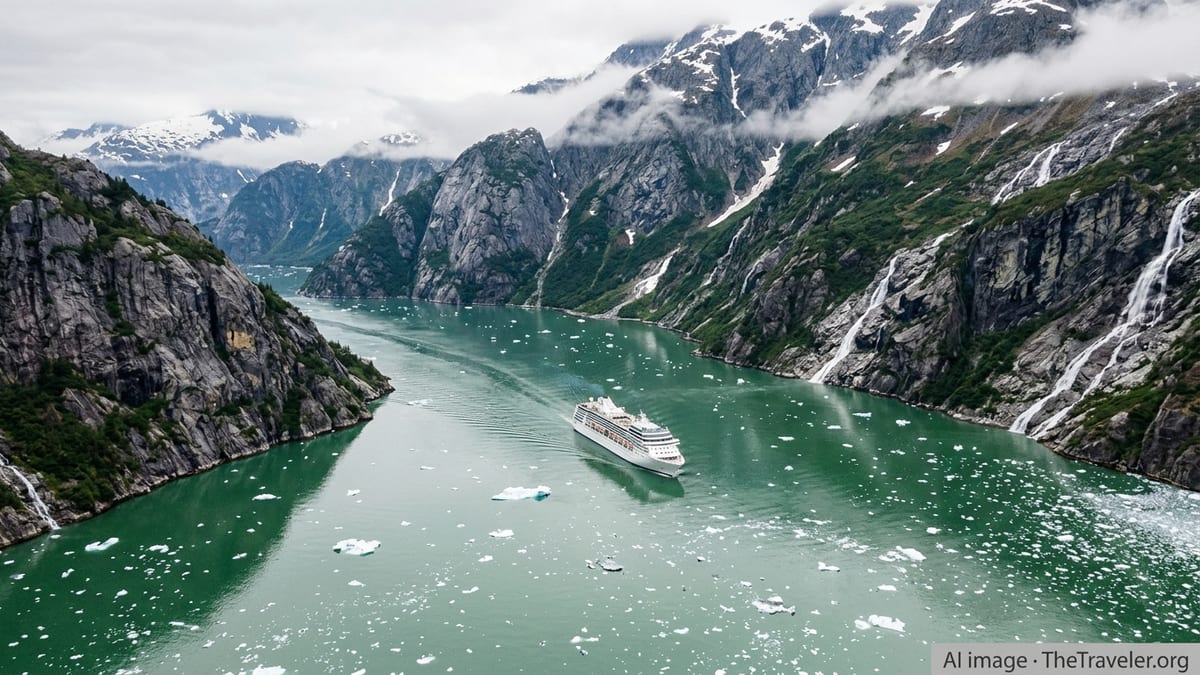
Itinerary Shift Reflects Growing Safety Concerns
Recent schedule updates show MSC Cruises replacing scenic cruising in Tracy Arm with routes through nearby Endicott Arm and Dawes Glacier for its United States and Alaska sailings. Publicly available information indicates that the change applies from the August 17, 2026 departure onward, aligning MSC with a wider industry move to avoid Tracy Arm at least for the 2026 season.
The adjustment follows a massive landslide near South Sawyer Glacier on August 10, 2025, which sent huge volumes of rock, ice and debris into the narrow fjord and generated a powerful tsunami within the confined waterway. While no cruise ships were in Tracy Arm at the time, subsequent assessments by government scientists and hazard specialists have highlighted a continued risk of additional rockfall and localized tsunamis in the area.
Coverage in industry and general news outlets indicates that navigation safety and passenger security now outweigh the marketing value of including Tracy Arm, often promoted as one of Alaska’s most dramatic scenic experiences. Instead, MSC Cruises is positioning Endicott Arm and Dawes Glacier as comparable alternatives that still offer glacier viewing and steep-walled fjord scenery, but with less immediate exposure to the unstable slopes around South Sawyer Glacier.
The focus on rerouting rather than canceling scenic cruising entirely suggests that operators are seeking a balance between risk management and the expectations of guests who book Alaska cruises specifically to see glaciers, icebergs and wildlife from the comfort of a large ship.
Tracy Arm’s Sudden Shift from Icon to No‑Go Zone
For years, Tracy Arm Fjord has been a signature highlight on southeast Alaska itineraries, often described in travel coverage as one of the state’s most photogenic waterways. The roughly 30 mile fjord southeast of Juneau features vertical granite walls, waterfalls and two tidewater glaciers, North and South Sawyer, making it a natural fit for scenic cruising days.
The 2025 landslide dramatically altered that image. According to publicly accessible scientific summaries, a large slope failure above the toe of South Sawyer Glacier sent material crashing into the fjord, driving water more than a quarter mile up the opposite mountain wall and out of the inner arm. The event demonstrated how quickly conditions in a steep, glaciated fjord can change, particularly as retreating ice leaves rock faces unsupported.
Subsequent monitoring and analysis described the Tracy Arm area as unstable, with expectations of continued rockfall and small scale sliding from the scarred slope over a period of years. For cruise operators, that has translated into uncertainty about whether a similar failure could occur while ships or small tour vessels are deep within the narrow channel, with limited room to maneuver.
The result is a swift shift in Tracy Arm’s status in the cruise sector. Instead of featuring prominently in marketing materials, the fjord is increasingly discussed in the context of geological risk, climate related landscape change and the operational limitations of bringing large passenger vessels into confined, hazard prone waterways.
Industry Wide Realignment of Alaska Scenic Routes
MSC Cruises is not alone in reevaluating Tracy Arm. Reports from travel trade publications and cruise focused outlets show that several other major lines, including Holland America, Carnival Cruise Line, Royal Caribbean and Virgin Voyages, have already removed Tracy Arm from their 2026 scenic cruising plans and substituted Endicott Arm instead.
In many cases, cruise companies are using nearly identical language in communications to guests, referencing unstable ice, geological conditions and navigation safety concerns that currently prevent vessels from entering Tracy Arm. Some brands have indicated that the change covers the entire 2026 Alaska season, suggesting that the industry does not expect a rapid resolution to the instability identified at South Sawyer Glacier.
This coordinated response means that travelers booking Alaska cruises out of major United States ports such as Seattle and Vancouver are now far more likely to see Endicott Arm listed on itineraries than Tracy Arm. Travel trade reporting notes that some passengers have expressed disappointment at losing a bucket list destination, but also that many are reassured by what is described as a precautionary approach in a complex environment.
For smaller regional operators and independent excursion providers, the changes are also significant. Some tour companies that once offered catamaran trips deep into Tracy Arm are reconfiguring offerings to focus on Endicott Arm or other nearby locations where hazard assessments are viewed as more favorable.
Endicott Arm Emerges as the Primary Alternative
Endicott Arm, located roughly 20 miles south of Tracy Arm in the same wilderness region of southeast Alaska, is emerging as the primary substitute on reworked itineraries. Publicly available promotional materials describe the fjord as offering many of the same visual elements as Tracy Arm, including narrow channels, steep rock walls and a tidewater glacier at Dawes Glacier near the head of the arm.
Travel reporting indicates that Endicott Arm has long been used as a backup when ice conditions or other factors made Tracy Arm inaccessible, so navigation routes, pilotage procedures and tour narratives are already familiar to many bridge teams and shore excursion partners. That existing experience appears to have made it a natural choice as cruise lines look for a scenic but operationally manageable alternative.
For guests on MSC Cruises and other major brands, the reroute may be more subtle than it appears on paper. Ships will still spend a day slowly transiting a glacier carved fjord, with opportunities to view floating ice, birdlife and possibly whales or seals along the way. However, repeat Alaska cruisers and regional specialists note that Tracy Arm’s twin Sawyer glaciers and particularly tight inner passages offered a distinct character that will be missed while access is restricted.
The rerouting also underscores how itinerary planning now takes into account not just weather and ice forecasts, but evolving geological risk assessments. Cruise lines are having to build in flexibility to adjust routes as scientific understanding of slope stability and climate driven change continues to develop.
Climate Change, Geology and the Future of Alaska Cruising
The situation at Tracy Arm has become a case study in how climate change and geology are intersecting with tourism in Alaska. Publicly accessible scientific commentary following the 2025 landslide has linked the event to broader patterns observed in glaciated mountain regions, where the retreat of ice can destabilize slopes and increase the likelihood of sudden failures.
Similar concerns have been raised in other parts of Alaska, such as Barry Arm and sections of Prince William Sound, where researchers have identified large, slowly moving landslides above deep fjords. While not all of these sites host cruise traffic on the scale of Tracy Arm, they illustrate a wider landscape level challenge for route planners and port authorities across the state.
For the cruise sector, including MSC Cruises’ United States and Alaska operations, that means building long term strategies that can accommodate periodic closures of high profile natural attractions. It may also mean investing more heavily in alternative experiences, from port intensive itineraries to partnerships with local tour providers in communities less exposed to geohazards.
Travel industry analysis suggests that demand for Alaska cruises remains strong, with early season sailings from April 2026 expected to bring thousands of passengers north from West Coast departure points. How those travelers experience the iconic fjord landscapes of southeast Alaska, however, is increasingly shaped by factors far beyond marketing brochures, as operators like MSC Cruises adjust to a dynamic and sometimes unpredictable natural environment.