


More news on this day
A new wave of codeshare agreements centered on Antananarivo is reshaping air connectivity across the Indian Ocean, opening fresh multi-island tourism routes that link Madagascar more tightly with neighboring island nations and long-haul markets.
Get the latest news straight to your inbox!
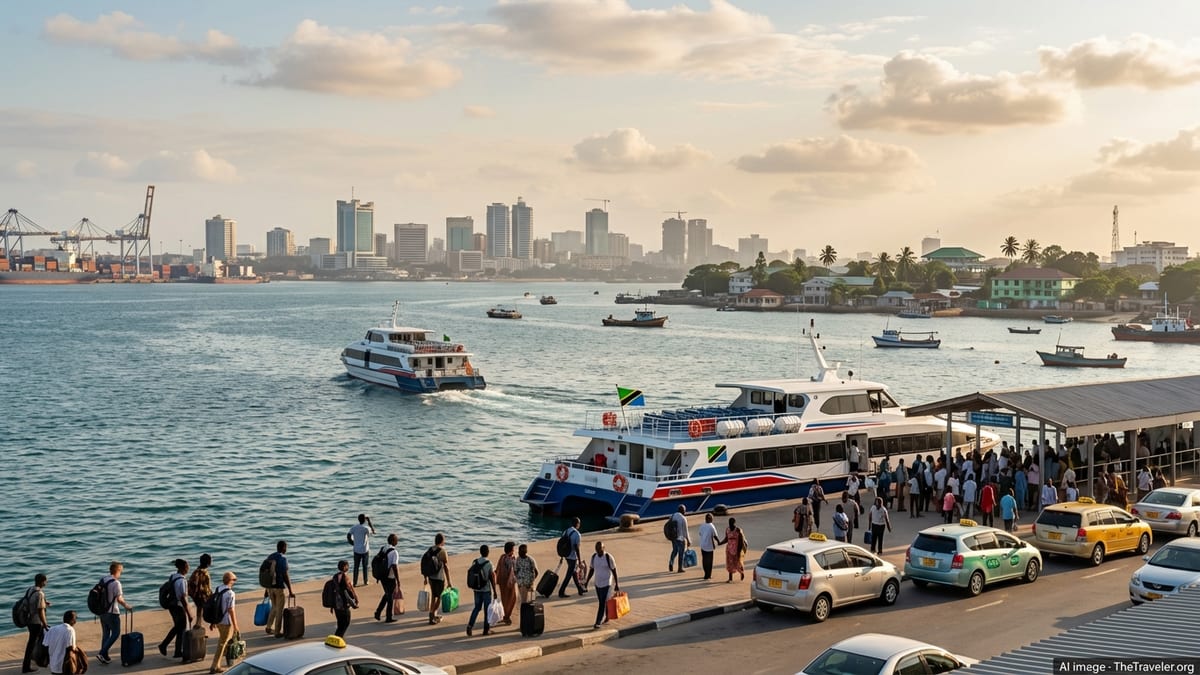
Antananarivo Emerges as a Strategic Indian Ocean Hub
Ivato International Airport in Antananarivo is moving into a more prominent hub role as airlines expand partnerships that link Madagascar to neighboring island states and global gateways. Publicly available information shows that Madagascar Airlines has become the focal point of this shift, using codeshare and special prorate agreements to extend its reach without adding large numbers of new aircraft.
Regional coverage indicates that a renewed codeshare between Madagascar Airlines and Air France has restored direct Paris to Antananarivo services under shared flight numbers, providing a vital long-haul bridge into Europe and onward connections across the continent. Additional cooperation with French leisure carrier Corsair on the Antananarivo to Saint Denis route reinforces access between Madagascar and Réunion, an important node in the Indian Ocean tourism network.
Analysts following the sector note that these arrangements are helping to stabilize international access after a period marked by temporary suspensions and schedule changes. With capacity gradually rebuilding, Antananarivo is now positioned as the primary gateway through which visitors can combine Madagascar’s wildlife and landscapes with beach, culture and diving experiences across the wider island region.
Codeshare Web Extends Across Réunion, Mayotte and Beyond
The most visible change for travelers is the growing web of shared flights connecting Madagascar with fellow island territories such as Réunion and Mayotte. A strategic codeshare and special prorate agreement between Madagascar Airlines and Air Austral, announced in mid 2025, aims to deepen links between Antananarivo and Réunion while providing smoother access to secondary cities in both territories.
According to specialist aviation coverage, this partnership allows Madagascar Airlines to market Air Austral operated services linking La Réunion with major Malagasy cities including Antananarivo, Antsiranana, Nosy Be and Toamasina. The combined network gives passengers more frequencies and routing options, particularly for multi-stop holidays that mix city visits, national parks and coastal resorts.
Recent reports also highlight a fresh codeshare arrangement between Madagascar Airlines and Mayotte based Ewa Air. Under this agreement, Ewa Air’s Mayotte to Antananarivo flights are being supported on a year round basis, extending the seasonal pattern that previously limited travelers’ options. The link offers a more consistent air bridge between Mayotte and the Malagasy capital, and by extension to Madagascar’s domestic network and partner airlines further afield.
In parallel, an expanded bilateral codeshare between Air India and Air Mauritius has added Antananarivo to a list of destinations marketed jointly on routes between India, Mauritius, Réunion, South Africa and Madagascar. This combination effectively ties Antananarivo into longer itineraries that can originate in major Indian cities and connect through Mauritius and Réunion before reaching Madagascar.
New Multi-Island Tourism Itineraries Take Shape
Tourism observers are increasingly pointing to the impact of these aviation ties on how visitors design their trips. The Vanilla Islands concept, which promotes combined travel to destinations such as Madagascar, Réunion, Mauritius, Seychelles, Mayotte and Comoros, now has more concrete air links to rely on as codeshares widen the choice of routings via Antananarivo.
More robust links between Antananarivo and Saint Denis, together with Mayotte connections and expanded codeshares via Mauritius, are making it easier to assemble circular routes that include several islands without complex ticketing. A traveler arriving from Europe or India can now fly into Madagascar, continue to Réunion or Mayotte under a single reservation, and then route home through Mauritius or South Africa.
Forward booking data compiled for Madagascar’s tourism authorities has already indicated growing interest from key source markets when new or restored air services become visible in reservation systems. Industry briefings suggest that regional tour operators are starting to package multi-island stays that combine Madagascar’s rainforests and wildlife with Réunion’s volcanic landscapes or the lagoon beaches of Mauritius and Mayotte.
For smaller islands, the Antananarivo centered network offers improved diversification of arrivals, reducing reliance on a single long haul gateway. For Madagascar, it enhances the appeal of Antananarivo not only as an entry point but as a logical anchor for itineraries that radiate out across the Indian Ocean.
Opportunities and Constraints for Madagascar’s Domestic Tourism
The success of these new international linkages ultimately depends on the domestic backbone that carries visitors from Antananarivo to Madagascar’s tourism hotspots. Madagascar Airlines has been working to rebuild and rationalize its internal network using a fleet of ATR 72 aircraft, with published plans indicating further additions through 2026 to increase reliability and frequencies.
Travel industry reports describe how interline and codeshare agreements allow international passengers to connect from long haul flights into domestic sectors under a single ticket. Routes from Antananarivo to Nosy Be, Antsiranana, Morondava, Tulear and Sainte Marie are especially critical for tourists targeting beaches, whale watching, diving and national parks.
However, traveler reports and public commentary continue to point to challenges, including periodic schedule adjustments and capacity constraints on some routes during peak seasons. The success of the new codeshare architecture will therefore hinge on continued investment in aircraft, airport infrastructure at regional airfields and improved coordination between international and domestic schedules.
Industry observers note that closer cooperation with partner airlines such as Corsair and Air Austral could help smooth these connections, as shared planning makes it easier to match arrival and departure times. Over time, improved punctuality and frequency on domestic routes would reinforce confidence among long haul visitors considering multi-destination trips anchored in Antananarivo.
Regional Competition and Long-Term Outlook
The acceleration of codeshare activity around Antananarivo is also taking place in a competitive regional landscape. Other Indian Ocean hubs, including Mauritius and Seychelles, are pursuing their own network strategies, combining home carriers, Gulf airline links and European partnerships to attract tourists and transfer traffic.
According to aviation trade coverage, Madagascar’s approach relies less on building a large home fleet and more on leveraging commercial partnerships. Codeshares with Air France, Corsair, Air Austral, Ewa Air and expanded arrangements that touch Air Mauritius and Air India are collectively designed to secure a place for Antananarivo in itineraries that might otherwise bypass Madagascar.
In the medium term, the effectiveness of this strategy will be measured by passenger growth, the resilience of schedules and the ability to weather external shocks. If the current wave of agreements holds and is supported by improved domestic reliability and investment in tourism services on the ground, Antananarivo could consolidate its status as a key connector linking Africa, Asia and the island states of the southwest Indian Ocean.
For travelers, the practical outcome is already starting to appear in booking systems: more city pairs featuring Antananarivo, a broader choice of carriers and the prospect of stitching together ambitious island hopping journeys that would have been difficult to arrange only a few years ago.