


More news on this day
Marking World Oceans Day on 8 June 2026, MSC Foundation and MSC Cruises have introduced “Oceans Day powered by MSC Foundation,” a new onboard program designed to engage children worldwide in ocean literacy while positioning family cruising as a platform for sustainable travel and future tourism growth.
Get the latest news straight to your inbox!
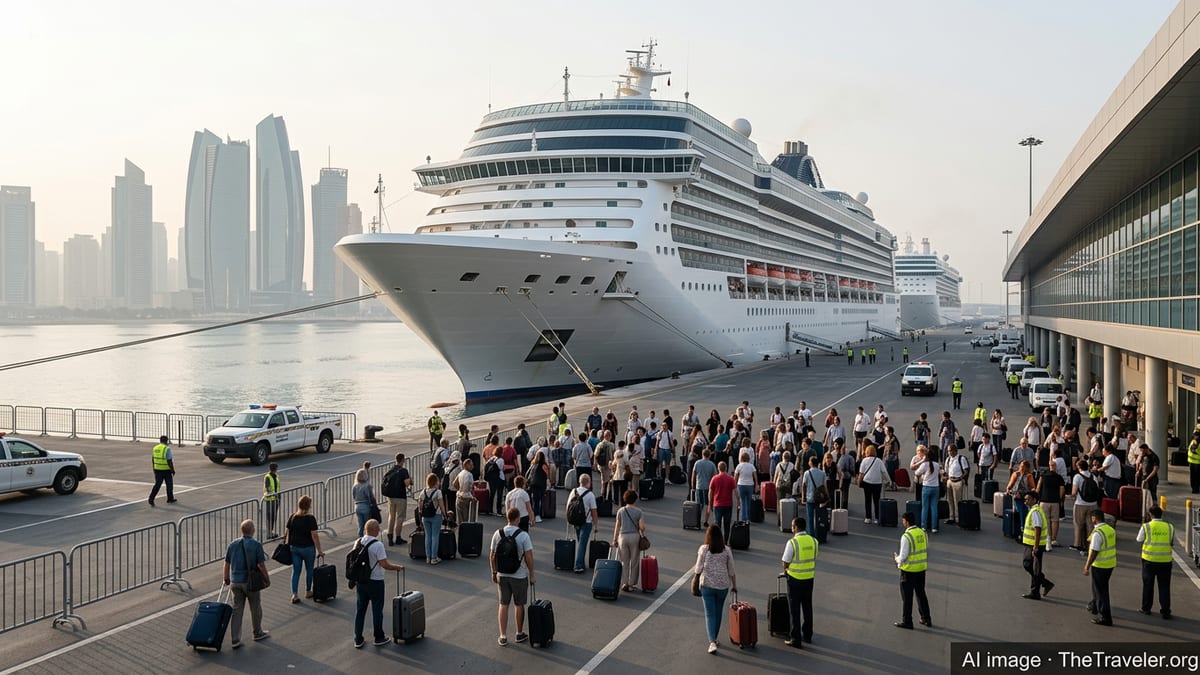
New Oceans Day Program Rolls Out Across MSC Fleet
Publicly available information shows that Oceans Day powered by MSC Foundation is being progressively introduced across the MSC Cruises fleet as a dedicated day of activities focused on the sea. The initiative is structured so that every voyage includes an ocean-themed program, turning each sailing into a platform for marine awareness rather than limiting engagement to a single calendar date.
The concept is built around three core pillars: celebrating the ocean on every cruise, placing children and families at the center of activities, and fostering ocean literacy. Reports indicate that the program is expected to reach thousands of children from around the world each year, signaling a long-term commitment to embed environmental education into the cruise experience.
According to published coverage from MSC’s own channels, Oceans Day draws on several years of conservation and education work by MSC Foundation, including restoration projects at Ocean Cay in The Bahamas and collaborations with marine organizations. The initiative is presented as part of a broader strategy to connect guests emotionally with the sea while reinforcing the company’s sustainability narrative.
The launch was timed with World Oceans Day on 8 June, underlining how cruise lines are increasingly using global observances to debut initiatives that link leisure travel with environmental themes. Industry observers note that such timing can help amplify visibility among both passengers and policy stakeholders who follow ocean governance and climate debates.
Children at the Heart of Ocean Literacy Efforts
A central feature of Oceans Day is its focus on children and teenagers aged roughly 3 to 17, who are targeted through age-appropriate workshops, games and creative sessions. Program descriptions highlight interactive experiences such as marine-themed challenges, science-infused entertainment and arts activities that present complex topics like biodiversity loss and plastic pollution in accessible ways.
Materials shared by MSC Foundation emphasize that education is regarded as a foundation for long-term conservation, with the program aiming to turn young guests into “ocean ambassadors” who carry new habits and knowledge back to their home communities. By blending play with scientific content, the initiative seeks to avoid traditional classroom formats in favor of what the company describes as an “edutainment” approach.
The effort builds on earlier pilots in which MSC Foundation tested ocean-themed days and activities at sea. Reporting in the foundation’s recent annual updates indicates that tens of thousands of young guests have already participated in related environmental programs on board, suggesting that Oceans Day formalizes and scales up existing experiments with curriculum and format.
Experts in youth engagement note that travel experiences can be powerful moments for behavior change, particularly when families are relaxed and receptive. By situating learning within a cruise holiday, MSC appears to be betting that messages about reef protection, responsible consumption and marine science may resonate more strongly than in conventional school settings.
Linking Sustainable Family Travel and Destination Stewardship
The introduction of Oceans Day coincides with a broader shift in family tourism toward experiences that are marketed as both enriching and responsible. Cruise industry analyses point to rising demand among parents for activities that combine entertainment with learning outcomes, especially around climate and nature. Oceans Day positions MSC’s family offering within this trend, framing children’s clubs and entertainment venues as spaces where environmental topics are explored in a playful way.
MSC Foundation’s work at Ocean Cay Marine Reserve in The Bahamas, which includes coral restoration and habitat protection, is frequently cited in background materials as a real-world example that can be showcased to guests. Educational content from Oceans Day is reported to draw on lessons from these projects, linking onboard storytelling with visible conservation work in destinations.
By highlighting restoration sites and marine reserves featured on its itineraries, MSC aims to align its family proposition with destination stewardship. The company’s sustainability reporting outlines longer-term goals to improve marine science data and reduce environmental impacts, and Oceans Day gives these commitments a tangible presence in front of passengers.
Travel analysts suggest that such integration could influence excursion choices and onshore behavior, encouraging families to favor lower-impact activities and view coastal communities as partners in protecting marine ecosystems. In turn, this may support local conservation initiatives and broaden the perceived value of cruise tourism beyond direct economic spending.
From Onboard Edutainment to Future Cruise Tourism Growth
Although framed primarily as an educational and philanthropic effort, Oceans Day also intersects with MSC Cruises’ commercial strategy in a competitive global market. Industry commentary notes that cruise lines increasingly differentiate themselves through themed experiences and values-led branding, particularly in segments targeting multigenerational travel.
By embedding a distinctive oceans-focused program across its fleet, MSC is positioning itself to appeal to environmentally conscious families who weigh sustainability messaging when choosing vacations. If successful, this approach could support higher retention among existing guests and attract new customers seeking cruises that reflect their environmental priorities.
MSC’s recent sustainability and foundation reports describe ambitions to scale ocean literacy initiatives to millions of guests over the coming years, using ships as high-traffic venues for awareness campaigns. Oceans Day functions as a recurring touchpoint within that strategy, offering visible proof of investment in education alongside technical measures such as emissions reduction and waste management.
Observers of cruise tourism trends argue that initiatives like Oceans Day could gradually shape expectations for the wider sector, particularly if guests begin to view robust environmental programming as a standard component of a modern family cruise. For port communities and marine destinations facing mounting pressures from climate change and visitor numbers, the hope is that more informed travelers may become allies in long-term ocean protection rather than passive spectators.
Global Reach and Collaboration Across the MSC Ecosystem
Because MSC Cruises operates itineraries in multiple regions, from the Caribbean and Mediterranean to Asia and the Middle East, Oceans Day is set up as a global program that can be adapted to different languages and cultural contexts. Official descriptions indicate that the company’s entertainment and youth teams are working with MSC Foundation to tailor activities while maintaining consistent themes of respect for the ocean and responsible travel.
The program also reflects the foundation’s collaborative approach with external conservation and education organizations. Background information cites partnerships with marine science groups and non-profit initiatives that provide scientific content, best practices and curricular guidance, helping to ensure that shipboard activities align with current research on ocean health.
As the rollout continues, future enhancements are expected to include new digital materials, updated activities linked to emerging marine science topics and closer connections with shore-based projects. For cruise passengers, this could translate into a more coherent narrative that stretches from children’s clubs at sea to guided experiences in marine reserves and coastal communities.
For the wider travel industry, Oceans Day offers a case study in how large-scale cruise operations can incorporate environmental storytelling into their core product while seeking to cultivate the next generation of travelers who associate holidays at sea with active care for the world’s oceans.