


More news on this day
MSC Cruises is steering decisively into the U.S. market with the 2026 Alaska deployment of MSC Poesia, a move that highlights both Alaska’s enduring draw and the rapid expansion of cruise tourism from American ports.
Get the latest news straight to your inbox!
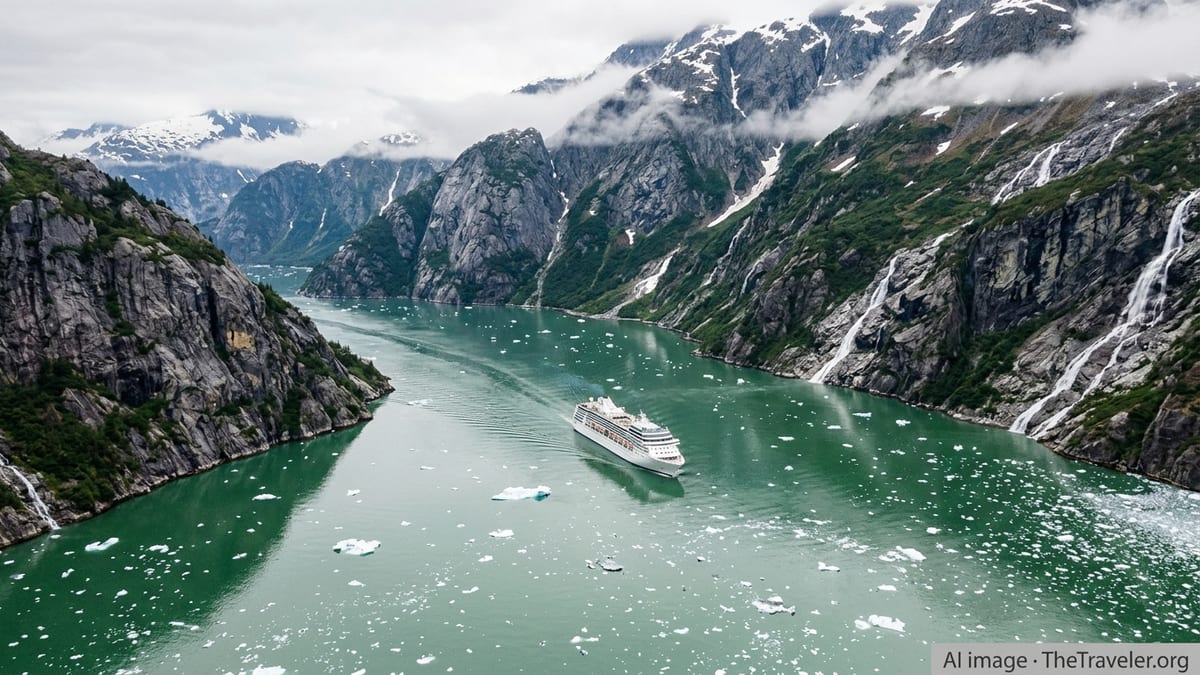
MSC Poesia Charts a New Course to America’s Last Frontier
The 2026 Alaska season will mark MSC Cruises’ first dedicated deployment in the region, with MSC Poesia scheduled to operate seven day sailings round trip from Seattle. Preliminary schedules released by the Port of Seattle list multiple summer calls for the 2,550 guest vessel, positioning the ship alongside long established players in the Alaska market.
Industry coverage describes the Alaska program as a significant strategic pivot for a brand long associated with the Mediterranean and European itineraries. Publicly available itineraries show MSC Poesia visiting marquee Inside Passage ports such as Ketchikan, Juneau and Icy Strait Point, along with scenic cruising in areas like Tracy Arm, in line with the region’s most in demand routes.
The ship’s positioning voyage from Europe to the Pacific Northwest and subsequent relocation to Miami for the winter Caribbean season underlines MSC’s broader aim to keep Poesia visible on both coasts of the United States. Analysts note that this year round presence, split between Alaska and the Caribbean, places the vessel firmly in the mainstream of North American cruising patterns.
For Alaska, the arrival of MSC Poesia adds a fresh brand to an already crowded schedule of major global lines, reinforcing forecasts that the state will remain a central pillar of North American cruise growth through the late 2020s.
Alaska Cruises Power a Rebounding U.S. Travel Sector
Recent forecasts for the U.S. cruise industry point to record participation and a steady rebound from the pandemic era downturn. Research prepared for national travel organizations indicates that more than 18 million passengers sailed from North American ports in 2023, surpassing 2019 volumes and establishing a platform for further growth in 2025 and 2026.
Within that expansion, Alaska holds an outsized role. Industry data suggest that roughly one in fourteen U.S. cruise passengers is choosing an Alaska itinerary, a notable share for a seasonal and geographically remote market. Separate market research into glacier and cold water cruising projects billions of dollars in global revenue by the mid 2030s, with Alaska capturing a substantial portion of that demand thanks to its extensive coastline and established visitor infrastructure.
New capacity from premium and luxury operators has already been flowing into the region, and reports show that at least eight major brands are expected to operate in Alaska by 2026. The addition of MSC Poesia reinforces this trend, signaling confidence that North American travelers will continue to seek cooler climate, nature focused sailings as a complement to traditional warm weather cruises.
For the wider U.S. tourism economy, Alaska sailings help disperse spending beyond the big Florida and Gulf Coast homeports. Cruise visitors often connect via Seattle, Vancouver or Anchorage, and tour patterns extend into smaller coastal communities where shore excursion spending supports local jobs and tax revenues.
Seattle Emerges as a Strategic Hub for MSC Cruises
Seattle’s growing role as a homeport is central to MSC Poesia’s Alaska deployment and to MSC Cruises’ North American ambitions. The city already handles hundreds of cruise calls each summer, and official port schedules for 2026 show a diverse mix of brands using its terminals for both round trip and open jaw itineraries.
For MSC, establishing a seasonal base in Seattle adds to an expanding list of U.S. homeports that includes Miami, Port Canaveral, New York and Galveston. Trade press coverage over the past two years has highlighted a series of investments in new terminals and berths, particularly in Texas and Florida, aimed at positioning the company as a larger player in the U.S. cruise marketplace.
Seattle offers relatively strong air connections, proximity to major West Coast population centers and straightforward access to the Inside Passage. Those factors, combined with the city’s own tourism appeal, help explain why multiple international lines have chosen it for their Alaska seasons. MSC Poesia’s arrival further consolidates the port’s status as a key gateway to America’s northernmost state.
The Pacific Northwest focus also balances MSC’s traditional strength in East Coast and Caribbean cruising. By linking Seattle based Alaska sailings with Panama Canal repositioning voyages to Miami, the company is effectively stitching together a coast to coast deployment pattern that maximizes ship utilization and visibility in the U.S. market.
Shifting Patterns in Alaska’s Cruise Geography
MSC Poesia’s itineraries unfold against a backdrop of evolving traffic patterns in Southeast Alaska. Recent reports indicate that passenger caps and voluntary daily limits in Juneau are encouraging some lines to adjust schedules, with additional calls flowing toward Ketchikan and Icy Strait Point. Preliminary forecasts for upcoming seasons suggest Ketchikan could host more cruise passengers than Juneau for the first time.
These shifts are part of a broader effort by Alaska communities to balance economic benefits with concerns about congestion and environmental impacts. Municipal governments and port authorities have been exploring daily passenger thresholds, revised dock agreements and infrastructure upgrades that can spread ship calls more evenly across the week and across smaller ports.
New entrants like MSC Poesia must navigate this changing landscape when planning routes. The ship’s published Alaska programs include a mix of larger and smaller ports, which aligns with local efforts to distribute visitors and reduce peak pressure on any one destination. Such adjustments are likely to remain a feature of Alaska cruise planning as towns respond to evolving tourism dynamics.
At the same time, state level tourism statistics show overall visitation hovering near or slightly above pre pandemic records, even during what some local observers describe as a softer summer in 2025. That suggests Alaska remains highly attractive to cruise travelers, with itinerary refinements occurring within an overall environment of sustained demand.
Environmental and Market Pressures Shape the Next Phase
As MSC Poesia sails into Alaska, environmental expectations for cruise lines have never been higher. Trade associations emphasize that cruise vessels represent a small fraction of the global fleet but are increasingly subject to public scrutiny over emissions, wastewater treatment and shore power usage. In Alaska, where sensitive marine ecosystems and glacier landscapes are central to the visitor experience, this scrutiny is particularly intense.
Cruise Lines International Association materials describe a sector wide push to invest in cleaner fuels, advanced wastewater systems and other technologies designed to reduce the environmental footprint of large ships. Many ports in the region, including Seattle and some Alaska communities, are expanding shore power capabilities that allow ships to shut down main engines while docked, cutting local air emissions.
Market pressures are adding another layer of complexity. Some Alaska communities report tighter municipal budgets for destination marketing and a more cautious consumer environment, which contributed to flatter visitor numbers in the 2025 summer season. At the same time, forecasts for global glacier and expedition cruising remain upbeat, suggesting that operators who tailor products to eco minded and experience driven travelers could capture significant growth.
For MSC Poesia, the Alaska deployment represents both an opportunity and a test. Success in the region could strengthen MSC Cruises’ position in the competitive U.S. market and demonstrate that large scale operators can adapt to the environmental, regulatory and community expectations that increasingly define sailing to America’s northern frontier.