


More news on this day
The Bahamas is preparing for a fresh wave of high‑end cruise tourism as MSC Group’s cruise division unveils plans for Sandy Cay, a new luxury private island retreat set to debut in 2028 alongside the existing Ocean Cay MSC Marine Reserve.
Get the latest news straight to your inbox!
A Twin-Island Vision in the Bahamas
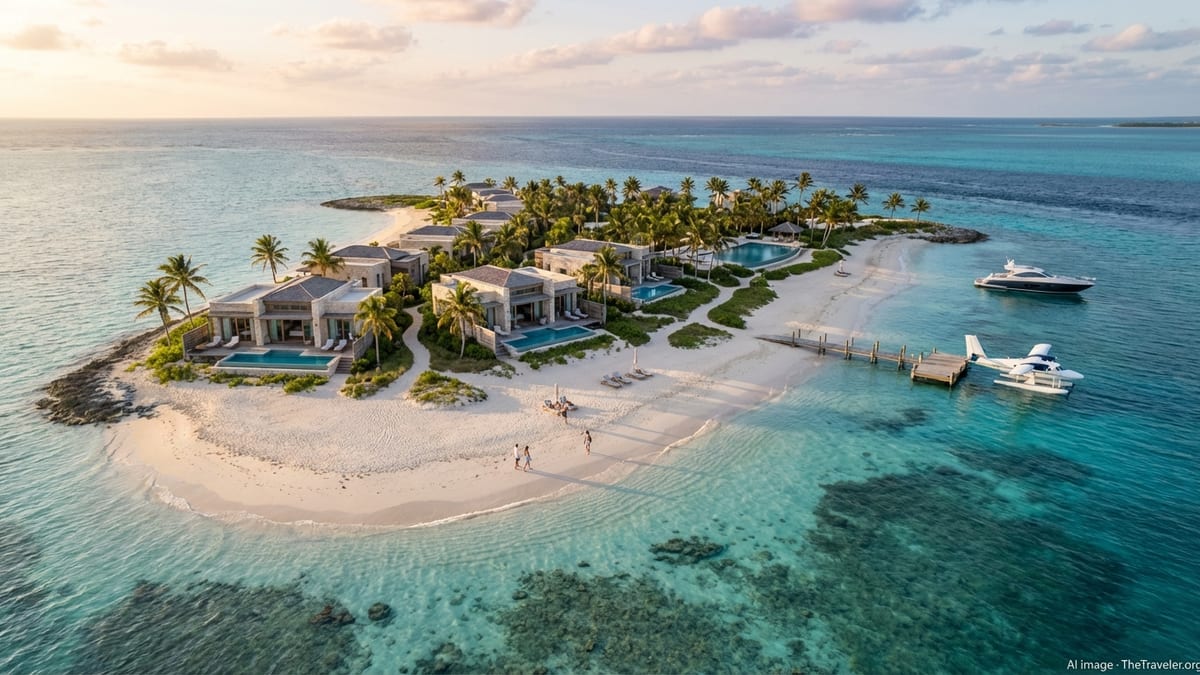
Publicly available information shows that Sandy Cay will sit just a short boat ride from Ocean Cay MSC Marine Reserve, adding a second private destination for MSC Cruises and sister brand Explora Journeys in Bahamian waters. The company describes the new cay as an intimate counterpart to Ocean Cay, designed to offer a quieter and more exclusive atmosphere for guests seeking a high-end beach escape.
Reports indicate that Sandy Cay has been conceived with a focus on serenity, privacy and space, featuring aragonite sands and multiple coves intended to distribute visitors and avoid crowding. Industry coverage notes that the island is planned as a smaller, more rarefied retreat compared with Ocean Cay, positioning it as a premium option within MSC’s broader Caribbean network.
The announcement comes as the Bahamas consolidates its position as a leading cruise destination in the region, with government statements and industry data pointing to rising passenger volumes and a growing roster of private island developments. In this context, Sandy Cay is emerging as both a strategic capacity play and a statement of intent in the competitive luxury cruise segment.
MSC has not yet detailed the final layout of Sandy Cay, but early descriptions reference five distinct coves, upscale beach and lounge spaces and tailored services for different guest segments, from Explora Journeys’ small-ship clientele to MSC’s Yacht Club suite passengers.
Elevating Ocean Cay and Expanding Private Island Capacity
The new project is closely linked with the ongoing evolution of Ocean Cay MSC Marine Reserve, which opened to guests in late 2019 after a multiyear transformation of a former industrial sand-mining site. Previous announcements outlined a program of enhancements at Ocean Cay including new dining options, expanded family and adults-only beach concepts, and additional relaxation areas to support growing ship calls.
Reports from cruise industry observers in recent months have highlighted visible construction activity around Ocean Cay, including work on a smaller adjacent cay and comments that a dedicated transfer service is planned for MSC Yacht Club guests. Sandy Cay appears to formalize and scale up this push by creating a clearly defined, second island experience rather than simply extending Ocean Cay’s footprint.
Travel trade coverage suggests that the twin-island model could help MSC manage the simultaneous calls of larger ships while preserving a sense of space and exclusivity. With the line’s fleet growing and new vessels scheduled to serve the Caribbean, a second Bahamian outpost provides additional beach capacity without relying solely on shared ports.
The development also complements other infrastructure investments tied to MSC in the Bahamas, including participation in a major upgrade of facilities at Freeport and increased calls at Nassau, reinforcing the country’s strategy of blending public port improvements with high-profile private destinations.
Luxury, Sustainability and the Ocean Reserve Legacy
MSC has consistently framed its Bahamas strategy around a combination of upscale guest experiences and environmental restoration, a narrative that is expected to extend to Sandy Cay. At Ocean Cay, the company and its foundation have worked with marine experts on coral restoration and habitat rehabilitation, repositioning the site as a marine reserve after decades of extractive use.
Recent documentation on Ocean Cay details the establishment of a Marine Conservation Centre and the launch of a super coral initiative aiming to cultivate resilient coral species for reef recovery in Bahamian waters. These initiatives are now a central part of the island’s identity, with guided activities and educational programs integrated into the guest offering.
Industry analysis suggests that Sandy Cay will lean heavily on this conservation legacy, even as it targets a more rarefied segment of the market. Descriptions of the new island emphasize low-rise structures, preserved coastal vegetation and a design language aimed at blending into the seascape rather than dominating it.
For the Bahamas, this mix of luxury and environmental positioning aligns with a broader policy focus on sustainable tourism. Official communications in recent years have stressed the need for cruise expansion to coexist with marine protection, coastal resilience and community benefits, creating a framework within which developments like Sandy Cay are being evaluated.
Bahamas Cruise Market Ramps Up Competition
The launch of Sandy Cay places MSC more firmly in a competitive field of cruise lines investing in proprietary Bahamian destinations. Rivals already operate well-established private islands and dedicated ports in the archipelago, using them as signature stops on short Caribbean itineraries and as platforms for new onshore concepts.
Analysts note that private islands have become critical differentiators in the cruise sector, allowing lines to curate every aspect of the guest experience, manage costs and experiment with new amenities away from traditional ports. In the Bahamas, this has translated into a cluster of exclusive beaches, water parks and branded enclaves that serve as powerful marketing tools.
Against this backdrop, Sandy Cay is being interpreted as a move by MSC to sharpen its competitive edge in the region’s premium and luxury space. The combination of a large-scale marine reserve at Ocean Cay and a smaller, high-touch retreat at Sandy Cay could give the company a distinctive two-tier offering compared with single-island models elsewhere.
For Bahamian tourism planners, the project underscores the country’s continued draw for global cruise operators, even as debates continue over environmental safeguards, port access and the balance between cruise and land-based tourism. Observers will be watching closely to see how Sandy Cay’s design and operations address these long-running concerns.
Timelines, Expectations and What Comes Next
According to MSC’s latest statements, Sandy Cay is scheduled to welcome its first guests in 2028, offering access to both MSC Cruises and Explora Journeys itineraries. The multiyear timeline reflects the complexity of building new infrastructure in a sensitive marine environment, from pier facilities and utilities to beach clubs and service areas.
Cruise media coverage indicates that detailed renderings and feature lists are likely to be released gradually as the project moves through permitting and construction phases. Key questions include how access will be allocated among different ship classes, the extent of any exclusive-use zones and the range of conservation or research activities that might be based on the new island.
In the interim, Ocean Cay is expected to continue evolving, with previously announced expansion projects and new programming designed to absorb rising visitor numbers. Industry reports point to strong demand for Bahamas and short Caribbean itineraries from major U.S. homeports, a trend that could accelerate as capacity increases and new ships enter service.
For travelers, the combined development signals that the typical day at a Bahamian private island is poised to change once again. By the end of the decade, MSC guests sailing through the region may find themselves alternating between a bustling marine reserve and a secluded cay, reflecting a broader shift toward more layered, choice-driven cruise experiences in one of the Caribbean’s most closely watched destinations.