


More news on this day
Multiple injuries have been reported after two passenger trains collided near Bedford in central England on Friday evening, prompting a major emergency response and closing a main rail corridor north of London.
Get the latest news straight to your inbox!
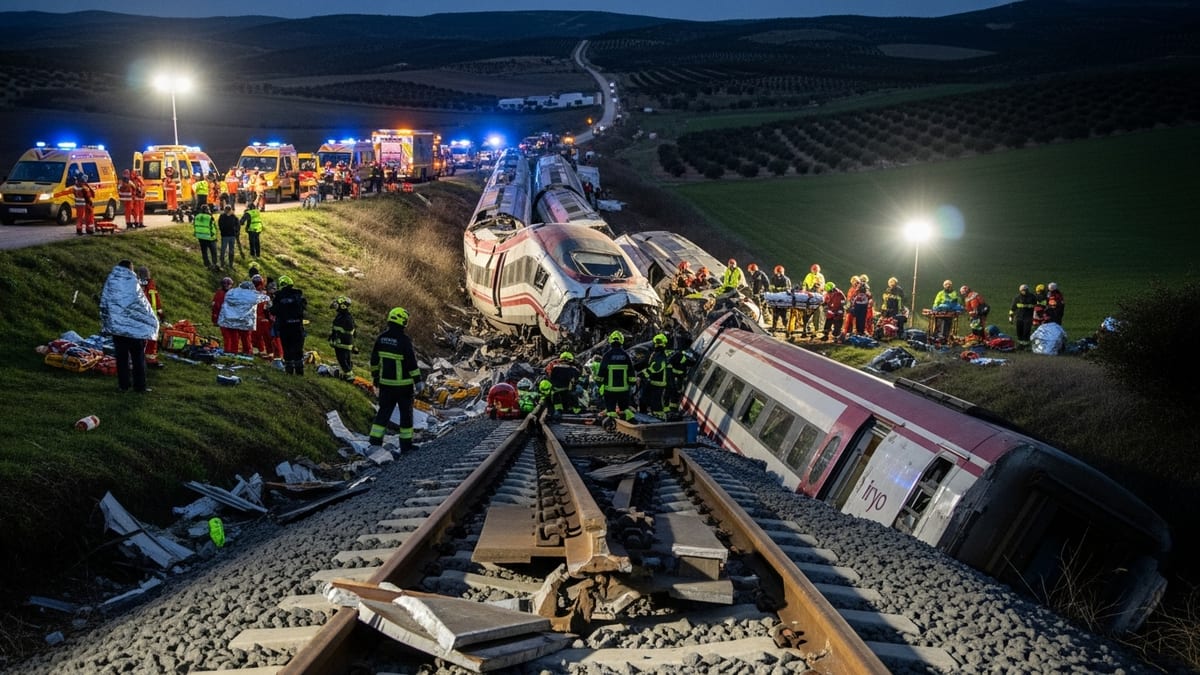
Collision on busy main line north of London
Reports indicate that the incident occurred on the Midland Main Line a short distance south of Bedford, a key section of railway linking London St Pancras with towns and cities across the East Midlands. Early information from the scene suggests one high speed service struck the rear of another train on the same track, leaving several carriages damaged and forcing passengers to evacuate into nearby fields.
Images and video circulating on social media show at least one train standing upright but with visible damage to its front end, while another set of coaches appears to have suffered deformation and possible derailment. Passengers can be seen gathered beside the track as emergency workers move between the vehicles.
The crash took place in the early evening, at around 6:45 p.m. local time, when services on the route are typically busy with commuters and long distance travellers. According to publicly available operator updates, all lines through the area were quickly halted while emergency services and rail staff assessed the situation.
Published coverage from British and international outlets describes the event as a serious rail incident, though the full scale of damage to the trains and infrastructure has not yet been detailed.
Multiple injuries reported, rail disruption expected
Initial accounts from the scene indicate that a significant number of passengers have been injured, with some reports describing several serious cases. Social media posts from individuals who say they were on board refer to people receiving first aid beside the track and being treated for cuts, bruises and possible fractures.
Local health services are reported to have placed nearby hospitals on alert to receive casualties from the collision. Unconfirmed estimates shared in early coverage suggest that dozens of people may require medical assessment, although the precise number of seriously injured passengers remains unclear.
Rail operators have warned that services between London St Pancras and destinations including Bedford, Luton and Leicester will face extensive disruption for the remainder of Friday evening and potentially into Saturday. Trains have been cancelled or diverted, and replacement road transport is being arranged where possible.
Travellers heading to or from London are being advised in public updates to check the latest service information before setting out, expect extended journey times and consider alternative routes. The affected corridor is one of the principal northbound links from the capital, amplifying the wider impact on the national network.
Emergency response and on-scene operations
Fire, ambulance and police units from across Bedfordshire and surrounding counties responded to the collision, supported by specialist rail incident teams. Photographs shared online appear to show multiple ambulances lined up along rural access roads, while at least one air ambulance has been observed in flight tracking data heading to the vicinity of the crash.
According to public statements released through social media channels, responders have been working to triage the injured, stabilise those with more serious trauma and move unhurt passengers to safe areas away from the tracks. Portable lighting and equipment have been deployed as daylight fades, and teams are carrying out systematic checks of each carriage to ensure no one remains trapped or unaccounted for.
Rail staff are assisting with passenger welfare, distributing water and helping people contact friends and family where mobile coverage allows. Buses and coaches are being used to transfer those able to walk to nearby stations and reception centres while investigators begin their initial site survey.
Given the extent of the damage and the need to carefully document the scene, industry observers expect that the section of line involved will remain closed for an extended period while the trains are recovered and track inspections are completed.
Early questions over cause and safety systems
With both trains involved understood to be modern passenger services equipped with contemporary signalling and control systems, early attention is turning to how two trains came to occupy the same section of track. Commentators with rail operations experience, writing on specialist forums, note that main line signalling is designed to prevent such conflicts, raising questions over whether a technical failure, human error, or a combination of factors may have played a role.
In previous rear end collisions internationally, investigators have examined issues such as signal overruns, incorrect routing, or communication problems between drivers and signallers. Similar lines of inquiry are expected in this case, although no official findings are available at this stage and published reports emphasise that it is too early to draw conclusions.
Britain’s rail network generally records a low number of serious train to train collisions compared with earlier decades, a change attributed by safety experts to modern signalling technology, strict operating rules and continuous training. The Bedford crash will likely prompt fresh scrutiny of how those protections are implemented on one of the country’s busiest intercity routes.
Any formal investigation is expected to examine the performance of braking systems, onboard data recorders, and the condition of the track and signalling equipment in the area, alongside detailed interviews with staff and passengers.
Impact on travellers and wider rail network
The location of the collision on a major north south artery means the disruption will likely ripple far beyond Bedford itself. Services linking London with airports and regional centres are being curtailed, with knock on consequences for travellers attempting to make evening connections or return home at the end of the working week.
Tourists heading to and from the capital, as well as passengers bound for Midlands cities and beyond, are among those stranded on trains held at stations along the route. Coach operators and other rail lines are expected to see increased demand as people seek alternative ways to complete their journeys.
Travel industry observers note that the incident comes at a busy time for domestic and international travel, with summer holiday bookings increasing and many travellers relying on rail for airport access. The closure of the line south of Bedford underscores the wider vulnerability of heavily used transport corridors when a single unexpected event occurs.
Further updates on the number of injured passengers, the condition of those taken to hospital and the progress of recovery operations are expected as more verified information becomes available through official channels and subsequent investigative reports.