


More news on this day
Severe thunderstorms around Dallas Fort Worth International Airport on June 19 disrupted one of the country’s busiest hubs, stranding thousands of travelers and causing a fresh wave of cancellations and rolling delays for American Airlines and regional affiliate Envoy Air.
Get the latest news straight to your inbox!
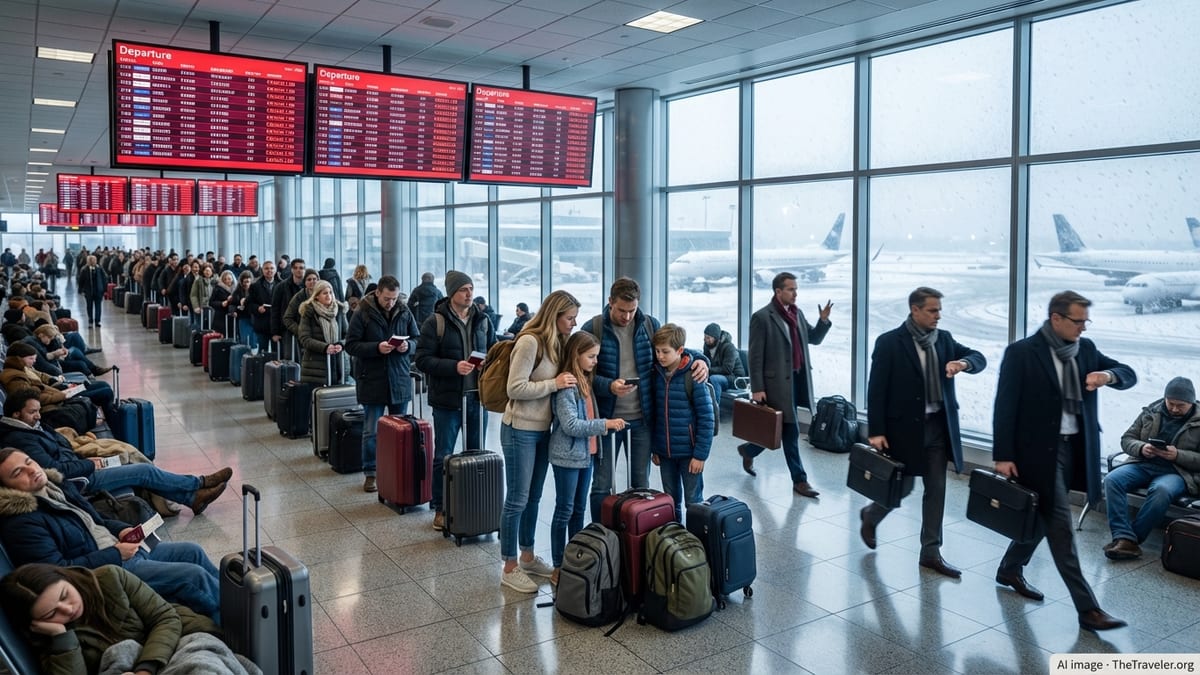
Storms Trigger New Wave of Disruptions at Key American Hub
Dallas Fort Worth International Airport, the largest hub for American Airlines, experienced another bout of intense thunderstorms on Friday, with lightning and low visibility contributing to a slowdown of arrivals and departures. Publicly available flight-status boards showed delays rippling across the schedule, as ground operations paused periodically while storms moved through North Texas.
Reports from passengers and aviation tracking services indicated that flights heading to and from major domestic destinations including Atlanta, Chicago, Miami and New York City were among those facing extended delays, diversions and cancellations. International services to Mexico City and leisure routes into the Caribbean, including Providenciales in Turks and Caicos, were also affected as aircraft and crews became out of position.
The latest round of disruption follows several weeks of weather-related instability at Dallas Fort Worth, where a series of severe storm systems and heavy rain bands have repeatedly forced ground stops and diversions. Recent accounts from travelers have described long waits on tarmacs, unexpected overnight stays and missed onward connections as successive storm cells passed over North Texas and neighboring states.
American Airlines uses Dallas Fort Worth as the backbone of its domestic and international network, feeding traffic to cities across the United States, Latin America and the Caribbean. When thunderstorms park over the metro area, the impact extends far beyond Texas, creating network-wide constraints that can take days to fully resolve.
Passengers Face Cascading Delays Across the United States
On Friday, travelers connecting through Dallas Fort Worth reported being caught in cascading delays as missed connections and rebookings pushed flights later into the evening. Flights bound for major hubs such as Hartsfield Jackson in Atlanta, Chicago O’Hare, Miami International and New York area airports saw schedule changes as aircraft arriving from Texas missed their planned departure slots.
Travelers attempting to reach vacation and business destinations in the Southeast and Midwest described spending long stretches in terminal gate areas as departure times repeatedly shifted. Social media posts and online forums chronicled travelers camped out overnight at Dallas Fort Worth after evening thunderstorms forced cancellations too late in the day for them to secure alternative same-day itineraries.
The storms also affected regional links operated by Envoy Air under the American Eagle brand, which connect smaller cities to Dallas Fort Worth. When these feeder flights are delayed or grounded, passengers from secondary markets often lose their onward options to larger hubs such as Miami and New York, compounding missed trips and extended layovers.
According to publicly available operational analyses of recent months, American’s hub in North Texas has already been under pressure from multiple severe weather episodes. Each new storm cluster tends to amplify existing crew and aircraft mismatches, as planes and pilots end up overnight in unscheduled locations, creating a web of challenges for schedulers attempting to restore normal service.
International and Leisure Routes Also Hit
The disruption at Dallas Fort Worth is not limited to domestic travel. Routes to Mexico City and popular Caribbean destinations that rely on timely connections through the hub have also been swept up in the delays. Passengers aiming to start vacations in resorts near Cancun, Mexico City, or on islands such as Providenciales in Turks and Caicos have reported missed departures and unexpected overnight stays in Texas or intermediate airports.
Travel industry observers note that DFW’s role as a gateway to Latin America and the Caribbean means storms in North Texas can quickly reverberate across beaches and business centers far beyond the United States. When long-haul international flights are delayed or canceled, rebooking options may be limited for several days, particularly on niche leisure routes that operate only once daily or a few times per week.
Publicly available airline reliability data and previous severe weather case studies suggest that international services are especially vulnerable when thunderstorms strike late in the afternoon or evening. Once transborder flights are disrupted, aircraft rotations and crew duty-time limits can force further schedule reductions on subsequent days, prolonging the recovery period for the network.
For travelers heading to destinations such as Mexico City or Providenciales from smaller U.S. markets, a missed Dallas Fort Worth connection can mean a full-day or even multi-day delay, particularly during busy summer travel periods when remaining seats are scarce.
Thunderstorms Add to a Season of Operational Strain
The latest storms arrived during what has already been a challenging early summer for air travel across the central and eastern United States. A series of severe weather systems has swept from the Gulf Coast through the Midwest in recent days, bringing heavy rain, damaging winds and lightning to multiple states. Published coverage has highlighted flooding risks along the Gulf and strong storms across the Mississippi and Ohio Valleys, conditions that complicate both airport operations and flight paths.
Dallas Fort Worth’s location near the intersection of Gulf moisture and continental weather patterns often leaves it exposed to rapidly developing thunderstorm complexes. Aviation analyses describe how lines of storms forming over central Texas and Oklahoma can quickly move into the Dallas area, forcing air traffic controllers to reroute aircraft around convective cells and, at times, impose ground stops when lightning and wind become too intense.
Industry-focused reports explain that American Airlines and Envoy Air, like other carriers, deploy dedicated operations control centers to monitor storm development and adjust schedules in real time. Thunderstorm cells near runways and along departure and arrival corridors can severely restrict capacity, reducing the number of planes that can safely land or take off each hour, which in turn pushes flights into holding patterns or diverts them to alternate airports.
Once aircraft and crews are scattered across secondary airports, the knock-on impacts can be felt on routes that never directly experienced the storms. Travelers flying between cities such as Miami and New York, or Chicago and Atlanta, can still face delays if their aircraft or crew were originally scheduled to pass through Dallas Fort Worth earlier in the day.
What Stranded Travelers Are Experiencing on the Ground
Accounts from passenger forums and social platforms describe crowded terminals at Dallas Fort Worth during the worst of the storms, with long lines at customer service desks and rebooking counters for American Airlines and its regional affiliates. Some travelers reported spending more than 10 hours in the airport waiting for updated departure times, while others recounted receiving hotel and meal vouchers only to find limited availability near the airport.
Travel blogs and consumer advocates have noted that during significant weather events, airlines prioritize safety and air traffic control requirements, often resulting in lengthy ground holds and rerouted flights. This can leave travelers with uncertainty about when they will depart, especially when crews reach their regulated duty-time limits and must be replaced before a flight can legally operate.
Publicly shared guidance from aviation and consumer information sites suggests that passengers caught in these disruptions should monitor airline apps closely, sign up for text alerts, and consider proactively rebooking earlier in the day when forecasts indicate severe weather in North Texas. Same-day schedule changes, when available, can occasionally help travelers route around Dallas Fort Worth or shift to morning flights that depart before thunderstorms typically build in the afternoon and evening.
With summer travel demand climbing and convective storm patterns intensifying across large parts of the United States, industry analysts expect that weather-related disruptions at major hubs such as Dallas Fort Worth, Chicago O’Hare and the New York airports will remain a recurring challenge. For now, passengers traveling through DFW on American Airlines, Envoy Air and partner carriers are being advised by publicly available travel resources to plan for potential delays, keep flexible itineraries where possible, and build extra connection time into their journeys.