


More news on this day
A three year around the world voyage marketed as a chance to live in a permanent “floating home” has come to an abrupt halt in Cambodia, with the MV Odyssey suspending operations and leaving more than 200 passengers and over 150 crew members suddenly stranded in the port city of Sihanoukville.
Get the latest news straight to your inbox!
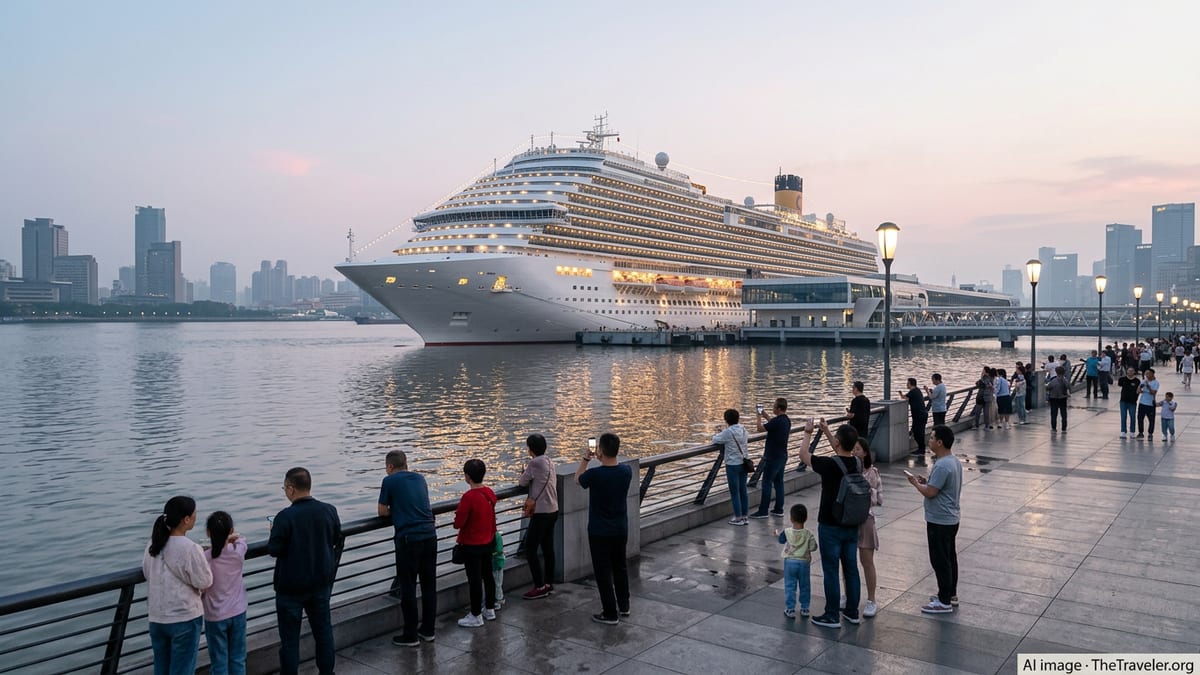
Residential cruise vision unravels in Cambodian port
Publicly available information shows that the U.S. flagged MV Odyssey, operated by Florida based Villa Vie Residences, had been promoted as a residential style cruise blending long term living with global travel. The multiyear itinerary was billed as an open ended, continuous journey to all seven continents, allowing guests to buy or rent cabins as primary homes rather than typical short term cruise accommodation.
Reports indicate that on October 28, 2026, the ship’s voyage was suspended while docked at Sihanoukville on Cambodia’s Gulf of Thailand coast. Coverage by international outlets describes residents being informed that Villa Vie could no longer afford the fuel required to continue sailing, and that passengers would need to disembark with their belongings on short notice.
Cambodian port officials cited in regional media confirmed that roughly 200 to 203 passengers, most of them from the United States and Europe, as well as around 150 crew members, were on board when the decision was announced. The company’s statement, quoted in several news reports, linked the suspension to a sharp and sudden increase in marine fuel costs in the wake of regional conflict affecting shipping routes and energy prices.
Passengers had expected to remain at sea for years, and many had planned their lives around the promise of indefinite travel. Some described the ship as their only home, having sold property on land or ended leases and jobs to join the Odyssey when it departed Europe in late 2024.
From “forever cruise” promise to abrupt suspension
The Odyssey story emerged from an earlier trend toward residential cruising and long duration voyages. Trade publications and news reports trace the project’s roots to a three and a half year “live at sea” concept initially marketed by another operator, which faced delays and ultimately never sailed under its original branding. The vessel eventually entered service for Villa Vie Residences as the MV Odyssey in 2024, following refits in Belfast and a heavily publicized launch.
Marketing materials highlighted in past coverage promoted the idea of purchasing a cabin for the lifetime of the ship, with entry level suites reported at around 230,000 dollars, alongside long term rental options. Residents were told they could make the Odyssey their permanent address, with an ever changing backdrop of ports from South America to Asia.
However, accounts gathered by international broadcasters and travel media point to early operational strains. The ship’s departure from Northern Ireland was delayed by several months, and occupancy reportedly remained below its target capacity of roughly 650 residents, peaking instead at about half that number. Lower than expected revenue combined with rising operating costs appears to have placed sustained pressure on the business model.
By October 2026, coverage by outlets such as the Associated Press, Channel NewsAsia, The Guardian and U.S. television networks indicated that Villa Vie faced mounting financial challenges. The company’s leadership cited rapidly escalating marine fuel prices, with some reports referencing internal figures that showed monthly fuel expenses per cabin climbing severalfold compared with initial projections.
Stranded residents face logistical and financial uncertainty
Once the suspension was announced in Sihanoukville, residents suddenly confronted the practical question of how to leave Cambodia and where to go next. News reports describe passengers being given only hours to pack up cabins that many had treated as full time homes, including furniture, personal archives and possessions accumulated over up to two years on board.
Travel coverage and broadcast reports from the port indicate that some guests had limited immediate options. Many had relinquished apartments or homes in their countries of origin, and some had used retirement savings to fund cabin purchases or long term leases. Without an ongoing shipboard address and with future operations uncertain, residents were left to arrange flights, temporary accommodation and storage largely on their own.
Local media in Cambodia reported that immigration authorities cooperated with cruise representatives to ensure passengers could disembark and clear formalities, but there was no coordinated group repatriation program at the time of the first reports. Instead, passengers described turning to online groups and informal networks to share information on available flights from Phnom Penh or nearby regional hubs and to compare notes on any potential reimbursement or support from the operator.
Coverage in U.S. and European outlets notes that many residents are now reviewing their contracts and payment records to assess what portion of their investment might be recoverable. Some passengers have publicly raised questions about escrow protections, the handling of deposits and the extent of financial transparency prior to the suspension, although detailed legal outcomes remain unclear as of early November 2026.
Financial pressure and the impact of fuel costs
The suspension of the Odyssey has unfolded against a backdrop of heightened volatility in global energy markets. International news coverage connects the surge in marine fuel prices to wider disruption in shipping lanes linked to conflict in the Middle East and Iran, which has pushed up costs for operators reliant on long, fuel intensive itineraries.
According to published accounts that cite Villa Vie statements and internal documents reviewed by major broadcasters, monthly fuel expenses for the Odyssey increased to levels that management considered unsustainable. Some reports describe company estimates of between 6,000 and 8,000 U.S. dollars in monthly fuel costs per occupied cabin at recent price peaks, compared with early expectations of around 1,800 dollars when the voyage was first marketed.
Analysts quoted in specialist cruise and travel industry coverage note that residential style ships are especially exposed to such cost swings. Because residents expect frequent port calls spread across multiple regions, operators have less flexibility to shorten itineraries or reduce speed without undermining the core promise of continuous, globe spanning travel. With occupancy below forecast and fuel costs surging, the Odyssey’s financial cushion narrowed rapidly.
Publicly available company communications suggest that Villa Vie had sought additional investment and explored options to refinance or restructure its commitments in the months leading up to the suspension. Reports by outlets including CBS News describe a scramble to secure fresh capital and discussions of possible new ownership structures, but those efforts did not produce a solution before the ship reached Cambodia.
Uncertain future for residential cruising concept
The abrupt halt of the MV Odyssey has renewed scrutiny of long duration and residential cruising models aimed at middle and upper middle income travelers. While ultra luxury residential ships backed by high net worth owners have operated for years, attempts to broaden the concept to a wider market at lower price points have repeatedly encountered difficulties, from ship acquisition challenges to regulatory compliance and now fuel price shocks.
Travel industry commentators point out that the Odyssey is not the first ambitious “live at sea” project to struggle. A separate three and a half year round the world cruise marketed under a different brand name was canceled in 2023 before departure when its operator was unable to finalize a suitable vessel, leaving would be residents seeking refunds and alternative arrangements. The Odyssey’s failure, by contrast, has unfolded mid voyage, with residents already fully immersed in shipboard life.
As of early November 2026, there is no confirmed plan for the MV Odyssey to resume its around the world itinerary. Some passengers quoted in international coverage have expressed hope that a new investor or consortium of residents might acquire the ship and revive a version of the residential cruising dream. Others are focusing on securing refunds and reestablishing lives on land after months or years at sea.
For travelers following the story, the Odyssey’s grounding in Cambodia is a reminder that even highly marketed “forever cruise” concepts remain subject to the same commercial and geopolitical risks as the wider shipping industry. Prospective residents on future projects are likely to pay closer attention to financial safeguards, fuel price exposure and contingency planning before committing to selling their homes on land in exchange for a life at sea.