


More news on this day
A prominent member of the US House Foreign Affairs Committee is urging the State Department to toughen its travel warning for China, arguing that recent cases of alleged wrongful detention of Americans justify elevating the advisory to a level that urges travelers to reconsider nonessential trips.
Get the latest news straight to your inbox!
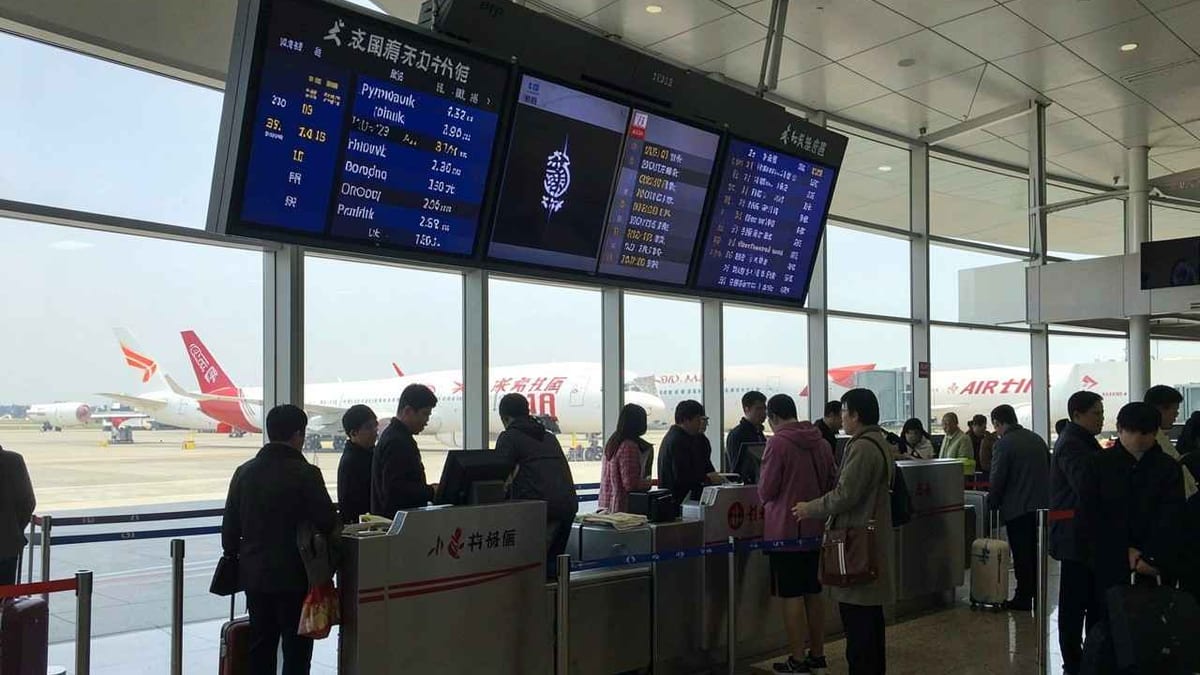
Call to raise China advisory to Level 3
According to multiple recent reports, Representative Young Kim of California, who chairs the House Foreign Affairs subcommittee focused on the Indo Pacific, has asked Secretary of State Marco Rubio to reassess Washington’s current guidance for travel to mainland China. In a letter dated October 29, 2026, Kim called for upgrading the advisory from Level 2, which instructs US citizens to exercise increased caution, to Level 3, which recommends that travelers reconsider going altogether.
Published coverage of the letter indicates that Kim frames China as a key adversarial nation and contends that the existing advisory does not fully reflect the risks faced by Americans visiting or working in the country. Her appeal follows a series of high profile detention cases involving US nationals and permanent residents, as well as broader concerns in Washington about the use of exit bans, opaque legal procedures, and national security related charges.
Publicly available information on the State Department’s four tier system shows that a Level 3 notice is reserved for destinations where serious safety and security risks exist, such as significant crime, civil unrest, or other threats that could affect ordinary travelers. A shift from Level 2 to Level 3 for China would therefore mark a substantial change in how US authorities characterize the risk environment for leisure and business visitors.
New “wrongful detention” signal in existing guidance
The push from Capitol Hill comes shortly after the State Department added a specific warning about the risk of wrongful detention to its existing advisory for China in October 2026. Public guidance for US travelers now highlights the possibility that visitors can face arbitrary enforcement of local laws, exit bans that prevent departure, and detention under broadly framed national security provisions.
Coverage of the October update notes that the department applied a “D” indicator for wrongful detention to its China advisory while retaining an “O” risk marker for other concerns not captured by standard categories. These letter codes are used across the State Department’s global advisories to flag particular hazards such as crime, civil unrest, health issues, or kidnapping, and their addition for China reflects growing unease over how foreign citizens are treated in high profile legal cases.
Despite the new wrongful detention reference, the overall advisory level for China remained at Level 2 going into November 2026. Kim’s latest intervention seeks to build on that update by arguing that the practical implications for US travelers have already reached the threshold where a reconsider travel message would be more appropriate.
High profile detention cases fuel congressional pressure
The call for a tougher warning is closely tied to recent cases involving academics and researchers with links to the United States who have been detained in China on security related allegations. Congressional material and media accounts describe situations in which American citizens or permanent residents were held incommunicado for extended periods or faced charges such as espionage that carry lengthy prison terms.
One House resolution introduced earlier in 2026 specifically mentions two scholars, identified in public records as Youlin Chen and Min Zin, as examples of individuals whose detentions have prompted concern among US lawmakers. The measure condemns what it characterizes as a pattern of arbitrary or wrongful detention of American academics and urges the executive branch to prioritize their release through diplomatic engagement.
These cases have become focal points for broader anxiety in Washington over the security environment for foreign nationals in China, particularly those involved in research, policy, or civil society work. Advocates of a tougher advisory argue that, for travelers, the central issue is not only whether charges are ultimately proven, but also the significant personal, financial, and professional costs associated with being drawn into drawn out legal proceedings far from home.
What a higher level warning would mean for travelers
If the State Department eventually raises its advisory for China to Level 3, US citizens considering trips would see federal guidance that explicitly urges them to reconsider travel. Under the department’s framework, Level 3 messages are often accompanied by detailed explanations of the main risks and practical advice on how travelers can reduce their exposure if they decide to proceed with a visit.
For China, that could mean a heightened emphasis on understanding local laws that govern activities such as information gathering, data transfers, religious practice, and contact with local partners. Travel risk analysts note that regulations classified under national security or state secrets provisions can differ significantly from standards familiar to visitors from the United States, and that enforcement practices may involve exit bans, questioning, or temporary detention.
Travel industry observers point out that a Level 3 warning does not prohibit Americans from visiting a country, nor does it automatically cancel commercial air services or tour operations. However, it can influence corporate travel policies, insurance coverage, and decisions by educational institutions about study abroad programs. For individual travelers, a higher level advisory may prompt more careful itinerary planning, registration with consular services, or a reassessment of the need for discretionary trips.
Broader context of US China travel and diplomacy
The debate over China’s advisory level unfolds against a backdrop of complex and often tense relations between Washington and Beijing. Public records and commentary over the past several years have highlighted disputes spanning trade, technology, human rights, and security in the Indo Pacific, all of which contribute to a more cautious environment for cross border exchanges, including tourism and academic collaboration.
At the same time, China remains an important destination for American business travelers, students, and overseas Chinese communities seeking to visit family. Airline schedules and tourism sector reporting show that flight connections between the two countries have gradually expanded from the sharp reductions seen during the height of the pandemic, though they have not fully returned to pre 2020 levels.
As of early November 2026, publicly available State Department information had not recorded a change in China’s overall advisory level in response to the latest congressional appeal. Analysts following the issue suggest that any decision to elevate the warning would need to weigh the security concerns raised by lawmakers against broader diplomatic objectives, consular access arrangements, and the desire to maintain some degree of people to people contact between the two countries.