


More news on this day
Travelers heading abroad for winter escapes are being urged to check night-time movement restrictions after the United States government highlighted curfews and other limits now affecting several popular tourist destinations.
Get the latest news straight to your inbox!
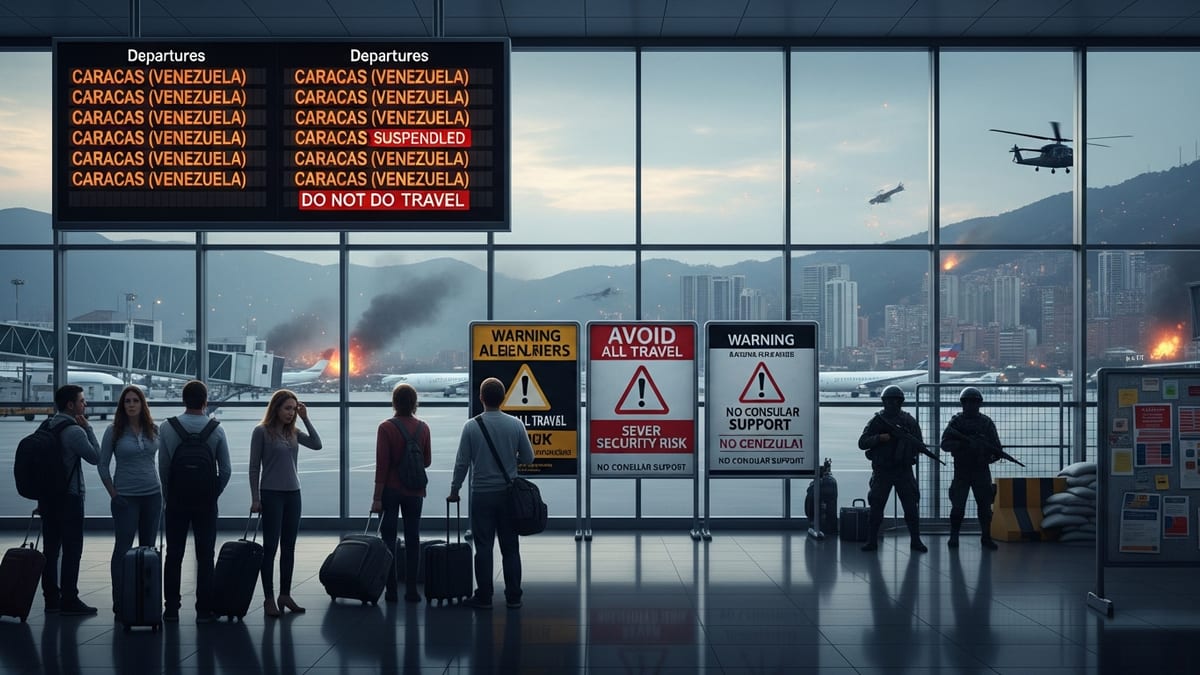
US travel advisories flag night curfews abroad
The US Department of State maintains country-by-country travel advisories that include information on local curfews, states of emergency and restrictions on movement after dark. Recent updates emphasize that visiting a destination considered generally open to tourism does not guarantee full freedom of movement at all hours.
Publicly available State Department material explains that Travel Advisories are revised whenever conditions change significantly, including the introduction of curfews or localized unrest that could affect visitors in resort areas or city centers. The advice stresses that such measures can limit the government’s ability to assist travelers on the ground if they ignore local rules or enter restricted areas during prohibited hours.
Guidance directed at US citizens also reiterates that local laws, not US norms, determine what is allowed in public spaces at night. Travelers are encouraged to treat curfews as legally binding, even when enforcement appears uneven, and to build extra time into evening plans for returning to hotels or transiting through affected neighborhoods before restrictions begin.
Security messages published by US missions abroad sometimes go further than general public advice, indicating that official staff may be placed under their own curfews or travel limits in specific regions. While these restrictions apply directly only to government personnel, they are often a practical indication that ordinary visitors could face elevated risk or disruption at similar times and locations.
Recent examples in popular tourist destinations
Curfews have resurfaced this year in several destinations that are otherwise working to attract international visitors. In Mauritius, a long-established Indian Ocean beach destination, authorities introduced an overnight curfew in mid-October 2026 in response to unrest linked to water shortages and living costs. A public communiqué from the Mauritius Tourism Authority set a daily ban on movement in certain regions from 20:30 to 06:00, limiting nonessential travel during those hours.
The curfew in Mauritius initially covered multiple nights, and local reports noted that most tourists stayed inside resort compounds or hotels once the evening deadline passed. Air services to and from Sir Seewoosagur Ramgoolam International Airport continued to operate, but road checks and the risk of sudden route closures made late-night transfers more complicated. The measures were lifted nationwide on October 19 after officials announced that the situation had stabilized, but authorities retained the power to reimpose local curfews if conditions deteriorate again.
Elsewhere, a broad all-ages night curfew in the Oceanfront district of Virginia Beach earlier this year illustrated how restrictions can be imposed even in destinations best known for nightlife. Local coverage in April 2026 described a city order that barred people from being in parts of the beachfront area after 21:30 on certain weekend nights following shootings and disturbances. Although the measure was temporary and applied to a specific stretch of seafront, visitors arriving without prior notice reported finding bars closing early and pedestrian access tightly controlled.
In Ukraine, where a nationwide state of war continues, travel information aimed at foreign visitors highlights curfew rules as a central planning factor. Guidance for autumn 2026 notes that in Kyiv the nightly curfew currently runs from 01:00 to 05:00, with variations between regions. Travelers are advised not to schedule late-night transfers or excursions that could conflict with these hours and to identify in advance the closest shelter points in their destination city.
Europe’s urban curfews add complexity for city breaks
Curfew measures have also appeared in Western Europe, sometimes in cities strongly associated with culture, food and nightlife. In France, national and local authorities recently imposed or extended partial night curfews in several urban areas, including Paris, Bordeaux, Nice and Lyon, in response to unrest connected to student demonstrations. Coverage from late October 2026 describes candles being lit outside the Lyon tourist office shortly before a curfew took effect, emphasizing the tension between civic protest and the city’s role as a visitor hub.
These curfews typically restrict movement in defined districts or at specific hours, rather than shutting cities completely, but they can still have visible consequences for visitors. Restaurants and bars may close earlier than advertised, evening events can be postponed or moved online, and public transport schedules may be altered so that final services align with the start of restricted hours.
Separately, some countries have experimented with curfew-like limits that do not directly confine people but significantly reshape nightlife. In Egypt, for example, energy-saving rules introduced in 2026 require most shops, cafés, nightclubs and bazaars to close at 21:00. Travel features on the new timetable note that tourism-focused venues benefit from certain exemptions, yet the overall effect has been a quieter late evening in districts that once stayed busy well into the night.
Across Europe, these policies intersect with ongoing debates over overtourism and quality of life for residents. Regional reports covering cities such as Barcelona, Lisbon, Venice and Amsterdam describe a patchwork of noise rules, bar closing times and targeted night restrictions aimed at balancing visitor spending with local concerns. While not always framed as formal curfews, the net result can feel similar to travelers who arrive expecting a full night out and instead encounter early last orders and stricter policing of late-night crowds.
How travelers can plan around curfews and restrictions
Given the variety of curfew rules now in place, US government guidance encourages travelers to weave local regulations into the earliest stages of trip planning. The State Department’s online advisory pages outline broad security conditions in each country, and travelers can use these alongside local government tourism portals, city transport sites and hotel communications to check for night safety measures.
In destinations affected by unrest-related curfews, visitors may want to avoid booking activities that require cross-town travel late at night, especially if routes pass through areas mentioned in recent news coverage. In cities where curfews begin shortly after typical dinner hours, it can be sensible to reserve earlier seating at restaurants and to clarify with hotel staff whether taxis or ride-hailing services continue to operate legally once restrictions start.
Travel safety resources also stress the importance of contingency planning. Changes to curfew rules can be announced at short notice, particularly following major demonstrations or security incidents. Keeping copies of identity documents, programming local emergency numbers into a mobile phone and monitoring local media in the destination language or in translation can help travelers respond quickly if restrictions tighten.
While these developments may complicate evening itineraries in some of the world’s favorite city-break and beach destinations, tourism authorities in many affected locations continue to promote daytime experiences and structured excursions that comply with local regulations. For US travelers, the key message from official advisories and recent reporting is to treat curfews as a practical constraint rather than a trip-ending obstacle and to adapt night-time plans accordingly.