


More news on this day
The United States has issued new security alerts for citizens traveling in Europe as protest movements over housing, student grievances and living costs intensify in Portugal and Germany, prompting localized violence and disruption to flights, rail links and city centers.
Get the latest news straight to your inbox!
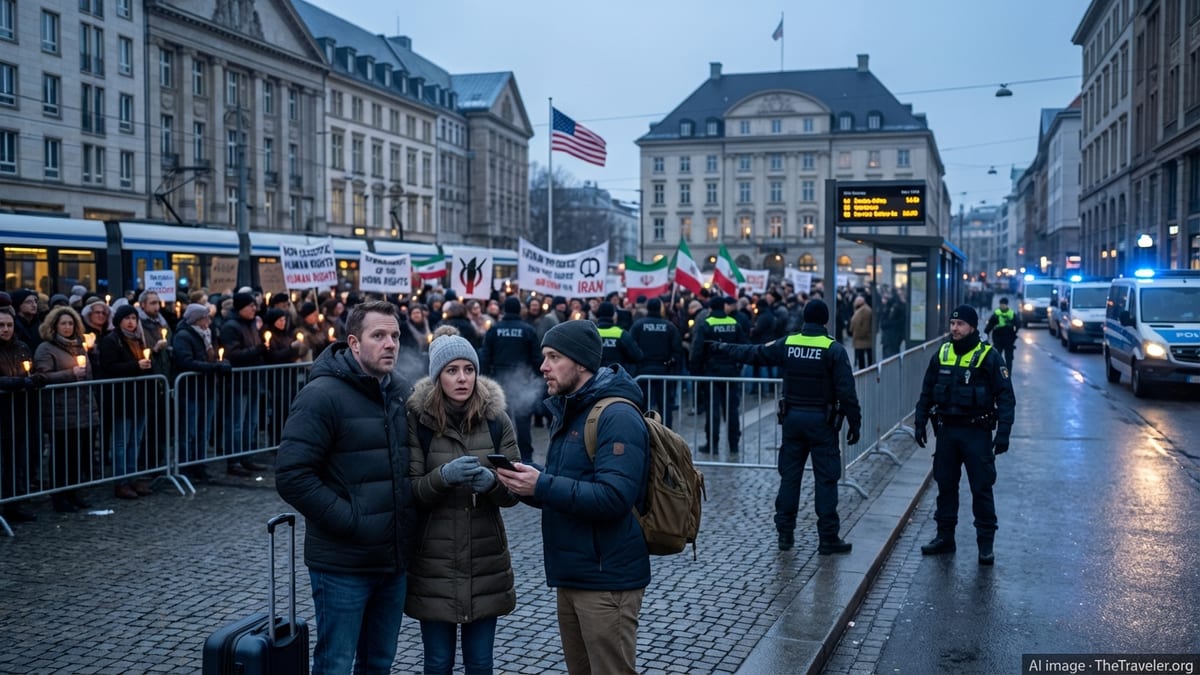
New US Alerts Highlight Protest Flashpoints
Publicly available information from the US diplomatic mission in Lisbon shows that a recent security alert urges US citizens to avoid large demonstrations in central Lisbon and Porto, particularly around Rossio and other downtown squares, after housing and cost-of-living protests drew large crowds. The alert notes that gatherings can form at short notice and may lead to clashes with security forces, affecting access to nearby streets and transport hubs.
In Germany, the US State Department’s standing travel advisory continues to emphasize the risk around demonstrations in major cities, advising travelers to stay clear of protest routes and follow local announcements about disruptions to public transport. The advisory underlines that protest activity in Germany can attract counter-demonstrations and that, while many events remain peaceful, some have resulted in property damage and confrontations in busy urban areas.
The broader European context also matters for US travelers. Recent guidance for US citizens in Europe highlights concerns about large public gatherings and potential targeting of US or allied interests, encouraging visitors to maintain a high level of situational awareness in areas where protests are expected, such as central plazas, near parliaments, and close to symbolic government or corporate buildings.
While the overall advisory levels for both Portugal and Germany remain lower than in higher-risk destinations, the new alerts indicate a more focused concern about short-notice unrest and the knock-on effects for transport, tourism services and access to city landmarks.
Portugal Sees Housing Protests and Transport Pressure
In Portugal, reports from international and local media describe thousands of demonstrators converging near the national parliament in Lisbon in late October to protest soaring housing costs and the spread of short-term rentals. Previous days saw police disperse crowds in downtown areas using batons and police dogs, leading to heightened tensions around key squares popular with visitors.
Tourism and aviation updates from Portuguese industry sources show that travel disruption has been compounded by labor actions and announced strikes. Information published by Turismo de Portugal details scheduled five-day easyJet cabin crew strikes based in Lisbon, Porto and Faro, covering October 2 to 6 and December 19 to 23, 2026. These plans raise the prospect of cancellations or delays on routes linking Portugal with other European cities during peak travel periods.
Separate coverage from Portuguese and international outlets highlights concerns from hospitality and restaurant associations about the impact of previous general strikes and airport bottlenecks on visitor arrivals. Industry bodies have warned that stoppages at airports and in urban transport, combined with protest activity in central districts, can quickly reduce hotel occupancy and complicate transfers between airports, rail stations and city centers.
For travelers planning trips to Portugal over the coming months, publicly available advice stresses the importance of allowing additional time for airport procedures and of monitoring local news in Portuguese and English for any announcements of new protests near airports, key bridges or major suburban rail corridors that could temporarily restrict access.
Gen Z–Led Demonstrations Turn Violent in Germany
In Germany, several large youth-driven demonstrations have grown into a significant national movement. According to recent coverage from international agencies and German media, tens of thousands of mostly student and young adult protesters have taken to the streets in cities including Frankfurt, Berlin and others, rallying around education, climate and wider social and economic grievances.
Reports from Frankfurt describe how some events that began peacefully deteriorated as small groups looted stores and vandalized property in the city’s commercial districts. Reuters and other outlets indicate that at least two shops were looted in Frankfurt’s financial hub, with further damage reported nearby as police sought to regain control of the situation.
German public broadcasters and national newspapers have noted that many organizers insist their intention is to maintain peaceful protests, but authorities have nonetheless increased deployments around demonstration routes and sensitive sites. This includes central train stations, commercial centers and government buildings that are close to common tourist paths.
Background analysis from European risk advisories points out that Germany has already faced repeated waves of strikes and protests affecting rail networks, airports and public services in recent years. Labor disputes in aviation and rail sectors have previously led to cancellation of hundreds of flights and widespread train delays, suggesting that any new protest-linked disruptions could have rapid and visible effects on visitors’ itineraries.
Impact on Flights, Rail and Urban Mobility
Travel risk assessments compiled by government and private-sector advisory services underline that protests and strikes in Europe often translate into delays rather than complete shutdowns, but the cumulative impact can be significant for tightly planned trips. In Portugal, published schedules of upcoming airline strikes indicate that easyJet services at Lisbon, Porto and Faro may face concentrated disruptions during early October and the pre-Christmas period, potentially affecting connecting itineraries across Europe.
In Germany, information drawn from rail and aviation strike coverage shows that previous industrial actions have reduced long-distance rail frequencies and caused extensive queues at major airports such as Frankfurt and Munich. When protests occur in parallel, traffic restrictions around central stations or airport access roads can magnify delays, even for services that are not formally on strike.
Urban mobility is also affected when protests pass along or block central avenues. In Lisbon, marches near the parliament or through Baixa and Rossio can interrupt tram and bus routes used by tourists to reach viewpoints, riverfront areas and hilltop neighborhoods. In German cities, protest routes that cross or encircle central train stations may temporarily close some entrances, divert tram lines or create dense pedestrian crowds at peak times.
Travel advisories note that many disruptions are announced only shortly in advance. As a result, visitors are encouraged to check the latest information on airport departure boards, rail operator announcements and city transport alerts on the day of travel, rather than relying solely on schedules planned weeks earlier.
Practical Guidance for US Travelers Planning Europe Trips
Current guidance for US travelers emphasizes preparation rather than avoidance. Official travel advisories for both Portugal and Germany continue to rate these destinations as broadly safe, while recommending that visitors remain aware of protest dynamics and maintain flexible itineraries. Travelers are advised to register their trips with relevant enrollment programs so they can receive security updates when alerts are issued for cities on their route.
Publicly available recommendations encourage visitors to stay away from large crowds, even if events appear peaceful, and to move promptly away at the first sign of tension or an unusually heavy security presence. Hotels in central districts may provide updates about nearby gatherings or road closures, and travelers can ask about alternative routes to airports or major sights on days when protests are expected.
For those with flights scheduled during known strike periods in Portugal or on days when protests are planned in German cities, risk analysts advise building extra time into transfers and considering earlier trains or airport shuttles. Where possible, travelers can keep carry-on essentials with them in case of missed connections, and follow airline or rail notifications about rebooking options if services are canceled.
Overall, recent alerts indicate that while Portugal and Germany remain open and welcoming to international visitors, US travelers should adjust expectations for smooth, uninterrupted movement in and around major cities. Careful monitoring of local developments, combined with flexible planning, can help reduce the impact of protest-related delays during the current period of heightened public mobilization across Europe.